
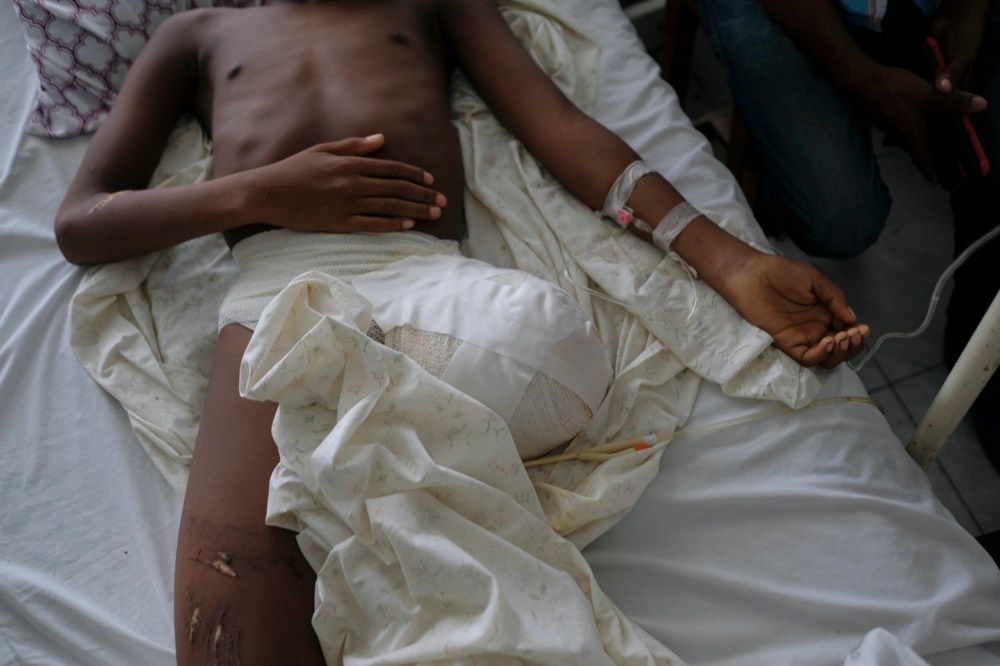
LES CAYES, Haiti (AP) – The home of clothing merchant Felix Pierre Genel collapsed before he could flee outside as a powerful earthquake shook southwestern Haiti. He was dug out of the rubble that same day with a broken arm and was among the somewhat fortunate ones who promptly received medical care at a local hospital. But even so, he could not escape amputation, a common consequence of the calamity.
Doctors at first told the 36-year-old they would try to save his right arm. He had surgery to place rods in to stabilize the broken bone. Then came an infection and a second operation.
“Instead of dying, I took the decision of letting them cut off my arm,” Genel said from his bed at the Les Cayes’ general hospital, his right arm bandaged where doctors amputated it above the elbow. “From where I’m coming from, inside the mouth of death, it’s best that they cut the arm off.”
Broken bones that cause open wounds are frequent injuries in devastating earthquakes like the one that battered the Caribbean nation on Aug. 14. That combination causes a particularly high risk of infection, and even more so when, as in Haiti, access to health care is limited or people delay seeking medical attention in favor of natural remedies.
“The risk of infections goes up the longer you wait to get care, and some of that is related to access to health care, not all of it,” said Dr. Christopher Colwell, chief of emergency medicine at Zuckerberg San Francisco General Hospital.