
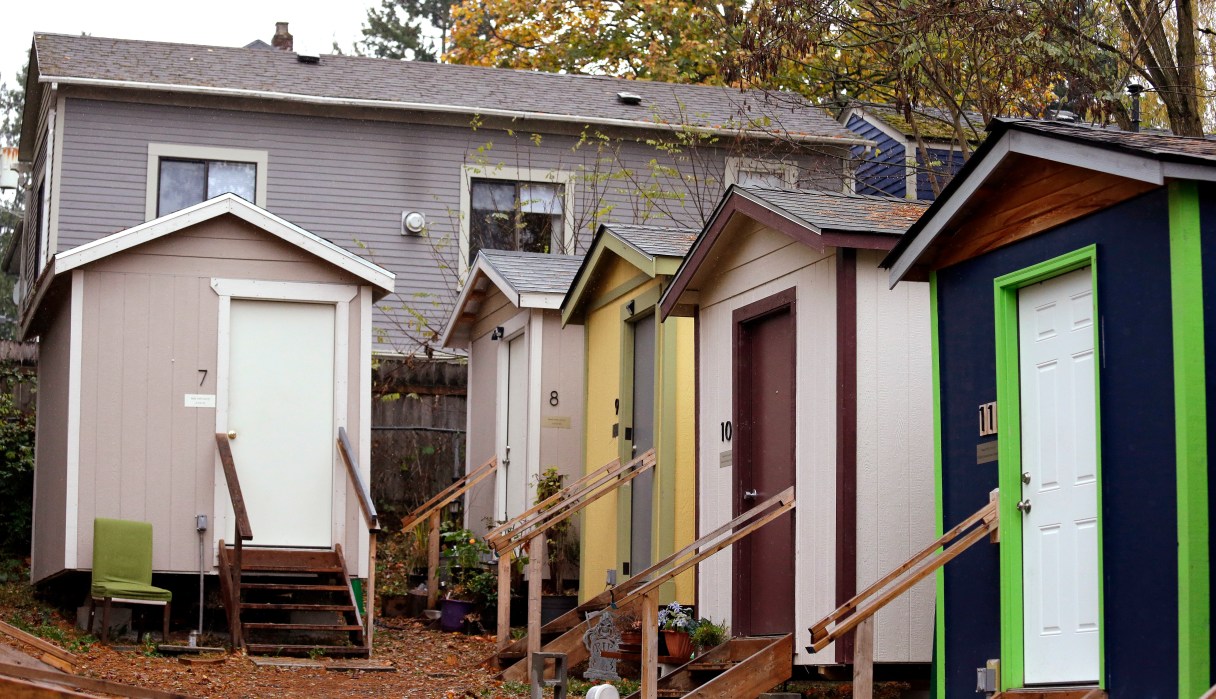
DES MOINES, Iowa (AP) – As he tows a 96-square-foot house around Des Moines, Joe Stevens is overwhelmed by the intense, sometimes tearful support he receives from churches, schools and service groups for his plan to use the trendy little structures to help homeless people.
But when Stevens actually tried to create a village of the homes in Iowa’s largest city, the response was far different.
“We got shot down,” said Stevens, who leads a group that proposed erecting 50 tiny homes on a 5-acre industrial site north of downtown Des Moines. “It was a sense of fear, uncertainty and doubt, a kneejerk situation.”
Tiny homes have been promoted as the solution to all kinds of housing needs – shelter for the homeless, an affordable option for expensive big cities and simplicity for people who want to declutter their lives. But the same popularity that inspired at least six national TV shows about the homes often fails to translate into acceptance when developers try to build them next door.
In at least a dozen cases across the nation, neighbors organized to stop tiny house projects, including in Charlotte, North Carolina; Nashville, Tennessee; San Jose, California; Tulsa, Oklahoma; Tallahassee, Florida; and Bend, Oregon. Sometimes the efforts moved ahead despite objections, but in many cases, the communities were blocked.