
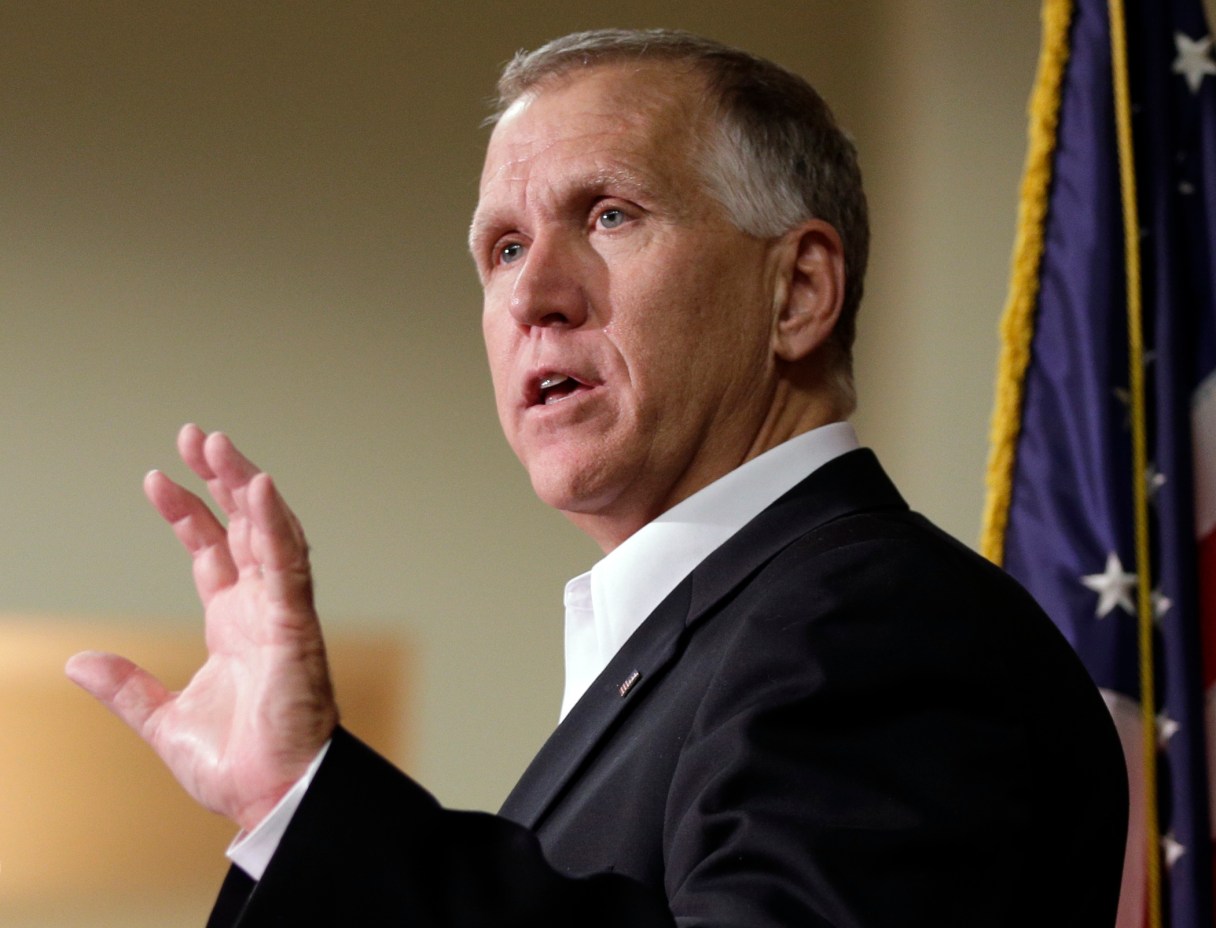
WASHINGTON (AP) – A series of nonprofit groups backed by secret donors spent millions of dollars to help elect North Carolina Sen. Tom Tillis in last year’s midterm elections, paying for television ads and crucial voter outreach efforts in what ended up as the most expensive Senate race in U.S. history.
Tax filings made public on Tuesday show how some of those nonprofits were working together. In all, about 30 nonprofits played a role in the election, with the majority spending money to help Republican Tillis beat incumbent Democrat Sen. Kay Hagan. The total cost, between the candidates and the outside groups, came to about $118 million, according to the Center for Responsive Politics, a Washington-based political tracker.
Nonprofit groups can accept donations of any size and are not required to disclose who is giving them money. In exchange for those privileges, they are supposed have “social welfare” as their primary mission and limit their overtly political activity. Some of the best-known social-welfare nonprofits are AARP and the National Rifle Association.
Political campaigns, by comparison, must abide by contribution limits and disclose their donors. The political groups known as super PACs can accepted donations of any size but also must disclose the names of donors.
Some of the nonprofit groups involved in the North Carolina race appear to have pushed the limits of what is allowed by law.