
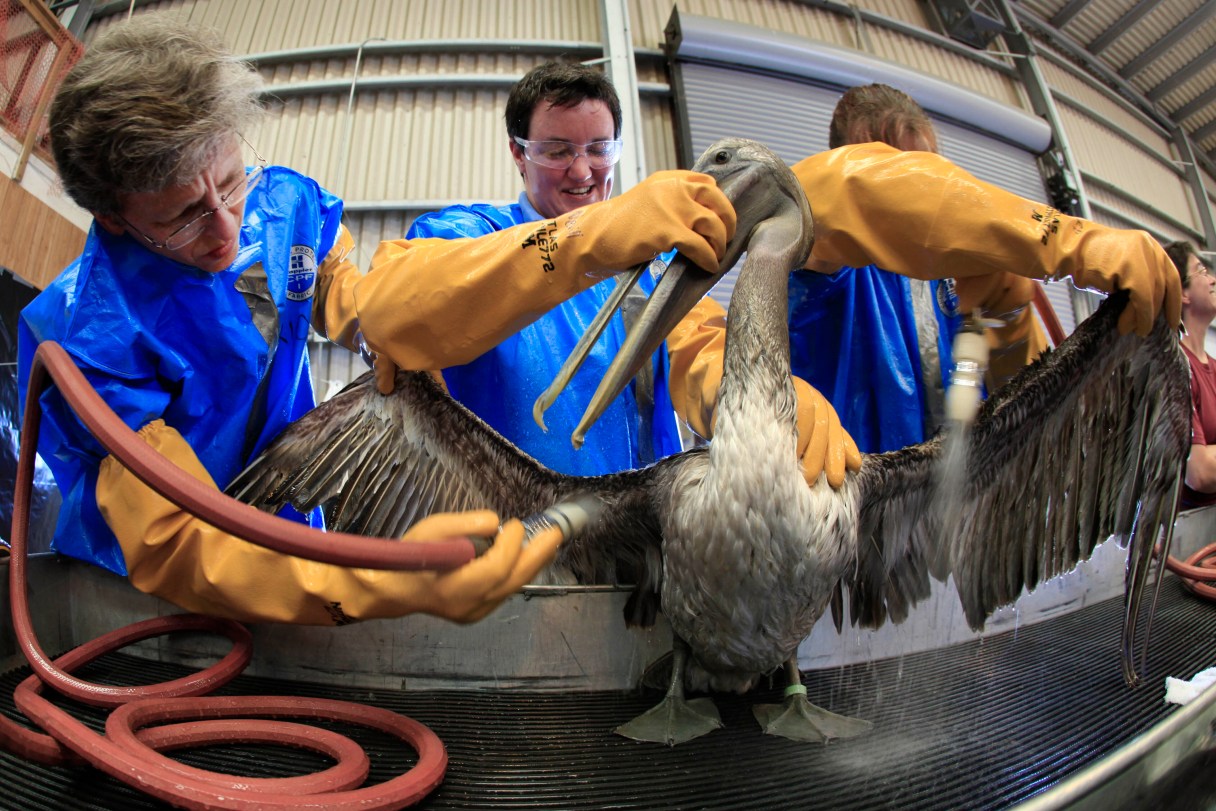
Louisiana is moving toward restoration of an island so low that high tides often drown the eggs and chicks of the pelicans and other birds that nest there.
Bids will be opened Thursday for restoration of Rabbit Island, where hundreds of birds were released after being rescued from the BP oil spill and cleaned of the thick black gunk in 2010.
Louisiana’s westernmost nesting site for colonial seabirds and wading birds isn’t a barrier island. Rather, it sits in a cove of Calcasieu Lake. It wasn’t affected by the spill, but is “the poster child for nest inundation,” said Jon J. Wiebe, project manager for the Louisiana Department of Wildlife and Fisheries.
BP oil spill money is paying for the $27 million project, which is more than double the size of the recently completed restoration of Queen Bess Island. Pelicans and other birds already have built about 5,000 nests at Queen Bess, with the height of nesting season still to come – an encouraging success, said biologist Todd Baker of the Louisiana Department of Wildlife and Fisheries.
Federal scientists estimated that the spill killed up to 102,000 birds gulf-wide, though later studies put the figure much higher. Anywhere from 12,700 to 27,600 pelicans were killed, according to the National Oceanic and Atmospheric Administration estimates.