
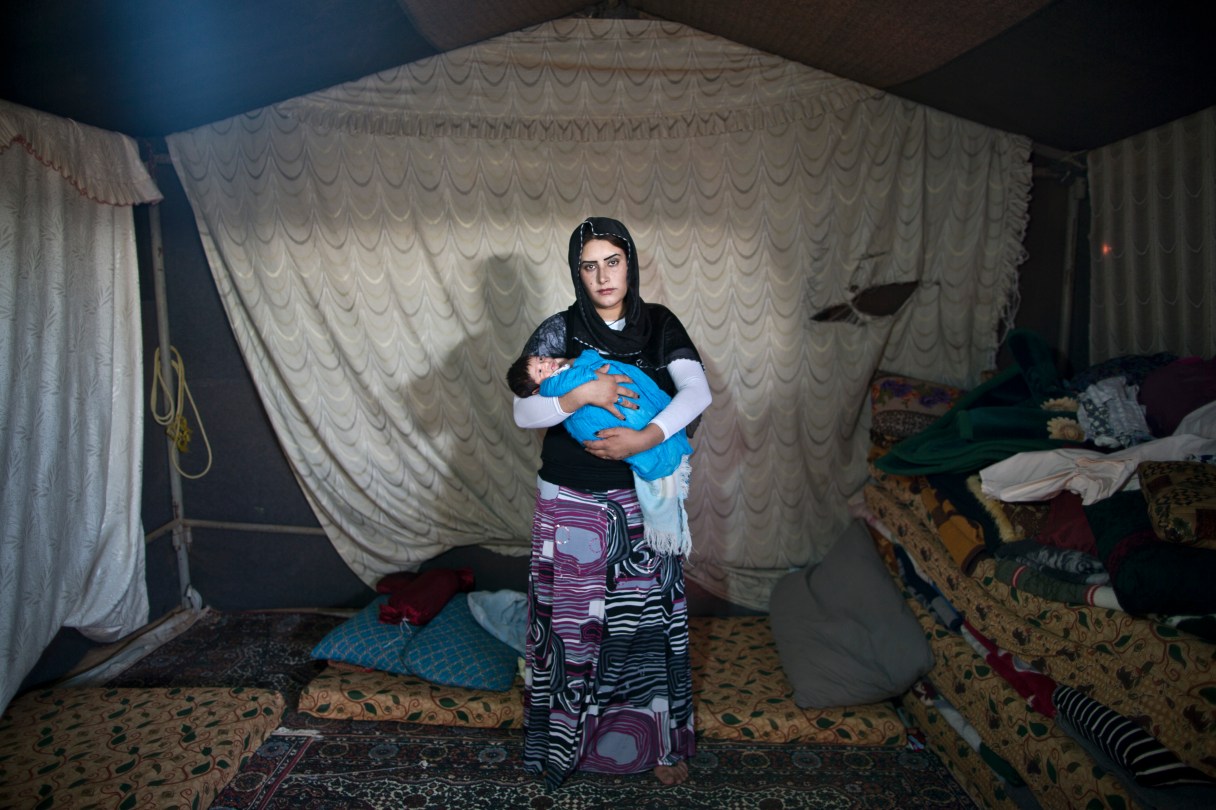
MAFRAQ, Jordan (AP) – Here among the tents of this informal camp for Syrian refugees in Jordan, pregnant mothers have given birth to children they struggle to care for amid sandstorms and crushing poverty.
More than 4 million Syrians have fled their country and are now registered as refugees, according to the United Nations. Most face desperate circumstances, even in Jordan’s registered camps like Zaatari. But those who live in makeshift camps, like this one near the Jordanian town of Mafraq, face even more dire choices to be able to live close to their jobs on local farms or to have greater freedom.
Many of these women The Associated Press previously profiled and photographed for a story in March about their lives as pregnant refugees. Now months later, Muhammed Muheisen, the AP’s chief photographer for the Middle East, Afghanistan and Pakistan, returned to see how their lives had changed since the birth of their children.
The challenges they face are laid bare by Syrian refugee Wadhah Hamada, 22, who just gave birth to her first son, Ra’fat: “Winter is so cold, summer is hot and dry. My husband hardly works and some of the decisions we had to make have been deciding what is more important: To buy bread to feed ourselves or medicine in case my child is in need? A day of treatment for my baby who suffered from diarrhea is like a month of work for my husband.”
Here are some stories of their survival: