
Monday, November 16, 2026Nov 16

Aid airdrops to Syria’s besieged are called too dangerous

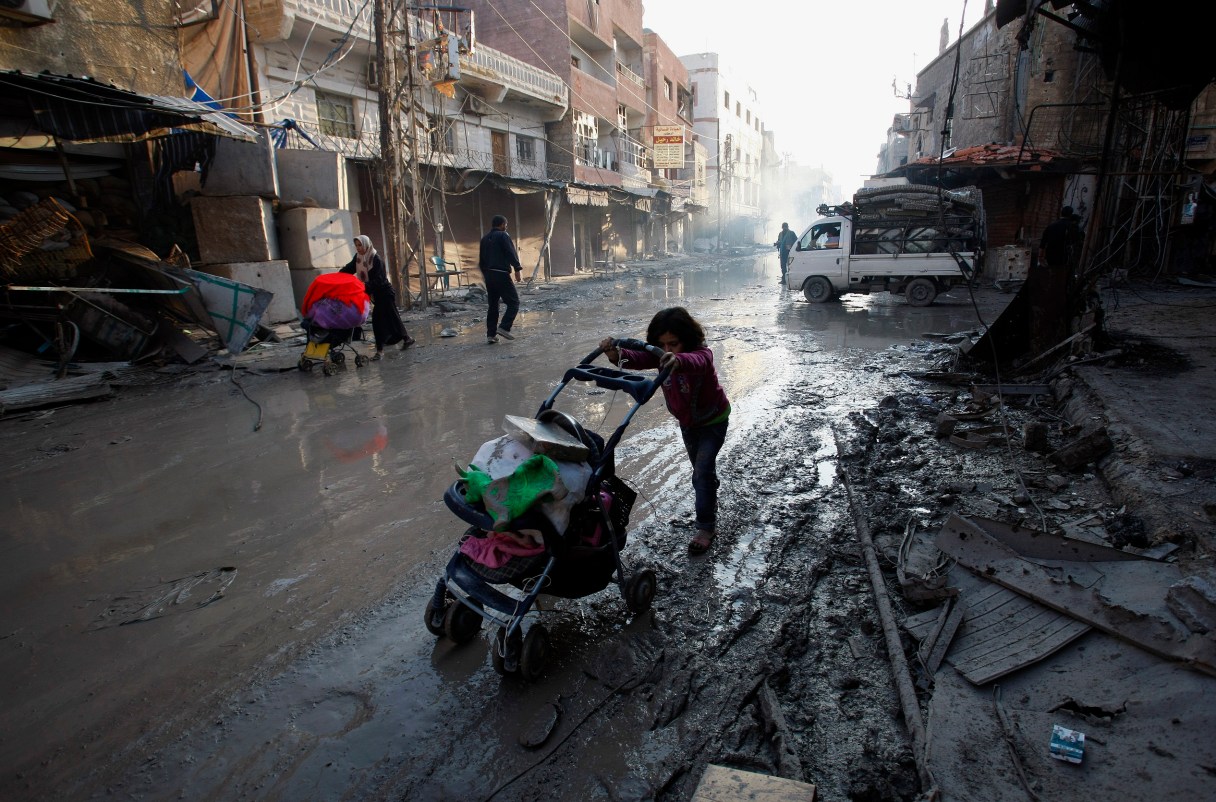
FILE - In this photo taken Thursday, Nov. 21, 2013, Syrian civilians carry their undamaged furniture, clothes and food they found at their homes destroyed during clashes between the Sunni-dominated Free Syrian Army and Syrian soldiers loyal to Syria's President Bashar Assad, in the countryside of Damascus, Syria.  As images and reports of starvation in besieged Syrian communities drew an international outcry and two rare aid convoys this month, Jan. 2016, an urgent question arose: Why not drop food and other needed supplies by air? (AP Photo/Jaber al-Helo)
FILE - In this photo taken Thursday, Nov. 21, 2013, Syrian civilians carry their undamaged furniture, clothes and food they found at their homes destroyed during clashes between the Sunni-dominated Free Syrian Army and Syrian soldiers loyal to Syria's President Bashar Assad, in the countryside of Damascus, Syria. As images and reports of starvation in besieged Syrian communities drew an international outcry and two rare aid convoys this month, Jan. 2016, an urgent question arose: Why not drop food and other needed supplies by air? (AP Photo/Jaber al-Helo)

UNITED NATIONS (AP) – As images and reports of starvation in besieged Syrian communities drew an international outcry and two rare aid convoys this month, an urgent question arose: Why not drop food and other needed supplies by air?

Humanitarian access is a key issue as the United Nations tries to get Syrian parties to peace talks tentatively set for Monday. And it’s the focus of a pledging conference on Feb. 4 in London, with the leaders of countries including Germany and Iran expected to attend.

Almost five years after Syria’s civil war began, the U.N. says more than 393,000 people are besieged. Food aid reached less than 1 percent of them last year. About 181,000 are besieged by Syria’s government.

Aid airdrops in Syria are possible to do, the U.S. Air Force secretary noted last week. “If we’re asked to do it, we have the assets, we have the people, we know how to do airdrops,” Deborah Lee James told an audience at the Center for Strategic and International Studies.

Russia, the Syrian government’s strongest ally, this month announced airdrops to the city of Deir el-Zour, where government-held areas are blockaded by Islamic State militants and an estimated 200,000 people are besieged.