
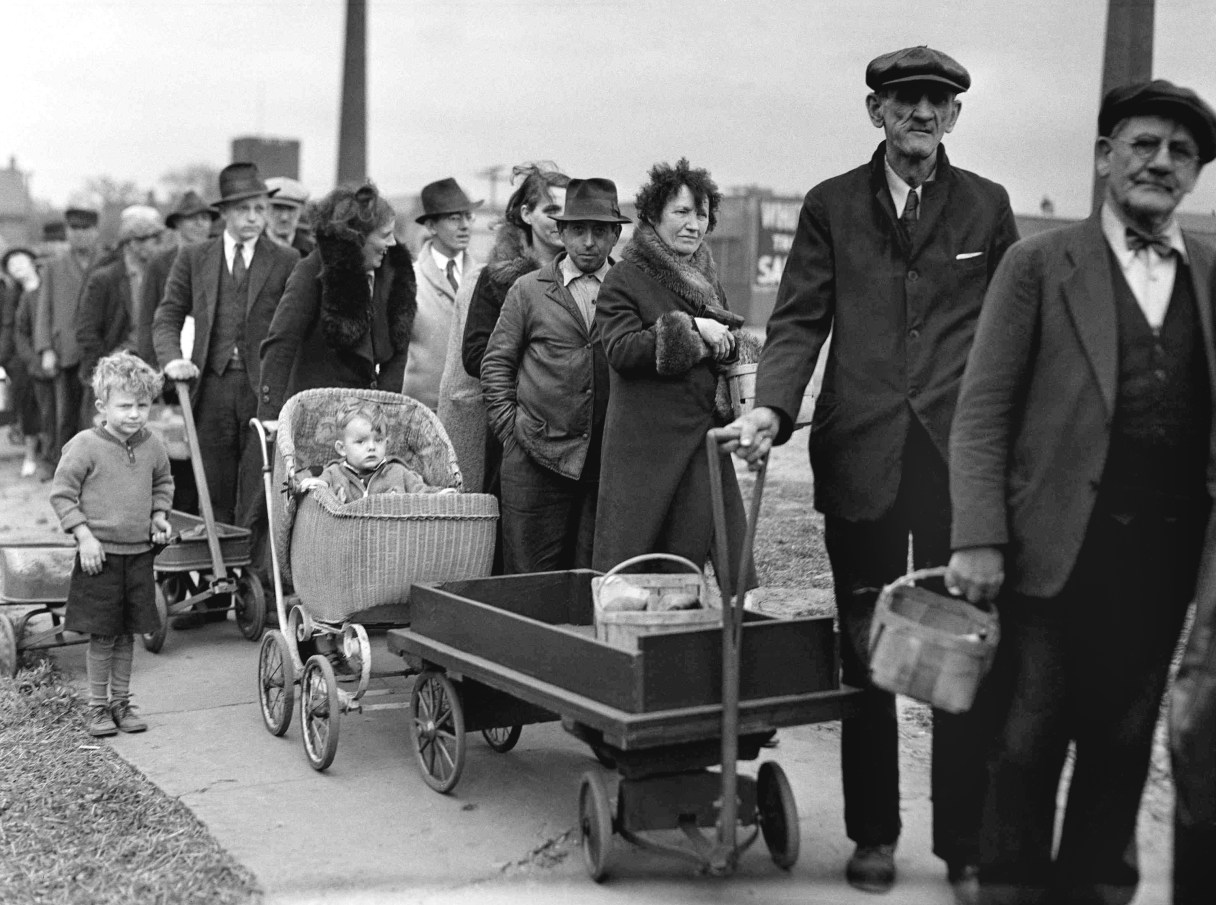
WASHINGTON (AP) – The imagery floats in sepia-colored photographs, faintly recalled images of bedraggled people lined up for bread or soup. Shacks in Appalachian hollows. Ruined investors taking their lives in the face of stock market crashes. Desperation etched on the faces of a generation that would soon face a world war.
By now, it’s hard to find someone whose grandparents are old enough to recall the suffering of the Great Depression or the stream of rescue programs the government unleashed in response to it. All but gone, too, are memories of President Franklin Roosevelt’s “fireside chats,” his attempts to console an anxious populace and quell the “fake news” rumors of the day.
Nearly a century later, the U.S. economy is all but shut down, and layoffs are soaring at small businesses and major industries. A devastating global recession looks inevitable. Deepening the threat, a global oil price war has erupted. Some economists foresee an economic downturn to rival the Depression.
“With the markets destroying wealth so quickly, the two shocks we’re seeing globally – the coronavirus and the oil-price war – could morph into a financial crisis,” said Carmen Reinhart, a professor of economics and finance at Harvard’s Kennedy School of Government. “We will see higher default rates and business failures. It could be like the 1930s.”
During the early Depression years, unemployment peaked at 25%. U.S. economic output plunged nearly 30%. Thousands of banks failed. Millions of homeowners faced foreclosure. Businesses failed.