
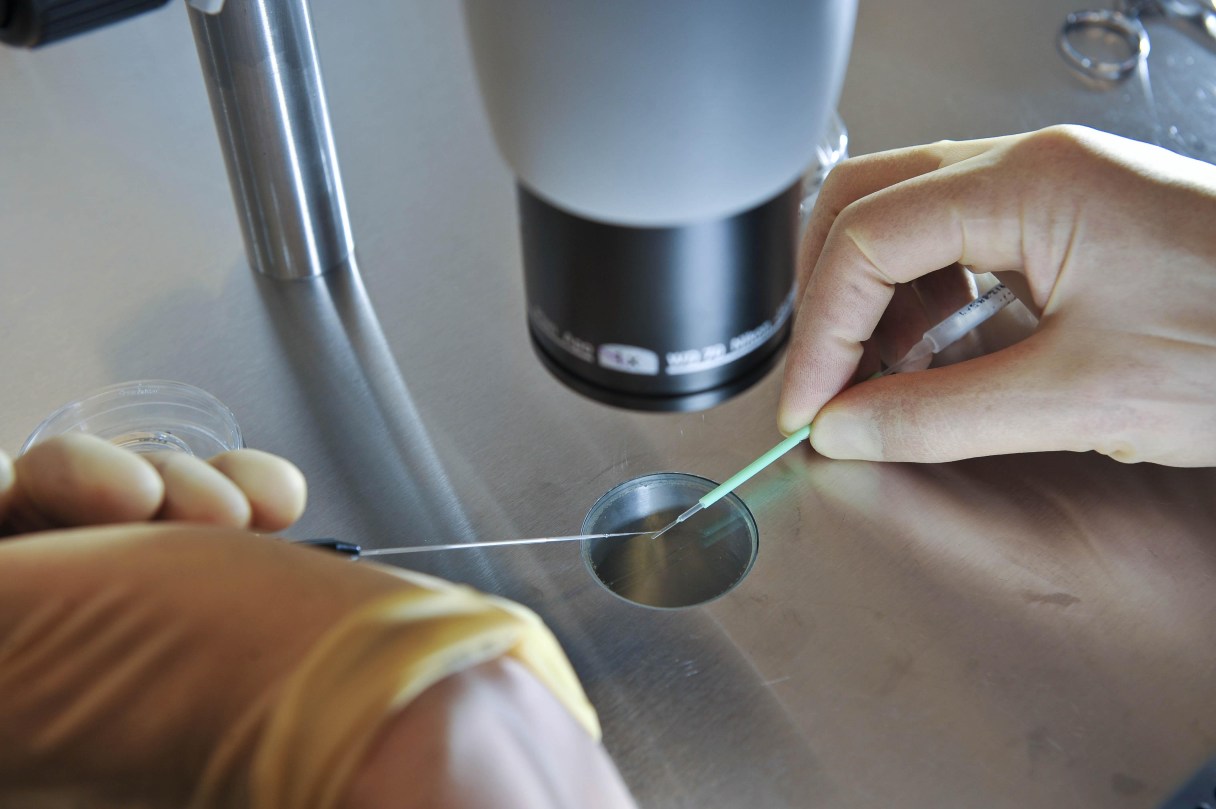
LONDON (AP) – Britain’s fertility regulator has approved a scientist’s request to edit the human genetic code in an effort to fight inherited diseases – but critics fear the new technique crosses too many ethical boundaries.
The Human Fertilisation and Embryology Authority announced Monday it has granted a research application to a team led by scientist Kathy Niakan to try to understand the genes that human embryos need to develop successfully.
Niakan, of the Francis Crick Institute, plans to use gene editing to analyze the first week of an embryo’s growth. Scientists say gene-editing techniques could one day lead to treatments for inherited conditions like muscular dystrophy or HIV, which causes AIDS.
Paul Nurse, director of the Francis Crick Institute, said Niakan’s research would “enhance our understanding of (in vitro fertilization) success rates, by looking at the very earliest stage of human development.”
Last year, Chinese researchers made the first attempt at modifying genes in human embryos. Their laboratory experiment didn’t work – the embryos weren’t viable – but raised the prospect of altering genes to repair the genes of future generations.