
Friday, November 13, 2026Nov 13

Italy’s rescue plan for troubled bank gets EU approval

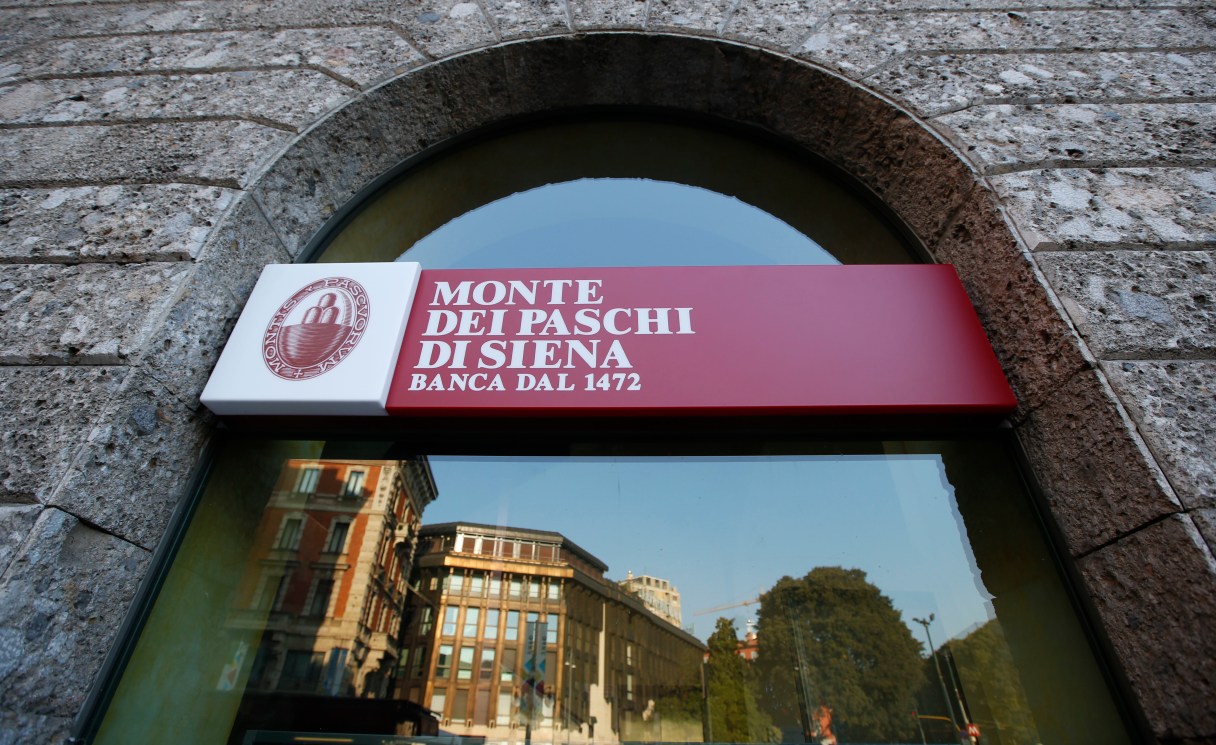
FILE - In this, Sunday, Oct. 26, 2014 file photo, a view of a "Monte Dei Paschi di Siena" bank branch in Milan, Italy. Italy's finance minister said Tuesday, July 4, 2017, the plan to restructure the struggling bank Monte dei Paschi di Siena will provide "a credible future'' for the institution, while ensuring stability to the Italian banking sector. (AP Photo/Luca Bruno, File)
FILE - In this, Sunday, Oct. 26, 2014 file photo, a view of a "Monte Dei Paschi di Siena" bank branch in Milan, Italy. Italy's finance minister said Tuesday, July 4, 2017, the plan to restructure the struggling bank Monte dei Paschi di Siena will provide "a credible future'' for the institution, while ensuring stability to the Italian banking sector. (AP Photo/Luca Bruno, File) FILE - In this, Sunday, Oct. 26, 2014 file photo, a view of a "Monte Dei Paschi di Siena" bank branch in Milan, Italy. Italy's finance minister said Tuesday, July 4, 2017, the plan to restructure the struggling bank Monte dei Paschi di Siena will provide "a credible future'' for the institution, while ensuring stability to the Italian banking sector. (AP Photo/Luca Bruno, File)

MILAN (AP) – Italy’s finance minister said Tuesday the plan to restructure the struggling bank Monte dei Paschi di Siena will provide “a credible future” for the institution while ensuring stability to the Italian banking sector.

Minister Pier Carlo Padoan made the comments after the European Union’s executive commission approved Italy’s plans to inject 5.4 billion euros ($6 billion) into the world’s oldest bank as part of a five-year restructuring plan that the bank’s management will outline to investors on Wednesday.

Italy’s banking system has been weighed down by a heavy load of bad loans due to a prolonged crisis in the eurozone’s third-largest economy coupled with management issues.

Besides the Monte dei Paschi rescue, Padoan has been ushering through a plan to save two cooperative banks in the productive northern Veneto region, where account holders have lost billions of euros.

The Commission cleared the Monte dei Paschi capital injection only following the contribution of 4.3 billion euros from the bank’s shareholders and junior creditors, as required by EU rules meant to minimize the cost of bailouts for taxpayers.