
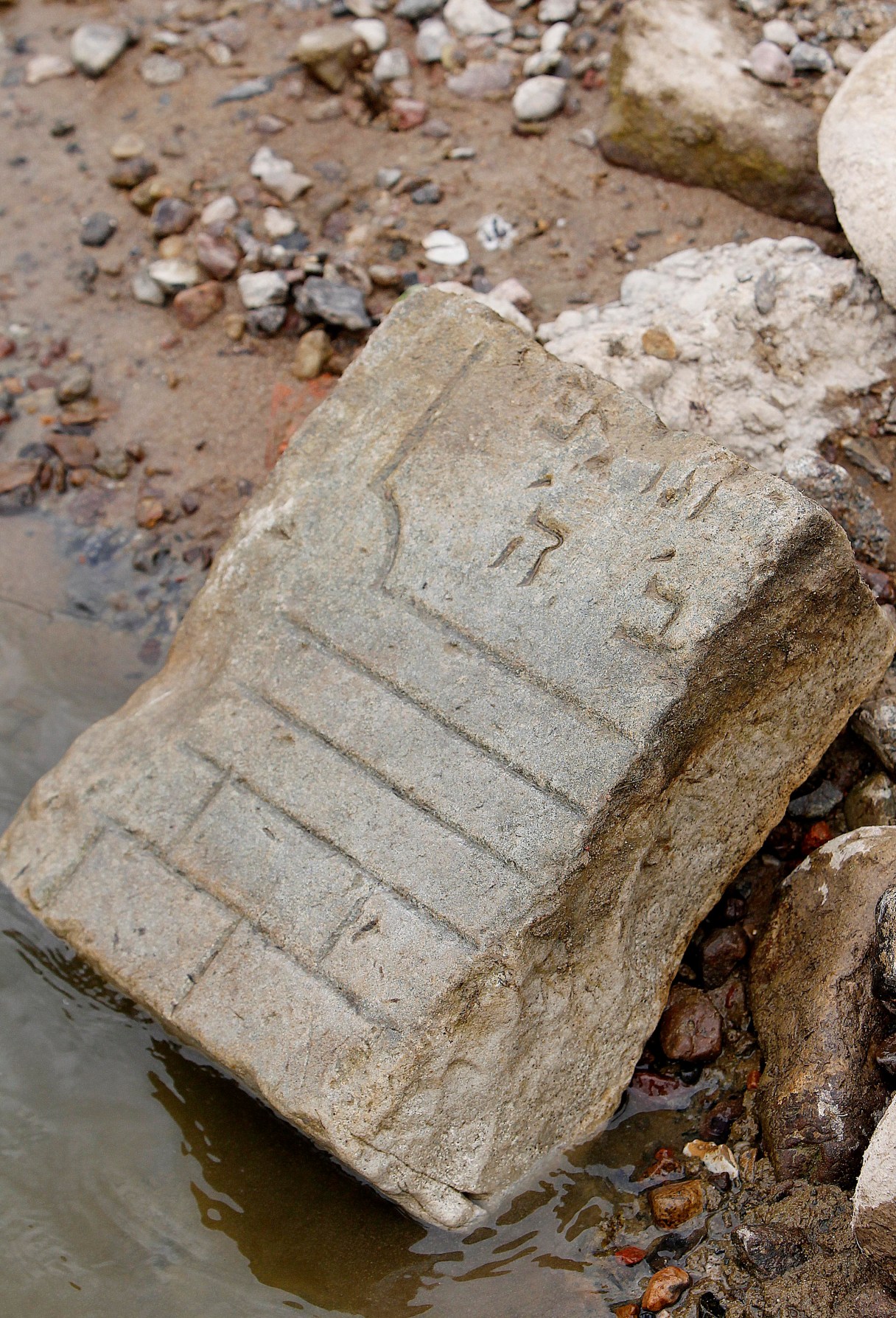
WARSAW, Poland (AP) – As river levels in Poland fall to record lows amid a prolonged drought, Jewish tombstones and a Soviet fighter plane with the remains of its pilots have been found in the riverbank, evidence of Poland’s tortured 20th-century history.
Those discoveries follow the findings of stone fragments from the early 20th-century Poniatowski Bridge across the Vistula River in Warsaw, which the Germans blew up in 1944 as they crushed the Warsaw Uprising. The bridge was rebuilt after the war.
“The Vistula River is hiding no end of secrets. They are everywhere,” said Jonny Daniels, the head of Jewish foundation “From the Depths,” who waded Tuesday into a shallow area of the Vistula, picking up fragments of stones with Hebrew lettering.
Officials knew that archaeological remnants remained hidden under wild and murky waters of the Vistula River and its tributaries, but it was impossible to carry out searches for them until now. The Vistula, which flows 1,047 kilometers (651 miles) from the Beskidy Mountains to the Baltic Sea, is now at its lowest level since measurements started in the late 18th century.
On Sunday, explorers found the remnant of the Soviet fighter bomber in the Bzura River, a Vistula tributary, near the village of Kamion in central Poland. The pieces have been moved to a museum in nearby Wyszogrod for examination, with more recovery work planned for Saturday.