
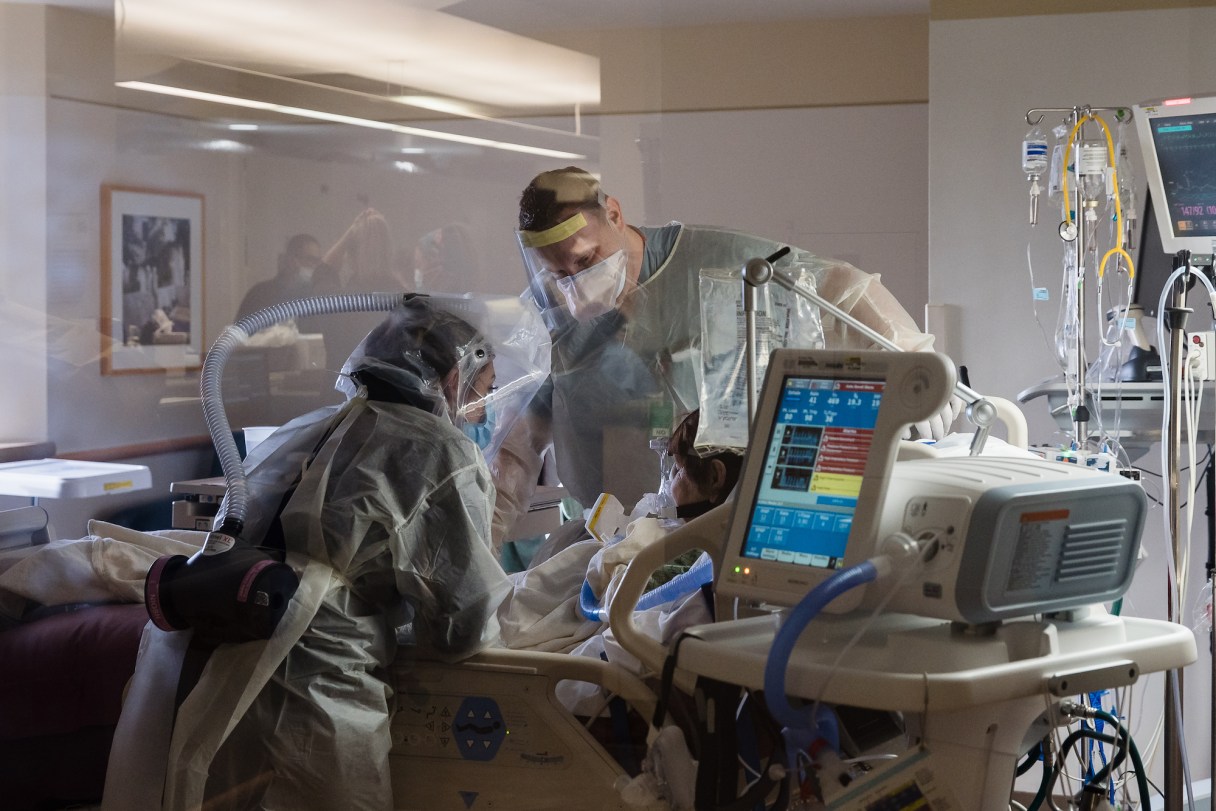
As a pulmonary and critical care physician in Southern California treating hospitalized patients with COVID-19, I am noticing a rising tension. Beyond just being overwhelmed, we are now part of the collateral damage.
I recently asked a security guard to accompany me and an ICU nurse to meet the family of an unvaccinated 42-year-old firefighter who refused to accept that COVID-19 caused his respiratory failure. Adamantly refusing intubation despite worsening over weeks, it was only when his oxygen levels precipitously dropped and he complained of excruciating breathlessness that he accepted a breathing tube.
A dozen irate family members and friends now demanded answers. Because of visitation restrictions to limit contagion, they awaited me in lawn chairs outside the hospital. Through my N95 mask, I tried to explain in simple terms what was happening to their loved one. They hectored with incessant questions about test results, accusations of mistreatment and demands for therapies like vitamins, ivermectin and sedatives.
Warning repeatedly “not to lie,” they recorded me with their camera phones. I tiptoed through a minefield of distrust. My careful medical explanations and efforts to connect empathically never landed. After 45 minutes, the three of us walked back into the hospital.
Once this would have been unbelievable, but it’s becoming all too common. Endless months of rancor from COVID-skeptic patients and their families takes a psychological toll on front-line health care professionals. I’m seeing a new casualty: Worn down, many practitioners are compromising long-standing practice norms.