
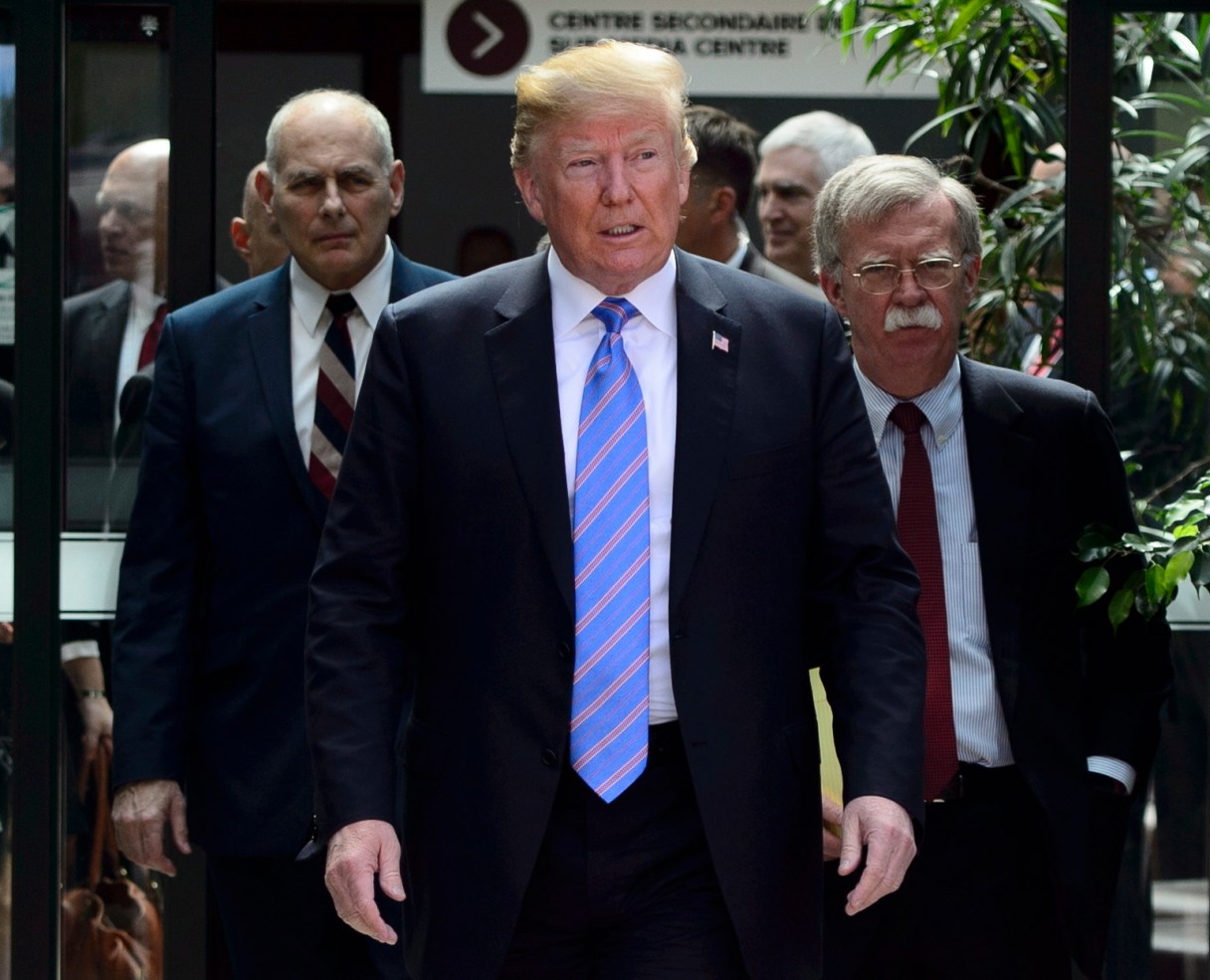
LA MALBAIE, Quebec (AP) – The annual G-7 summit appeared to have weathered tensions over President Donald Trump’s threats of a tariff-fueled trade war until the mercurial American pulled out of a joint statement while citing “false statements” by Canadian Prime Minister Justin Trudeau.
It was an unprecedented attack on the leader of the U.S. neighbor and ally.
Trump was aboard Air Force One heading to an historic summit with North Korea’s Kim Jong Un when he issued a pair of tweets Saturday criticizing the G-7 host and stepping back from the generally positive tone that had ended the two-day meeting. A few hours earlier, Trudeau had told reporters that all seven leaders had come together to sign the joint declaration.
Trudeau said he had reiterated to Trump that tariffs would harm industries and workers on both sides of the U.S.-Canada border. He said unleashing retaliatory measures “is not something I relish doing” but that he wouldn’t hesitate to do so because “I will always protect Canadian workers and Canadian interests.”
“As Canadians, we are polite, we’re reasonable, but also we will not be pushed around,” Trudeau said, and he described all seven leaders coming together to sign a joint declaration despite having “some strong, firm conversations on trade, and specifically on American tariffs.”