
Monday, November 16, 2026Nov 16

Russians worried about economy before Putin call-in show

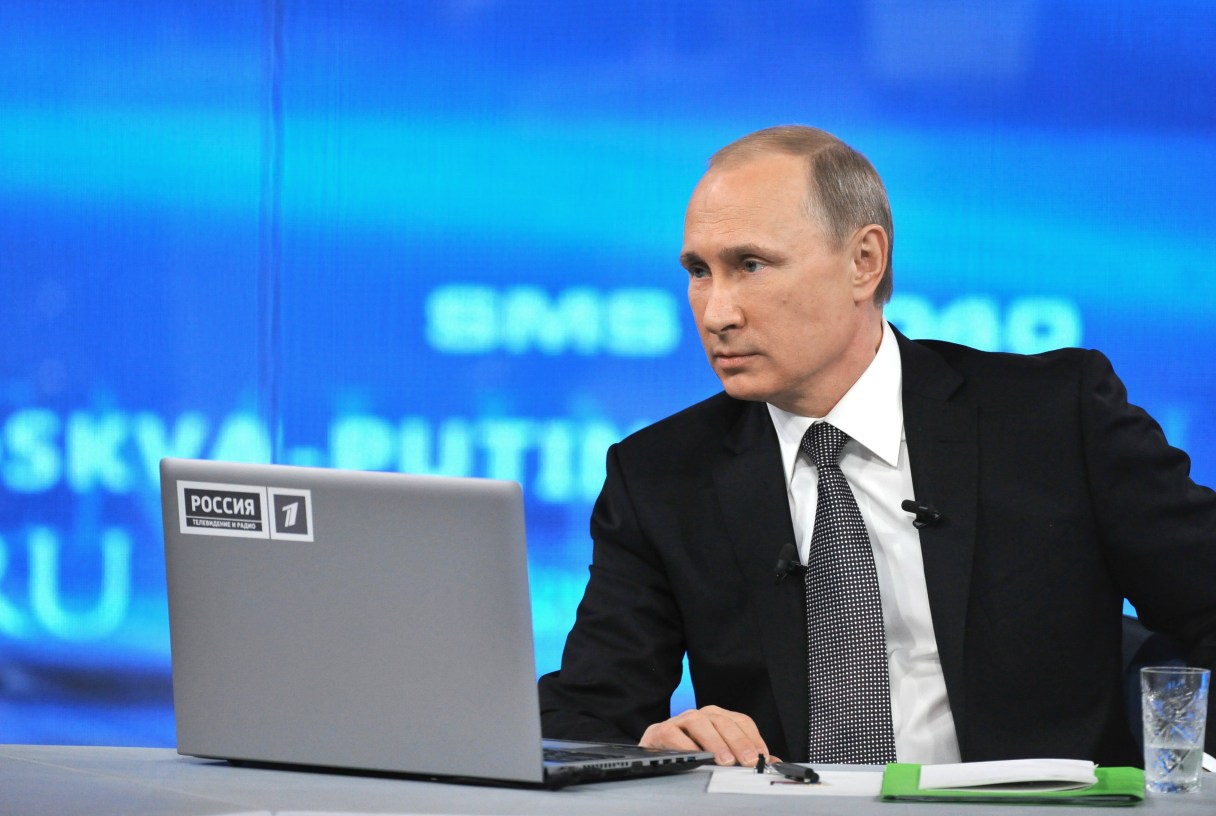
FILE -  In this Thursday, April 16, 2015 file photo Russian President Vladimir Putin, listens during an annual call-in show on Russian television "Conversation With Vladimir Putin"  in Moscow, Russia. On the eve of President Vladimir Putin’s annual call-in show, the Kremlin has been sifting through more than a million questions from Russians across the country. Chief among concerns this year are the rising cost of utilities_ a perineal issue_ and the state of Russia’s roads, said Kremlin spokesman Dmitry Peskov, adding that photographs of pockmarked highways have come flooding in ahead of Thursday’s April 14, 2016 show. (Mikhail Klimentyev/Sputnik, Kremlin Pool Photo via AP, file)
FILE - In this Thursday, April 16, 2015 file photo Russian President Vladimir Putin, listens during an annual call-in show on Russian television "Conversation With Vladimir Putin" in Moscow, Russia. On the eve of President Vladimir Putin’s annual call-in show, the Kremlin has been sifting through more than a million questions from Russians across the country. Chief among concerns this year are the rising cost of utilities_ a perineal issue_ and the state of Russia’s roads, said Kremlin spokesman Dmitry Peskov, adding that photographs of pockmarked highways have come flooding in ahead of Thursday’s April 14, 2016 show. (Mikhail Klimentyev/Sputnik, Kremlin Pool Photo via AP, file)

MOSCOW (AP) – Before President Vladimir Putin’s annual call-in show on Thursday, the Kremlin has been sifting through more than 1 million questions from Russians across the country.

Chief among concerns this year are the rising cost of utilities – a perennial issue – and the state of Russia’s roads, said Kremlin spokesman Dmitry Peskov, adding that photographs of pockmarked highways have come flooding in. Other major concerns include price increases and withheld salaries, the spokesman told journalists.

This “Direct Line” with Putin, now in its 14th year, provides a way for the president to assess the country’s mood, listen to direct appeals from his constituency, and explain policies, both foreign and domestic.

This year, more than in the past, the president is likely to devote a good amount of time to world politics, said Dmitri Trenin, the director of the Carnegie Moscow Center.

“Russia has been at war in the Middle East for a time now. It has been so far successful, but people are worried. People are also worried about what happens in Ukraine next,” he said.