
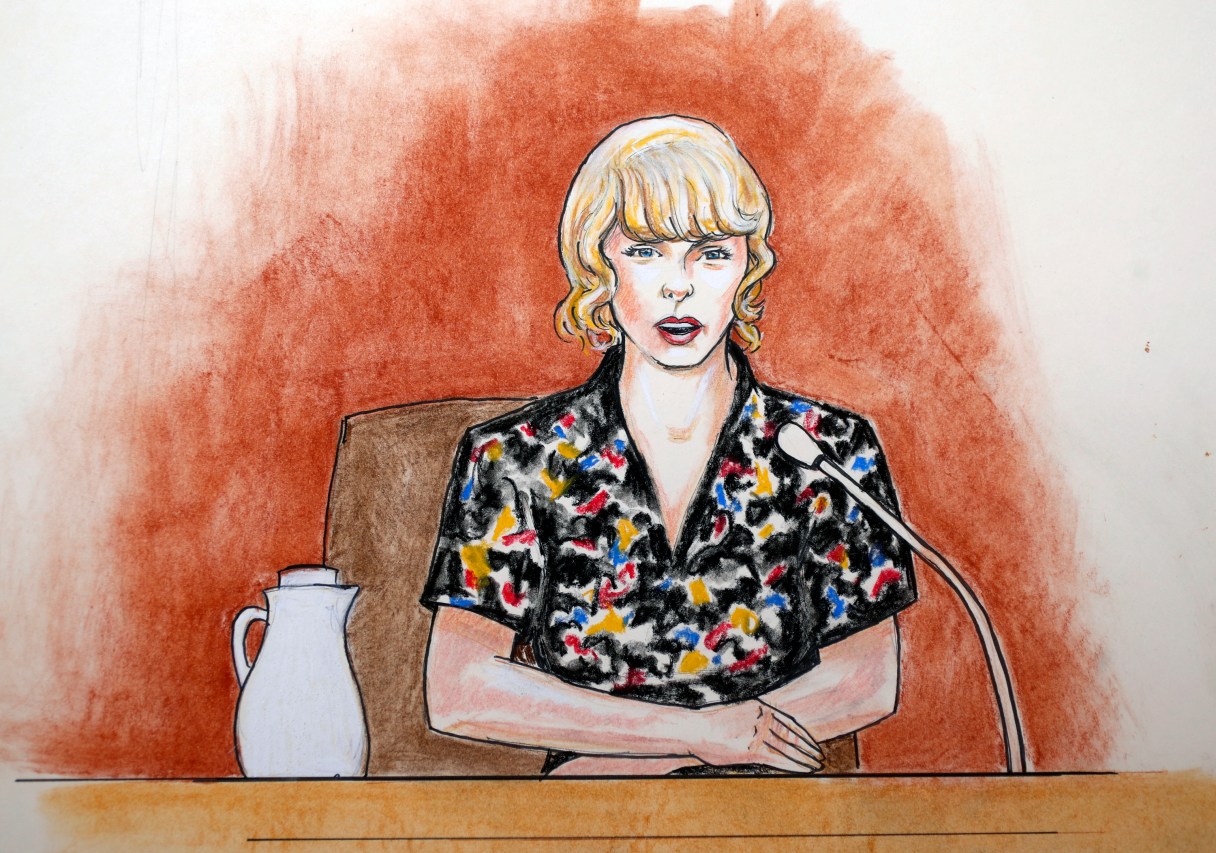
DENVER (AP) — Immediately after a jury determined that Taylor Swift had been groped by a radio station host before a concert in Denver, the singer-songwriter turned to one of her closest allies – her mother – and later said she hoped the verdict would inspire other victims of sexual assault.
Swift hugged her crying mother after the six-woman, two-man jury said in U.S. District Court on Monday that former Denver DJ David Mueller had groped the pop star during a photo op four years ago. Per Swift’s request, jurors awarded her $1 in damages – a sum her attorney, Douglas Baldridge, called “a single symbolic dollar, the value of which is immeasurable to all women in this situation.”
Swift released a statement thanking her attorneys “for fighting for me and anyone who feels silenced by a sexual assault.”
“My hope is to help those whose voices should also be heard,” she said, promising to make unspecified donations to groups that help victims of sexual assault.
Nancy Leong, a law professor at the University of Denver, said the verdict is important because “we are getting to the point in society that women are believed in court. For many decades and centuries, that was not the case.”