
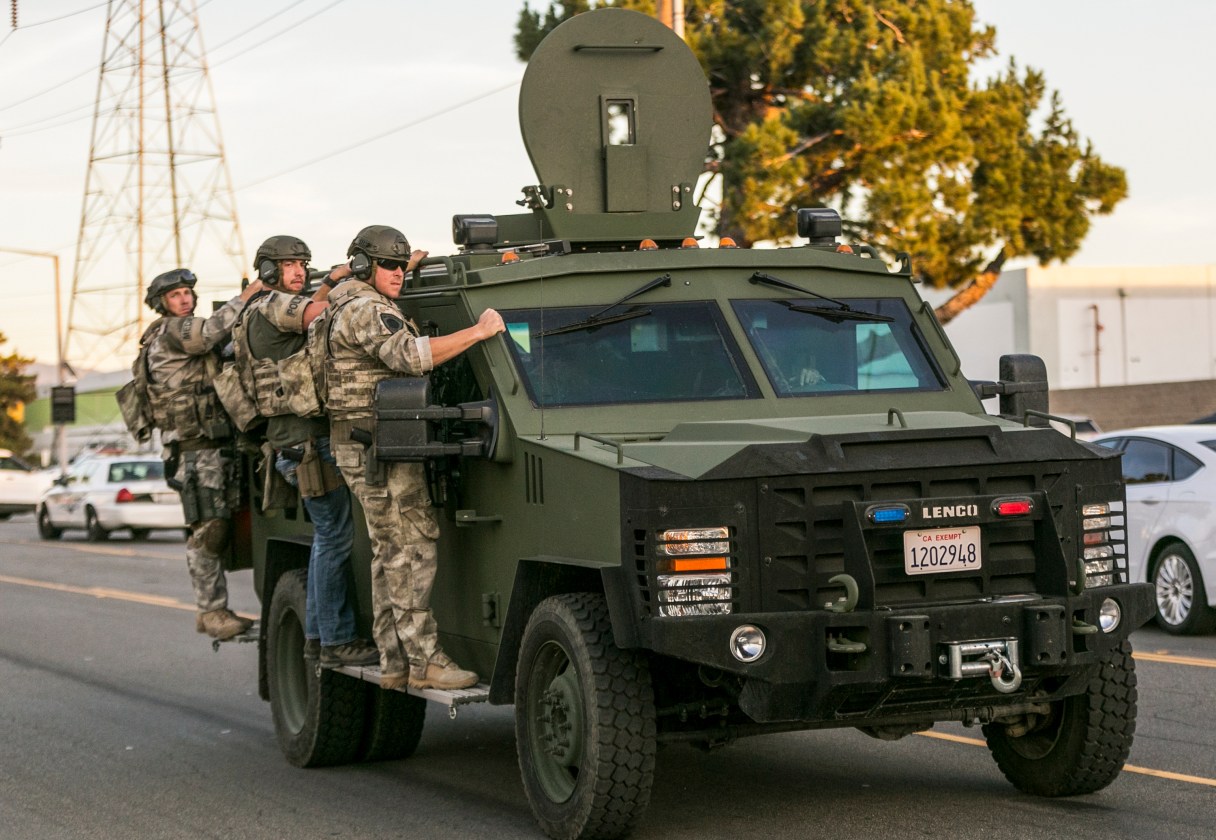
SAN BERNARDINO, Calif. (AP) – The terror attack that killed 14 people in California in December showed police need a protected radio channel and ambulance personnel need safety gear, emergency responders said Friday.
Police, fire and medical personnel lauded interagency working relationships during a state legislative hearing convened to learn what worked in the hours after a husband and wife opened fire on a luncheon for county health inspectors.
But they underscored the need for officers from diverse agencies to be able to communicate safely without worrying about details of a crime being broadcast live.
“Our radio traffic was playing out in real time across the nation,” said San Bernardino police Lt. Michael Madden, urging lawmakers to support efforts to enhance the security of communications. “That is an extremely precarious situation for first-responders in an incident of this magnitude to be put in.”
His comments came at a hearing of a joint legislative committee on emergency management called by state Assemblyman Freddie Rodriguez.
A similar hearing was held by the committee after the 2013 shooting death of a Transportation Security Administration worker at Los Angeles International Airport. The lessons learned from that hearing prodded state lawmakers to pass legislation requiring agencies to cooperate on active-shooter training, Rodriguez said.
Since the San Bernardino attack, law enforcement and medical personnel have been evaluating how they responded after Syed Farook and Tashfeen Malik killed 14 and wounded 22 others at the gathering for Farook’s colleagues at the San Bernardino County public health department.
Farook and Malik died hours later in a shootout with police on a busy street in the largely suburban community east of Los Angeles. The couple carried out the deadliest terror strike on U.S. soil since Sept. 11, 2001.
But David Molloy, operations manager of private ambulance company American Medical Response, said he was concerned medical responders went without helmets or safety vests to an active shooting scene when the whereabouts of Farook and Malik were still unknown.
“What would have happened if they would have come back to the scene, or the triage area, and my folks were not protected?” he said.