
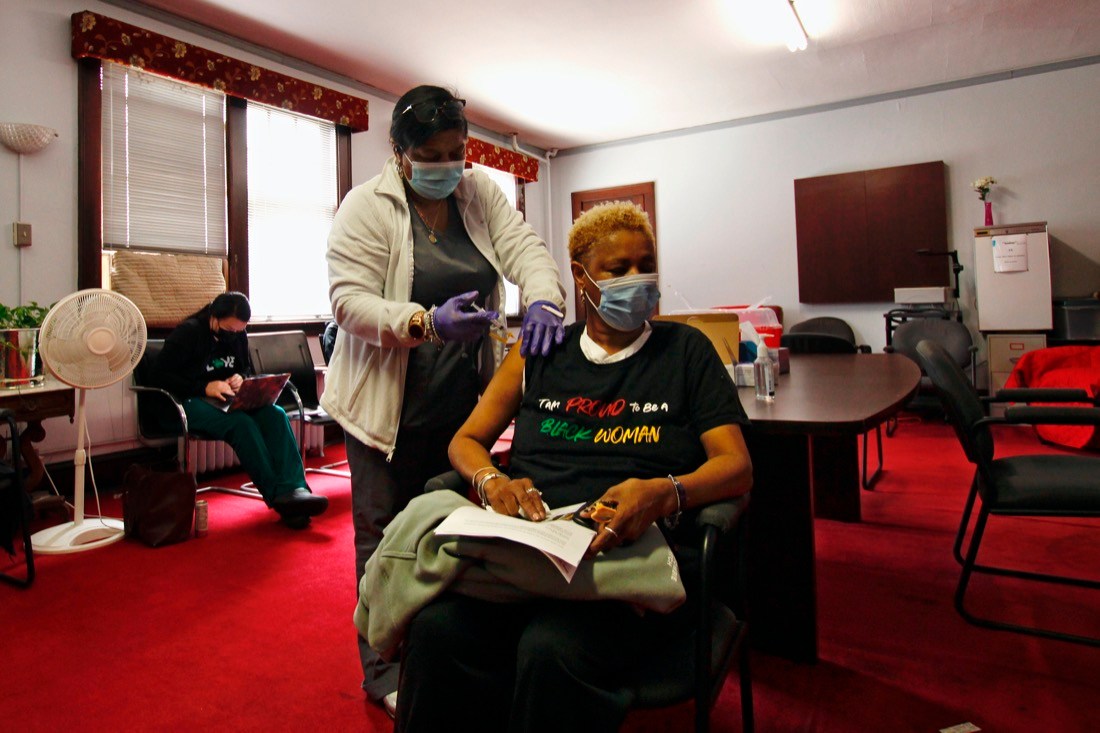
MILWAUKEE (AP) – Every Sunday at Friendship Missionary Baptist Church, the Rev. Joseph Jackson Jr. praises the Lord before his congregation. But since last fall he’s been praising something else his Black community needs: the COVID-19 vaccine.
“We want to continue to encourage our people to get out, get your shots. I got both of mine,” Jackson said to applause at the church in Milwaukee on a recent Sunday.
Members of Black communities across the U.S. have disproportionately fallen sick or died from the virus, so some church leaders are using their influence and trusted reputations to fight back by preaching from the pulpit, phoning people to encourage vaccinations, and hosting testing clinics and vaccination events in church buildings.
Some want to extend their efforts beyond the fight against COVID-19 and give their flocks a place to seek health care for other ailments at a place they trust – the church.
“We can’t go back to normal because we died in our normal,” Debra Fraser-Howze, the founder of Choose Healthy Life, told The Associated Press. “We have health disparities that were so serious that one pandemic virtually wiped us out more than anybody else. We can’t allow for that to happen again.”