
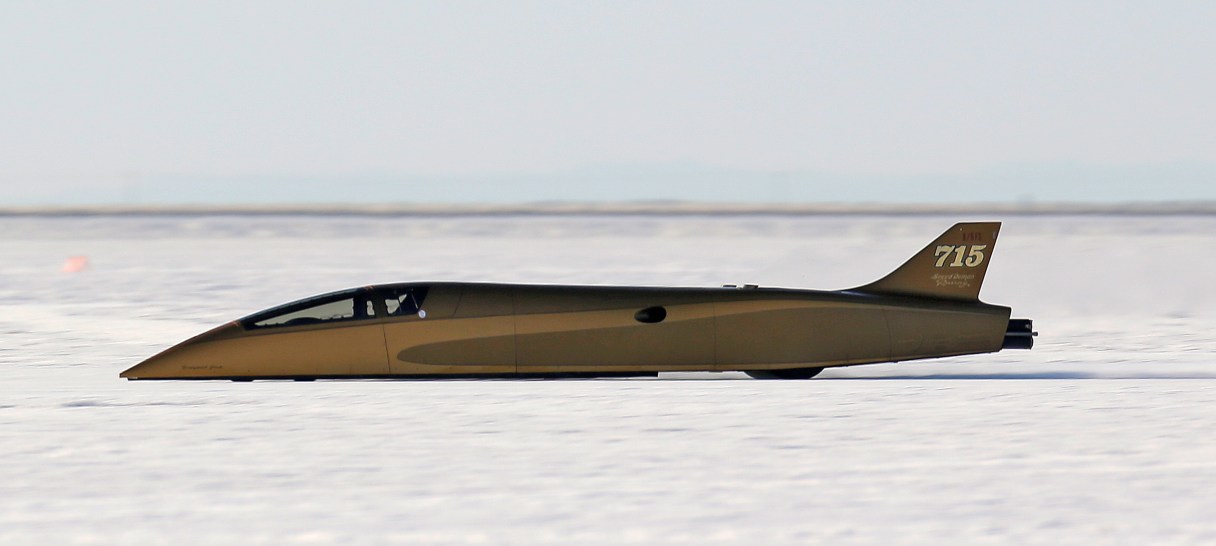
BONNEVILLE SALT FLATS, Utah (AP) – Blinding white salt stretches across the earth to distant purple mountain ranges, an otherworldly landscape famous for providing a natural track for racers seeking breakneck speeds but fragile enough that rain can easily break it down.
Thousands of adrenaline junkies have descended this week on Utah’s Bonneville Salt Flats, coming from as far away as New Zealand, Japan and Russia. In this stark place about 100 miles west of Salt Lake City, they have set up a caravan of campers, tents and trailers as they spend a week trying to beat the clock – some topping speeds of 400 mph.
They haul modified motorcycles, vintage hot rods and roadsters, and custom vehicles that look like rockets or spaceships, with names such as “Disturbing Da Peace” or “Loosenuts Special.” They’ll wait for hours in line under the brutal sun just to get a chance to zoom across the flats, hoping to see if their latest modifications help them beat their previous records or go fast enough to earn a spot in the “200 mph Club.”
While the racers are glad to be back at Speed Week, which runs through Friday, it’s a bittersweet return after a two-year hiatus marked by disappointments and accusations that federal land managers have failed to protect the unique area.
U.S. officials partly blame heavy rains and say they’re trying to preserve the salt by requiring a nearby mining company to pump brine onto the flats each year.