

Volkswagen posted a second straight global sales record in 2018, and the German automaker believes one of the ways to stay on top and compete to be the world’s biggest carmaker is electric vehicles.
That, as it turns out, is good news for Chattanooga, where VW will build a new seven-seat electric SUV in a new facility at its manufacturing plant here.
The announcement, made Monday at the North American International Auto Show in Detroit, will mean 1,000 or more new workers and an estimated $840 million additional investment by Volkswagen. That will bring the company’s total buy-in of the Scenic City to around $2.3 billion.
The carmaker’s presence in the city, county and region is good for jobs and investment, and it buoys the local economy because the newly employed need the likes of houses, groceries and gasoline. Those employees and their families also put money into local restaurants, entertainment and shopping centers.
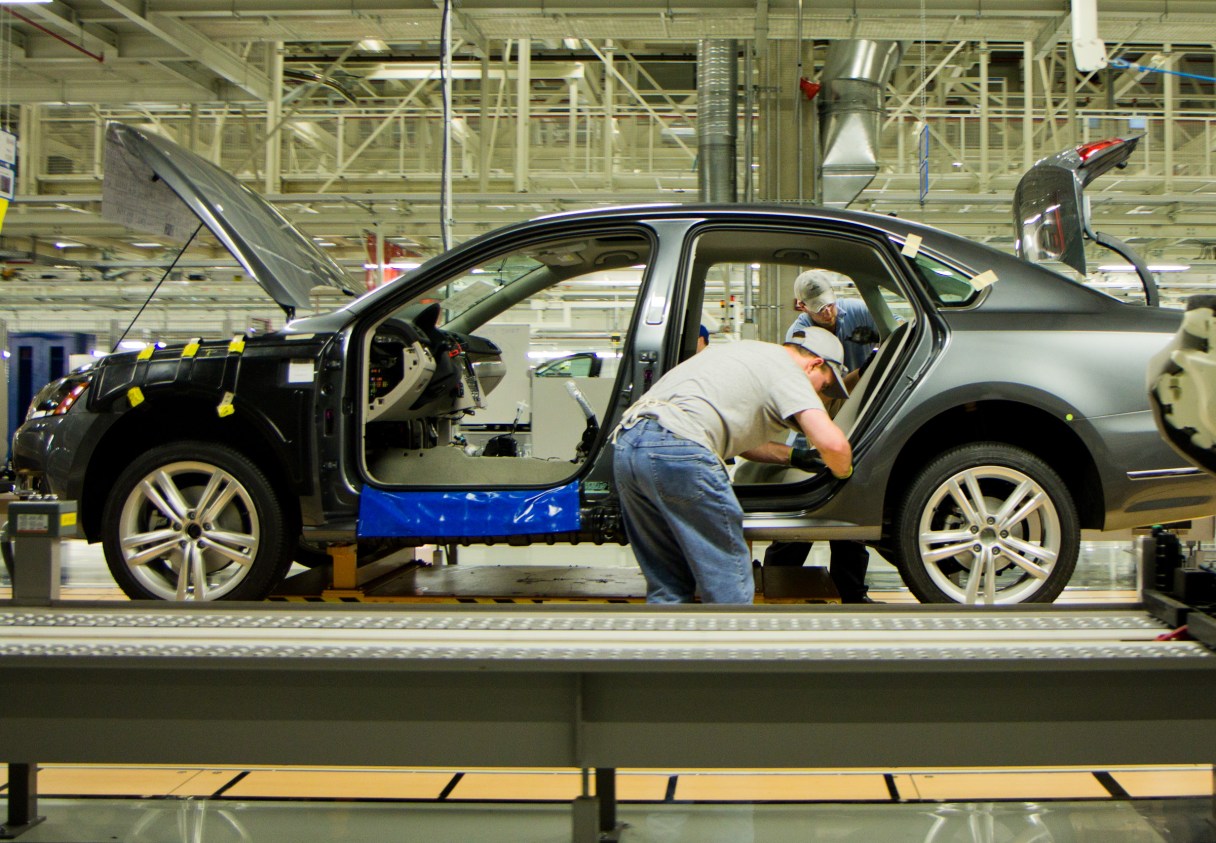
Currently, the Chattanooga plant employs about 3,500 people in making the Passat sedan and the seven-seat Atlas sports utility vehicle (and soon a five-seat version of the Atlas).
How serious is Volkswagen about electric vehicles? The company said late last year it hoped to be selling a million electric vehicles by 2025.
Although the manufacturer previously had talked about the possibility of making electric vehicles in Chattanooga, nothing was official until Monday when the announcement of its first electric manufacturing facility in the U.S. was revealed. It was said the first electric vehicle will roll out here in 2022.
The company also is building an electric vehicle plant in Zwickau, Germany, and adding electric car lines in two plants in China and two others in Germany. It has said it will commit almost $50 billion through 2023 toward the development of electric cars and attendant digital services.
Volkswagen dethroned Toyota as the world’s No. 1 automaker in 2016 and contested the top spot with the Renault-Nissan-Mitsubishi alliance in 2017.
It sold 10.83 million vehicles in 2018, beating its 2017 mark of 10.74 million, but how it did against other carmakers won’t be known until later this month.
What is known is that VW increased its share of the car market in China, its largest single market, by .5 percent even when the overall car market in the world’s largest country shrank by 1.2 percent.
That, said company marketing head Christian Dahlheim, was “a great result.”
The VW announcement, coincidentally, was one of two over the last several days involving what has become the Volunteer State’s largest industry.
On Sunday, General Motors announced its new Cadillac XT6 crossover vehicle would be manufactured at the carmaker’s plant in Spring Hill. GM had previously announced it would invest $300 million in the project and would increase its workforce by hundreds.
Spring Hill is the company’s largest facility in North America, spreading across 2,000 acres, employing about 3,400 workers and turning out the Cadillac XT5, GM Acadia and Holden Acadia (sold in Australia and New Zealand) models. It has invested about $2 billion in the plant since 2010.
The state’s automobile industry, which began in the mid-1980s with then-Gov. Lamar Alexander recruiting Nissan to Smyrna, now rolls out a new car every 20 seconds and generates around $12 billion in annual tax revenue for the state.
So prolific has the industry become that there are automotive operations, including more than 900 auto suppliers, in 87 of the state’s 95 counties.
What was not announced by Volkswagen or by state or local officials Monday was the amount of financial incentives the company will be given to locate its U.S. electric vehicle manufacturing facility here. No matter what the amount is, it is sure to be controversial in some circles. Yet, with the number of jobs to be added – not minimum-wage but living-wage jobs – the investment is sure to be worth it.
It would be difficult to argue that an industry that did not exist in the state 35 years ago, but is now its No. 1, is not worth significant state, county and city investment. When one adds the amount of money each employee then spends in his or her community, the return is astounding.
The next hurdle for Volkswagen will be convincing more of Middle America of an electric car’s viability. The company will be able to peddle its vehicles in Europe and China, where stringent environmental laws and available government subsidies enlarge the prospects for sales, but electric and plug-in hybrid vehicles accounted for just 2 percent of automobile purchases in the U.S. in 2018.
While the environmental attributes are clear, drivers will want their cars to have the range of a day’s drive and to know that charging stations are not hard to find. At best, those are a work in progress.
But by 2022 when VW rolls out that first electric vehicle, they may be more of a reality. In the meantime, the process in getting from here to there will be a boon for Chattanooga.