
Monday, November 16, 2026Nov 16

Coronavirus, Floyd death merge in brutal blow to Black well-being

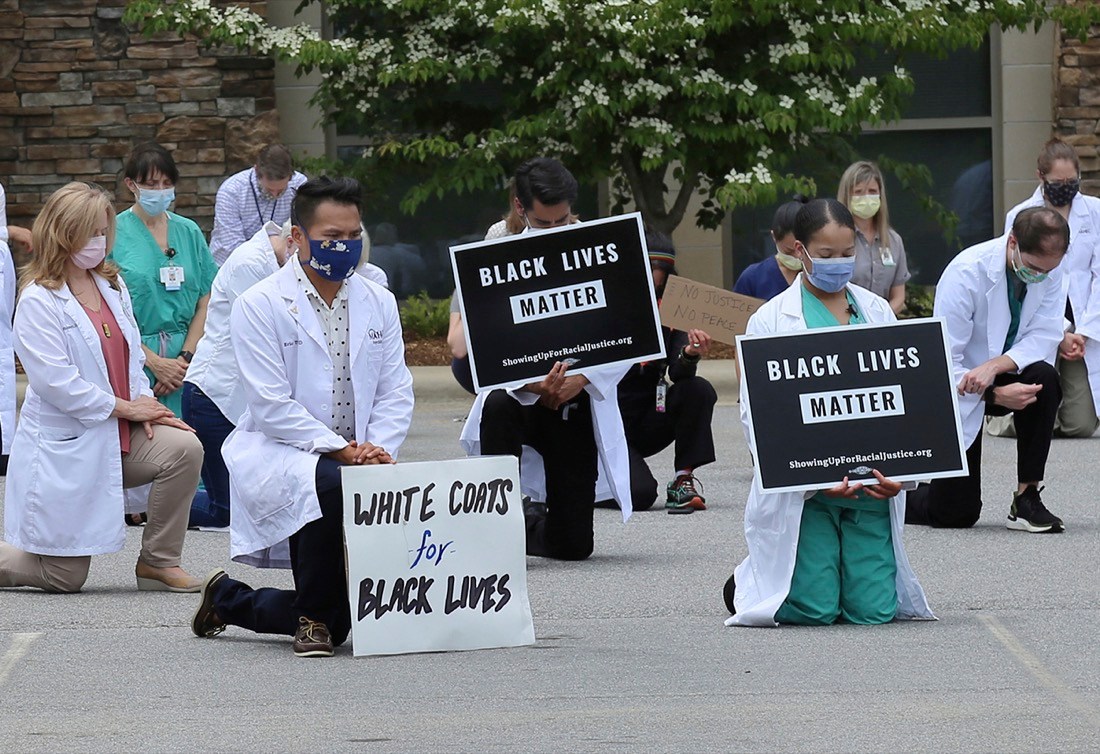
In this June 5, 2020 photo provided by the Mountain Area Health Education Center, physicians, residents and staff from the facility in Asheville, N.C., take a knee to show support for renewed calls for racial justice after the police killing of George Floyd. Government statistics from late January through May 30 suggest an increase in U.S. deaths from chronic diseases compared with historical trends. They include 7,000 excess deaths from hypertension, about 4,000 from diabetes and 3,000 from strokes -- all conditions that disproportionately affect Blacks, although the data don't include race. (Brenda Benik/MAHEC via AP)

Doctors have known it for a long time, well before the resounding cries of “Black Lives Matter”: Black people suffer disproportionately.

They face countless challenges to good health, among them food, transportation and income. The stress of living with racism has very real, physical effects. And they are especially prone to diabetes, hypertension and other chronic diseases that can be tricky to manage even in normal times.

Then came COVID-19 and George Floyd – one killing Black people in alarming numbers, the other shining a harsh light on systemic racism. In a matter of months and nearly 8 minutes, it became clear that institutions designed to ensure the two most important things in life – health and safety – had converged to turn against one segment of the population in stark, horrific ways.

It’s a brutal blow to Black people’s well-being and renewed calls for racial justice in all realms including health care. Doctors and their patients are reeling from the impact.

“We are exhausted and we are not OK,” said Dr. Patrice Harris, a psychiatrist who just ended her yearlong term as president of the American Medical Association. She was speaking not so much for herself as for her community.