
Friday, November 13, 2026Nov 13

Whole Foods to roll out rankings for produce

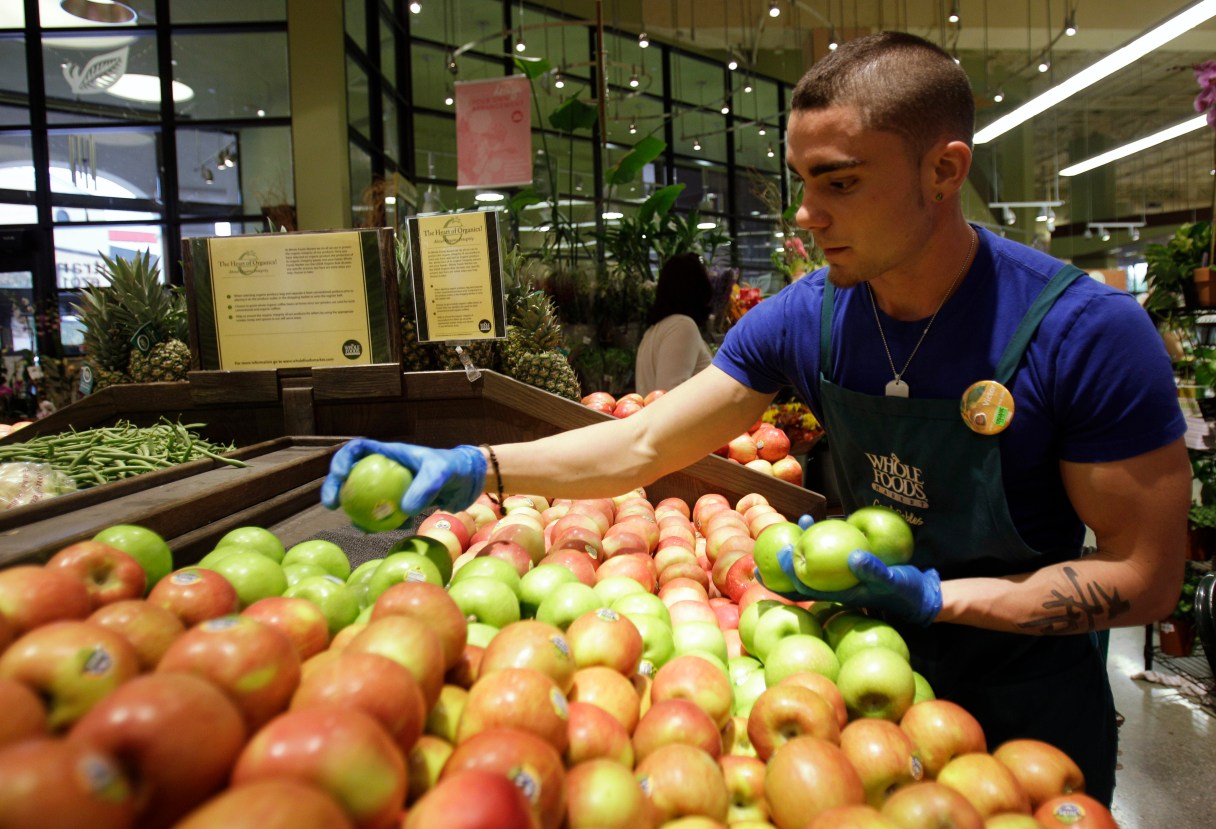
FILE - In this Nov. 3, 2010 file photo, Victor Hernandez stocks apples in the produce section at Whole Foods, in Coral Gables, Fla. Whole Foods on Wednesday, Oct. 15, 2014 plans to start rolling out a system that ranks fruits and vegetables as "good," ''better" or "best" based on the supplier's farming practices. (AP Photo/Lynne Sladky, File)
FILE - In this Nov. 3, 2010 file photo, Victor Hernandez stocks apples in the produce section at Whole Foods, in Coral Gables, Fla. Whole Foods on Wednesday, Oct. 15, 2014 plans to start rolling out a system that ranks fruits and vegetables as "good," ''better" or "best" based on the supplier's farming practices. (AP Photo/Lynne Sladky, File) FILE - In this Nov. 3, 2010 file photo, Victor Hernandez stocks apples in the produce section at Whole Foods, in Coral Gables, Fla. Whole Foods on Wednesday, Oct. 15, 2014 plans to start rolling out a system that ranks fruits and vegetables as "good," ''better" or "best" based on the supplier's farming practices. (AP Photo/Lynne Sladky, File)

NEW YORK (AP) – Whole Foods plans to start rolling out a system that ranks fruits and vegetables as “good,” ”better” or “best” based on the supplier’s farming practices.

Most notably, the supermarket chain says its “responsibly grown” labeling system for produce and flowers will prohibit the use of several common pesticides. The rankings will also take into account factors such as water and energy use.

The program will start appearing in the nearly 400 Whole Foods stores in the U.S. and Canada starting Wednesday, with the rankings being noted on signs where prices are listed. Not all produce and flowers that Whole Foods sells will qualify.

The standards were developed by Whole Foods and are not an official government designation.

Whole Foods is trying to draw a sharper distinction between itself and its competitors, in part by making shoppers feel more empowered about their purchasing decisions. The grocery chain already has ranking systems for meat and seafood, which takes into account animal welfare and sustainability standards, respectively.