
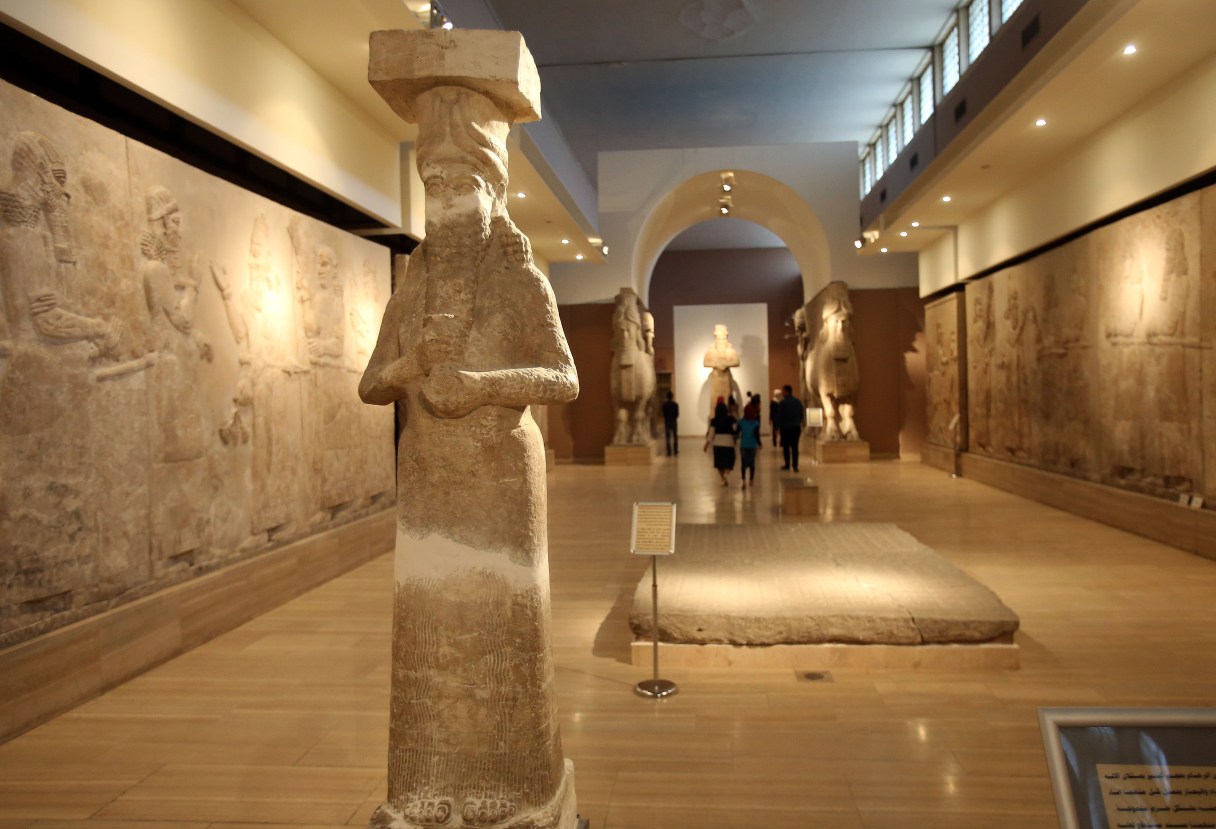
BAGHDAD (AP) – The videos of Islamic State militants destroying ancient artifacts in Iraq’s museums and blowing up 3,000-year-old temples are chilling enough, but one of Iraq’s top antiquities officials is now saying the destruction is a cover for an even more sinister activity – the systematic looting of Iraq’s cultural heritage.
In the videos that appeared in April, militants can be seen taking sledge hammers to the iconic winged-bulls of Assyria and sawing apart floral reliefs in the palace of Ashurnasirpal II in Nimrud before the entire site is destroyed with explosives. But according to Qais Hussein Rashid, head of Iraq’s State Board for Antiquities and Heritage, that was just the final step in a deeper game.
“According to our sources, the Islamic State started days before destroying this site by digging in this area, mainly the palace,” he told The Associated Press from his office next to Iraq’s National Museum – itself a target of looting after the 2003 U.S.-led invasion that ousted Saddam Hussein. “We think that they first started digging around these areas to get the artifacts, then they started demolishing them as a cover up.”
While there is no firm evidence of the amount of money being made by the Islamic State group from looting antiquities, satellite photos and anecdotal evidence confirm widespread plundering of archaeological sites in areas under IS control.
Nimrud was also the site of one of the greatest discoveries in Iraqi history, stunning golden jewelry from a royal tomb found in 1989, and Rashid is worried that more such tombs lie beneath the site and have been plundered. He estimated the potential income from looting to be in the millions of dollars.