
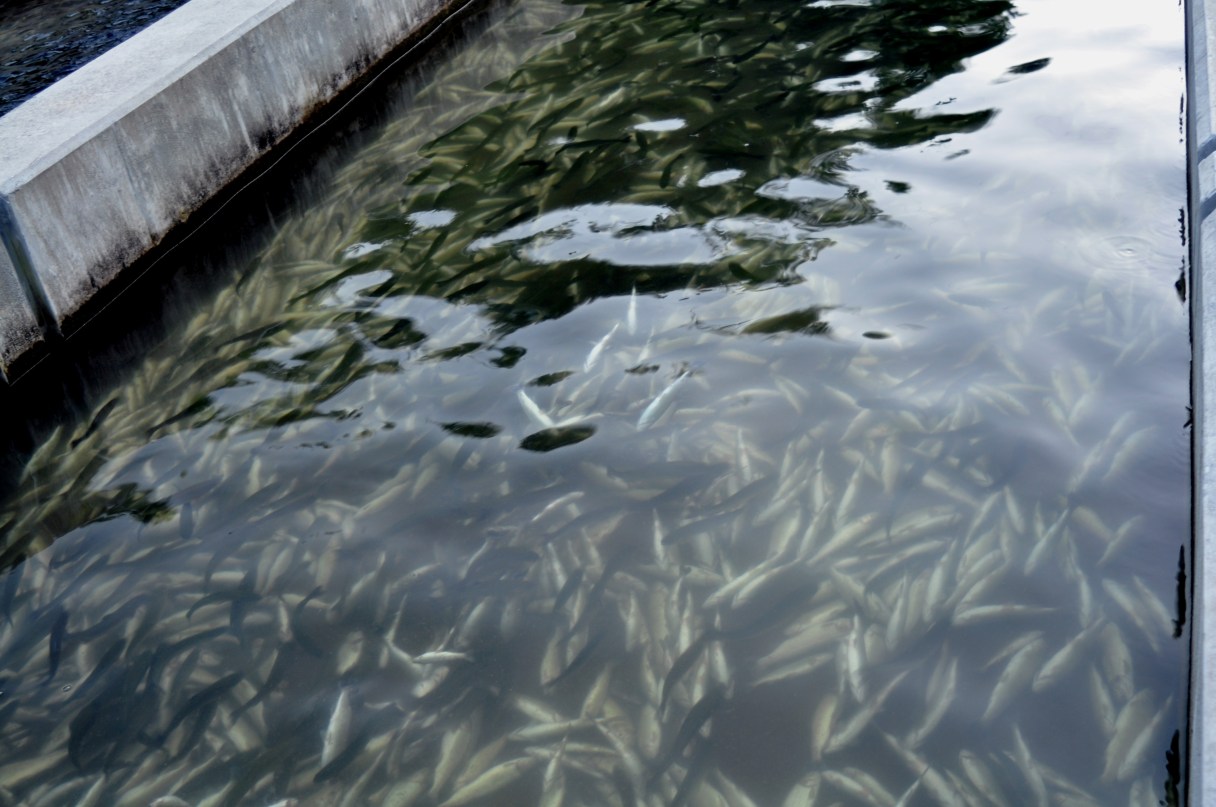
An estimated 50,000 rainbow trout being raised at the Chattahoochee Forest National Fish Hatchery were killed early on June 4 when someone came onto the property and cut off the main water supply line, according to the U.S. Fish and Wildlife Service and hatchery project leader Kelly Taylor.
The rainbow trout were scheduled to be released this year in streams and rivers across North Georgia.
“When you come in and see all those dead fish in the bottom it looks bad,” Taylor said.
 Dead rainbow trout are seen in a raceway at Chattahoochee Forest National Fish Hatchery the morning of June 4, 2018. Officials believe someone came onto the property and cut off the main water supply line to the hatchery. (Contributed photo/U.S. Fish and Wildlife Service)
However, he is hopeful that the incident won’t have a major impact on plans to restock the fish. The hatchery is one of three across the state taking part in a program to replenish rainbow trout in Georgia. The hatcheries have had a “great year this year,” Taylor said, so he believes the program still will be able to adequately stock the region.
Dan Chapman with the U.S. Fish and Wildlife Service said the problem could have been much worse. The fish killed were only a fraction of those at the hatchery, and a tree branch got stuck in the water supply gate, allowing some water to continue flowing through, he said.