
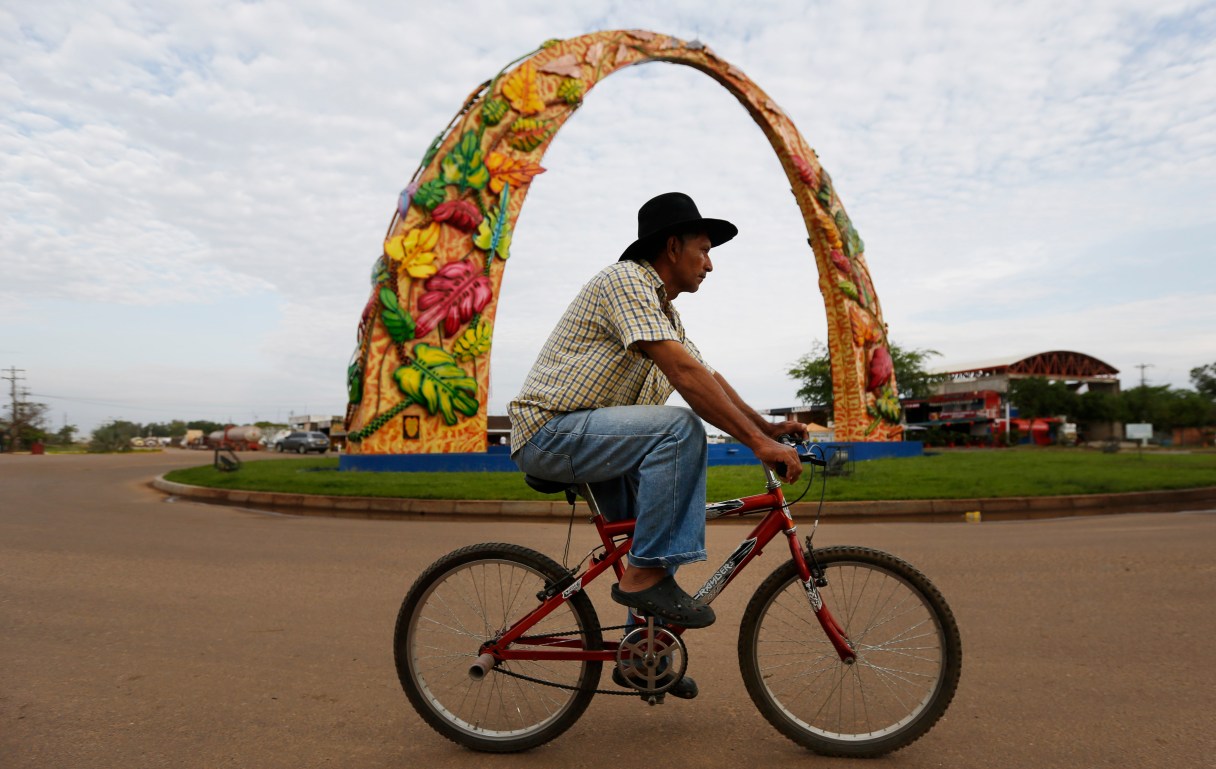
PUERTO GAITAN, Colombia (AP) – Soaring oil prices the past decade transformed this rural backwater into Colombia’s richest city as nearby fields pumped black gold, drawing new businesses, international pop stars and vanity art projects such as the biblical-themed arch that towers over these sweltering grasslands.
Now, crashing crude prices have the 45,000 residents of Puerto Gaitan bracing for a big fall, or already packing their bags. Many are questioning how the windfall was spent.
“Things are going badly but we haven’t touched bottom yet,” said Edgar Candelo, who lost his job driving a tanker at the Rubiales oil field, which pumps out a quarter of Colombia’s crude. With no prospects in sight, the 46-year-old says he is leaving Puerto Gaitan for a job at half the pay hundreds of miles away.
Similar upheaval is taking place across much of Latin America, where oil prices have fallen by nearly half since September, threatening to pull the rug out from under a decade-long economic boom. And the region’s leftist governments, which used the bonanza to lavish spending on social programs that entrenched them in power, now find themselves in the position of having to slash budgets amid rising social tensions.
Across the region, from the shale deposits of Patagonia to Mexico, where the government is rolling out a historic oil reform, nervousness is widespread. Drilling projects that proliferated over the past decade are being shelved and the Bank of America last month cut to 1.3 percent from 1.8 percent its forecast for the region’s economic growth this year.