
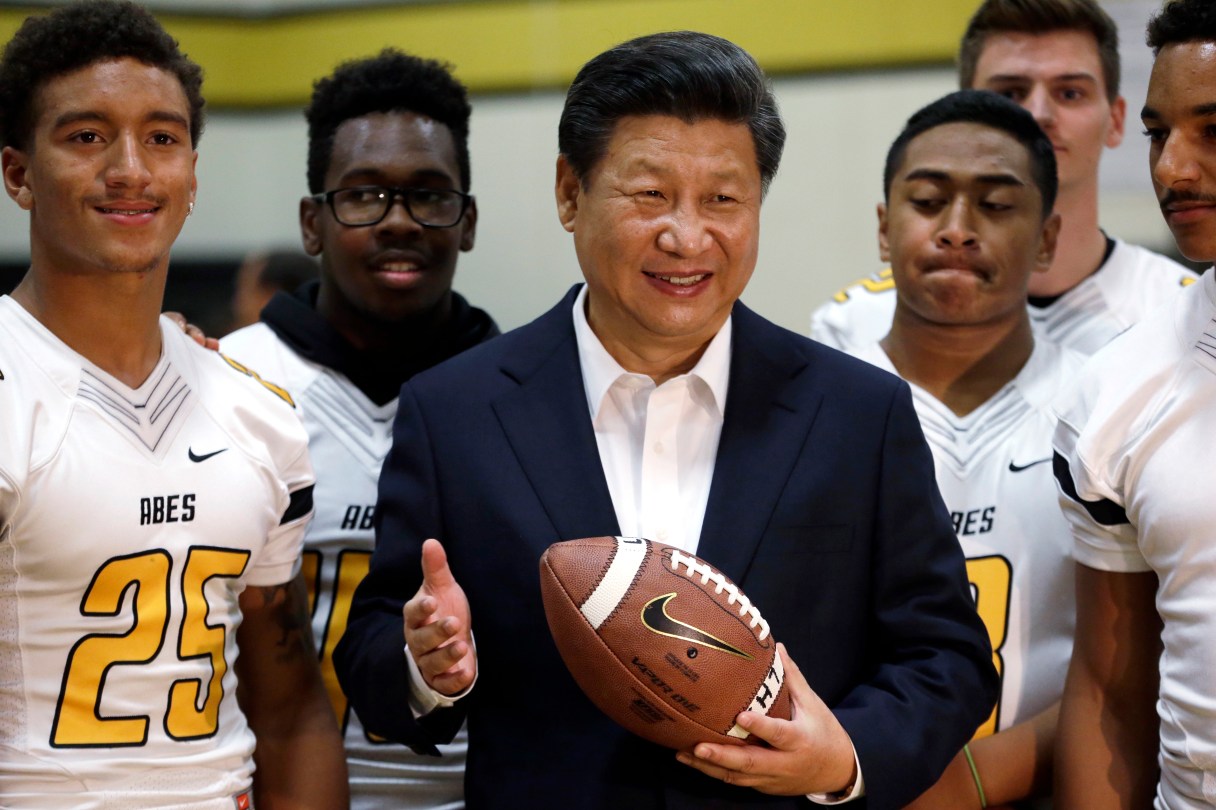
SEATTLE (AP) – With his feel-good tours of Boeing, Microsoft and a local high school complete, Chinese President Xi Jinping departs Washington state Thursday for the other Washington, where tougher discussions on cybersecurity, intellectual property protections and human rights await.
President Barack Obama’s administration said this week that he won’t paper over disagreements between the two countries on those topics, even as the leaders find ground where they can work together on other issues, including trade and climate change.
Xi struck a gracious tone during his 48-hour stay in Seattle, during which he toured Boeing’s plant in Everett, visited Microsoft’s campus in Redmond, and received a football jersey with his name on it from high school students in Tacoma.
In his public remarks, at a dinner banquet and at a meeting of top corporate leaders from both nations, Xi stressed the importance of U.S.-China business relations and vowed that his country would work to remove barriers to foreign investment and to improve intellectual property protections.
He also expressed a willingness to work with the U.S. on cybersecurity – a priority for Washington. White House officials have said hacking attacks originating from China are approaching epidemic levels. The administration believes Chinese espionage was behind one of the worst U.S. government data breaches in history, the theft of fingerprint images of those applying for security clearances. On Wednesday, the Office of Personnel Management announced that an estimated 5.6 million images were stolen – not 1.1 million as first thought.