
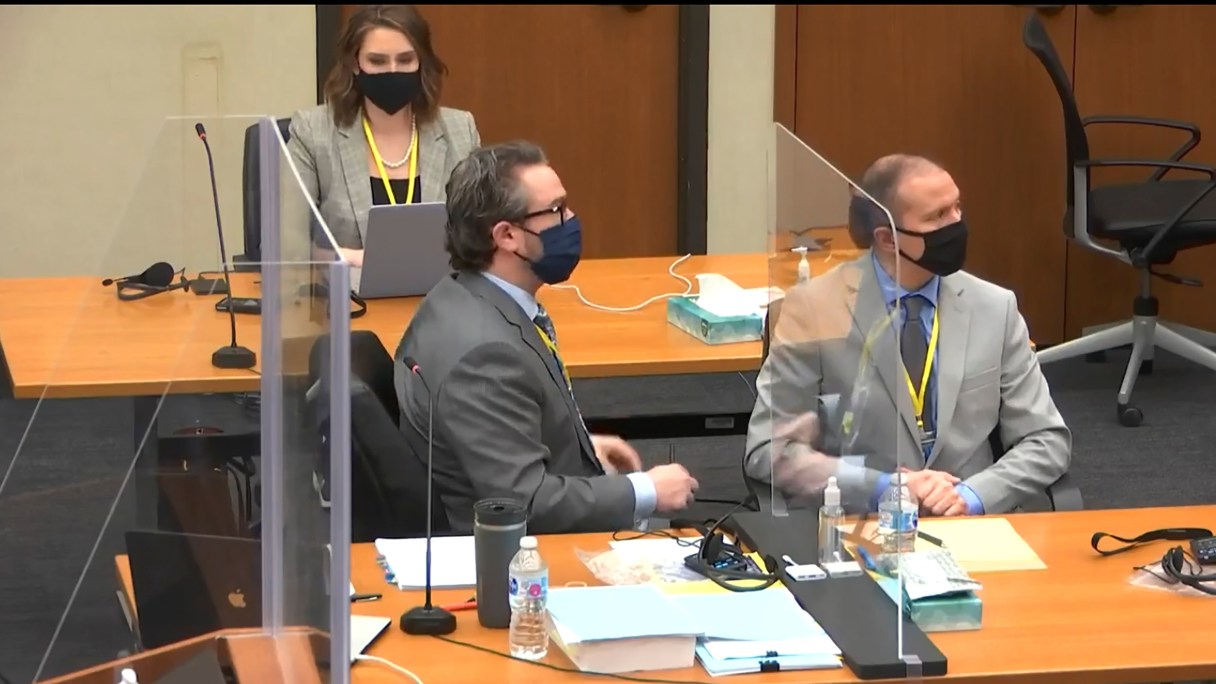
MINNEAPOLIS (AP) – Because the trial of a former Minneapolis police officer charged in George Floyd’s death is being held during the coronavirus pandemic, the courtroom has been overhauled for safety.
Gone are the traditional jury box and gallery, replaced with widely spaced seats and desks for a limited contingent of attorneys, jurors and media. Plexiglas barriers and hand sanitizer are everywhere, and the participants – even the judge – wear masks.
The pandemic has upended court systems across the country, delaying jury trials and creating huge backlogs of cases. Video and teleconference hearings have allowed judges to keep the wheels of justice grinding, albeit slowly. Many courts have installed barriers or moved jury orientation and even trials themselves to bigger spaces such as convention centers to get at least some jury trials going again.
In Minnesota, in-person criminal jury trials have been mostly on hold since November. Chief Justice Lorie Gildea last month allowed them to resume effective March 15, with proper safety protocols consistent with guidance from the Centers for Disease Control and Prevention and the Minnesota Department of Health. Most other proceedings will continue to be held remotely through April 30. A handful of exceptions have been allowed, including for the trial of Derek Chauvin’s trial, the former Minneapolis officer charged in Floyd’s death.
“We are gradually increasing in-person activities in court facilities in a safe and responsible manner that will allow the courts to fulfill our constitutional obligation, while we continue to do all that we can to protect public health and safety,” Gildea said in a statement.