
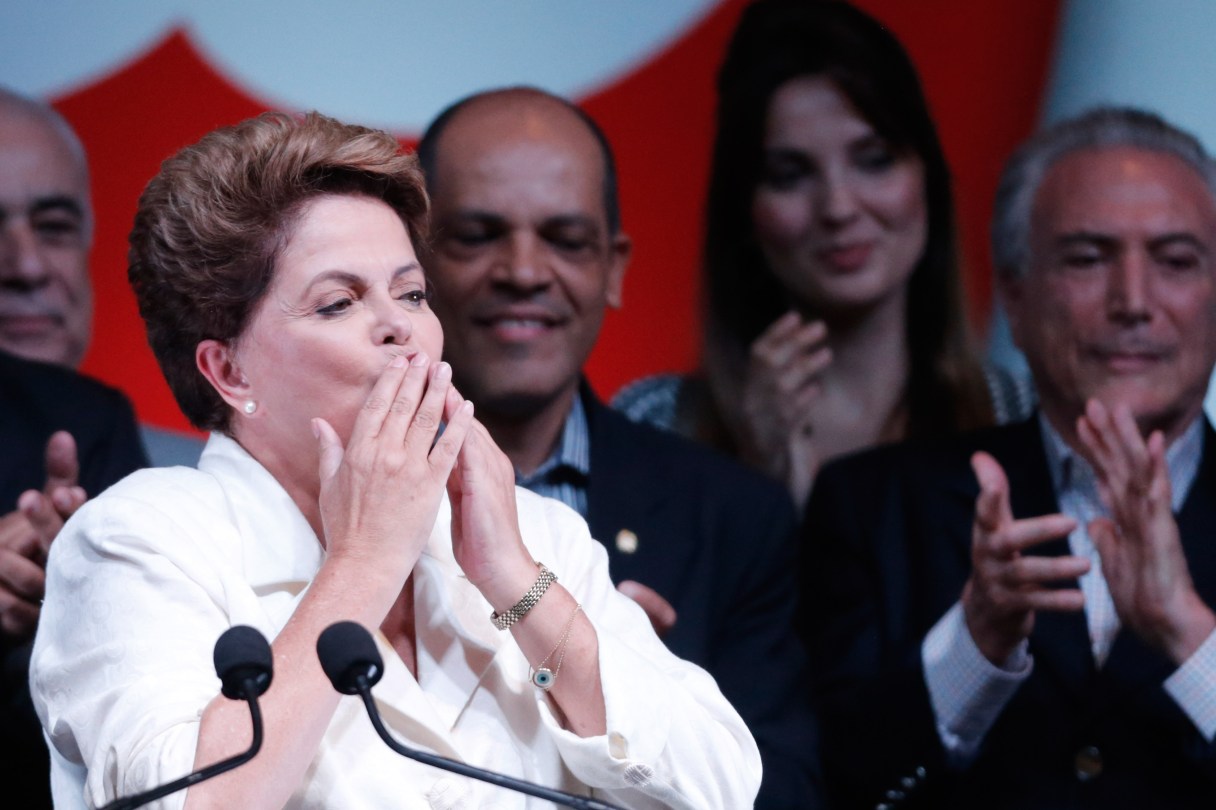
RIO DE JANEIRO (AP) – Brazil’s re-elected leader Dilma Rousseff on Monday faced a house divided after a bitterly fought election that ended with the narrowest presidential win since the nation’s return to democracy three decades ago.
In her victory speech, Rousseff said her first task will be to seek reconciliation and to build bridges to those who didn’t vote for her.
“This president is willing to dialogue and that’s the first promise of my second term, to have a dialogue,” she said before cheering supporters in Brasilia.
But what’s not clear is how far the famously stubborn Rousseff will reach out or to what extent a highly fragmented opposition and a Congress that now has 28 parties wants to work with her, principally on long-delayed structural changes and shorter-term measures needed to boost a stagnant economy, nor on political reforms that Brazilians demand.
“We’ve never seen an election that’s been this divisive,” said Paulo Sotero, director of the Brazil Institute at the Woodrow Wilson International Center for Scholars in Washington. “The things said during the campaign, by both sides, will make it very difficult for the nation to come together quickly.”