
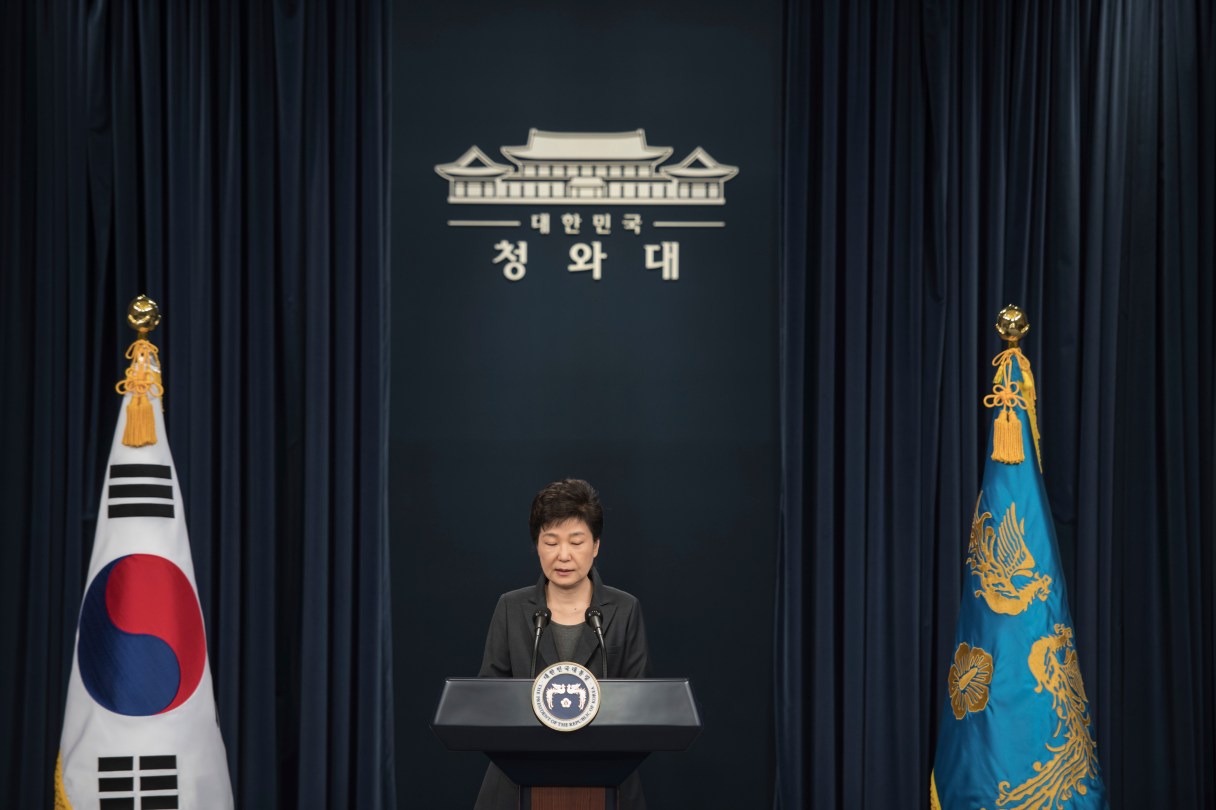
SEOUL (AP) – She was the secret power behind the South Korean throne, the first allegations said, a mysterious woman whose influence reached deep into the presidential mansion and guided many of the president’s public relations efforts.
She is Choi Soon-sil, the daughter of a cult leader and a longtime friend to President Park Geun-hye. And so far, about the only thing that South Korea knows for sure is that Choi edited some of the president’s speeches.
But as the political furor has grown, the rumors – widely reported here, widely believed and repeated regularly by the political opposition – have grown as well, permeating almost every corner of South Korean society.
By Friday, Choi had been accused of everything from swaying the careers of pop singers to helping craft North Korea policy to influencing Seoul’s multi-billion-dollar purchase of American F-35 fighter jets. With rumors flying, a string of celebrities, from the rapper PSY to a former Miss Korea, have issued statements denying links to Choi’s family or distancing themselves from the scandal.
Such allegations may seem ridiculous, but the gladitorial combat of South Korean politics – and the country’s long traditions of official corruption and influence-peddling – have bred a deep public cynicism. This is a country, after all, where one former president was ordered to repay more than $200 million he had taken in bribes, and another killed himself in 2009 amid a bribery investigation by throwing himself off a cliff.