
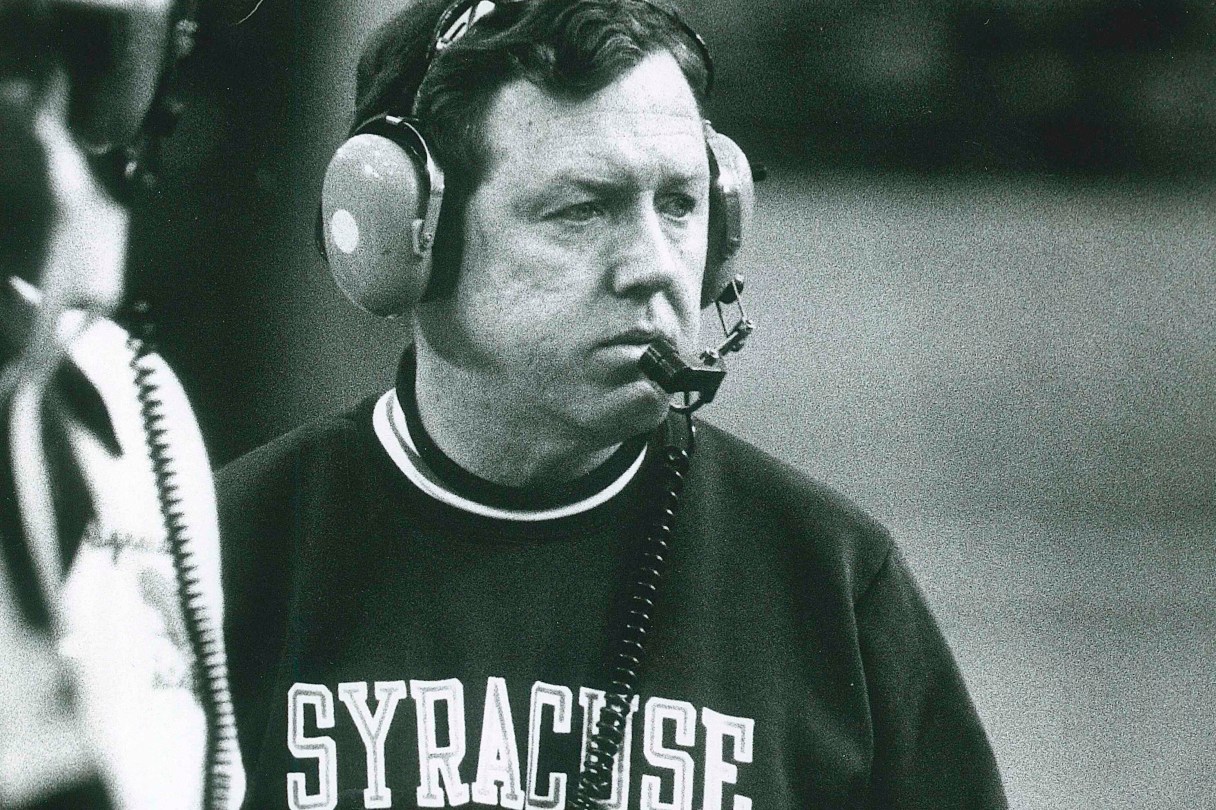
SYRACUSE, N.Y. (AP) – Former Syracuse football coach Frank Maloney, who succeeded the winningest coach in school history when the program was in decline, has died. He was 79.
Maloney died Monday at his home in Chicago, his family told the university. The cause was metastic brain cancer, according to Syracuse.com.
“We are deeply saddened to learn of the passing of coach Maloney. Our hearts go out to his family, friends and former players,” Syracuse athletic director John Wildhack said. “Coach Maloney led our football team during a time of transition.”
Maloney played center and guard at Michigan from 1959-61 and served as an assistant coach, mostly under Bo Schembechler, at his alma mater from 1968-73. He was hired at Syracuse to succeed Hall of Famer Ben Schwartzwalder, who had won 153 games since 1949 and guided the Orange to their lone national championship in 1959.
Maloney inherited a team that had finished 2-9 in Schwartzwalder’s final season and guided the Orange for seven seasons. His teams went 32-46 from 1974-80 at a school with a deteriorating stadium and financial troubles that had mulled not playing major college football in the aftermath of a boycott by nine players who had demanded change and racial equality in 1969.