
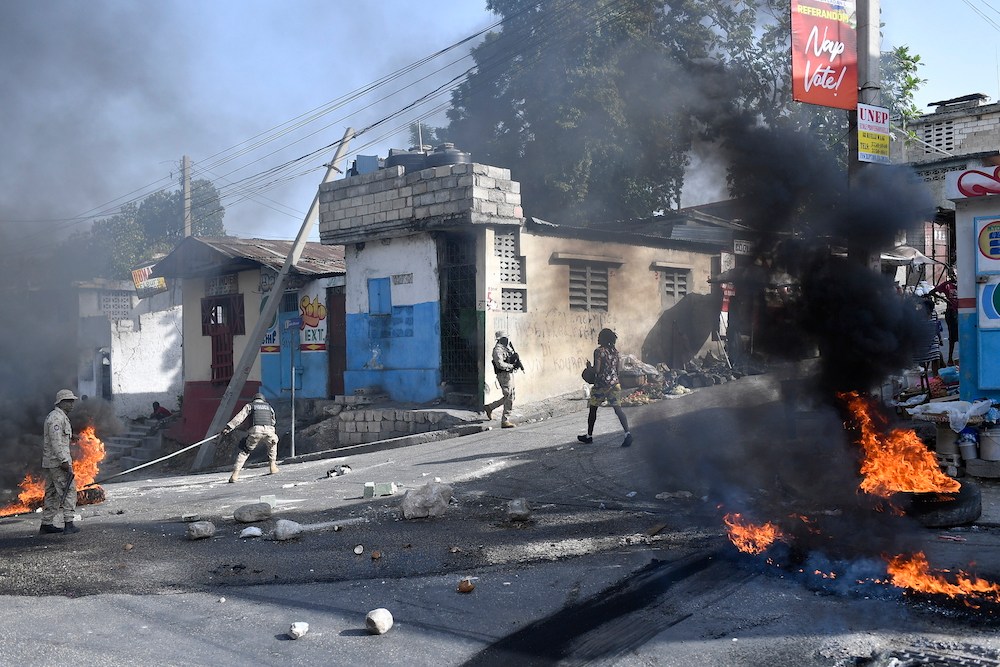
When it comes to Haiti, Joe Biden’s instincts are right: The best the United States can do is to do as little as possible – and, if possible, a bit less.
What the U.S. owes Haiti is what it’s already giving: legal and forensic aid to investigate the assassination of President Jovenel Moïse. Two Haitian Americans reportedly participated in carrying out the plot. Christian Emmanuel Sanon, a Haitian-born doctor based in Florida, has been arrested in Haiti on allegations that he ordered the assassination to make himself president. Former Colombian soldiers suspected of belonging to the hit squad had been hired by CTU Security, a firm based near Miami and run by a Venezuelan émigré.
But if U.S. authorities can help Haiti establish the facts about Moïse’s murder, they cannot help the country change the facts that led up to it – the endemic corruption, rampant lawlessness and institutional decay that have long crippled Haiti, and that make nearly every form of foreign assistance not only useless but also harmful.
That starts with the military intervention that the interim prime minister, Claude Joseph, requested of Washington. The U.S. has a history of sending troops to Haiti, from the long occupation begun by Woodrow Wilson to Bill Clinton’s invasion on behalf of the demagogic priest Jean-Bertrand Aristide to briefer intercessions by George W. Bush and Barack Obama.
With the exception of the last of these – a limited humanitarian operation in the wake of the catastrophic 2010 earthquake – none of the interventions left Haiti better off. Worse have been deployments of U.N. peacekeepers, whose shameful contributions included child sex abuse and a cholera epidemic that killed thousands.