
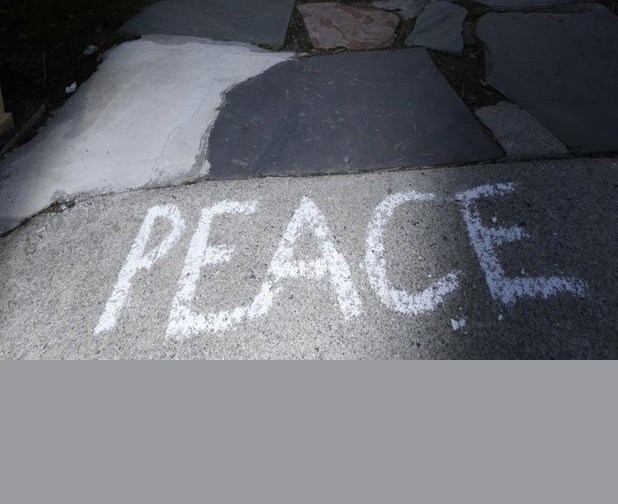
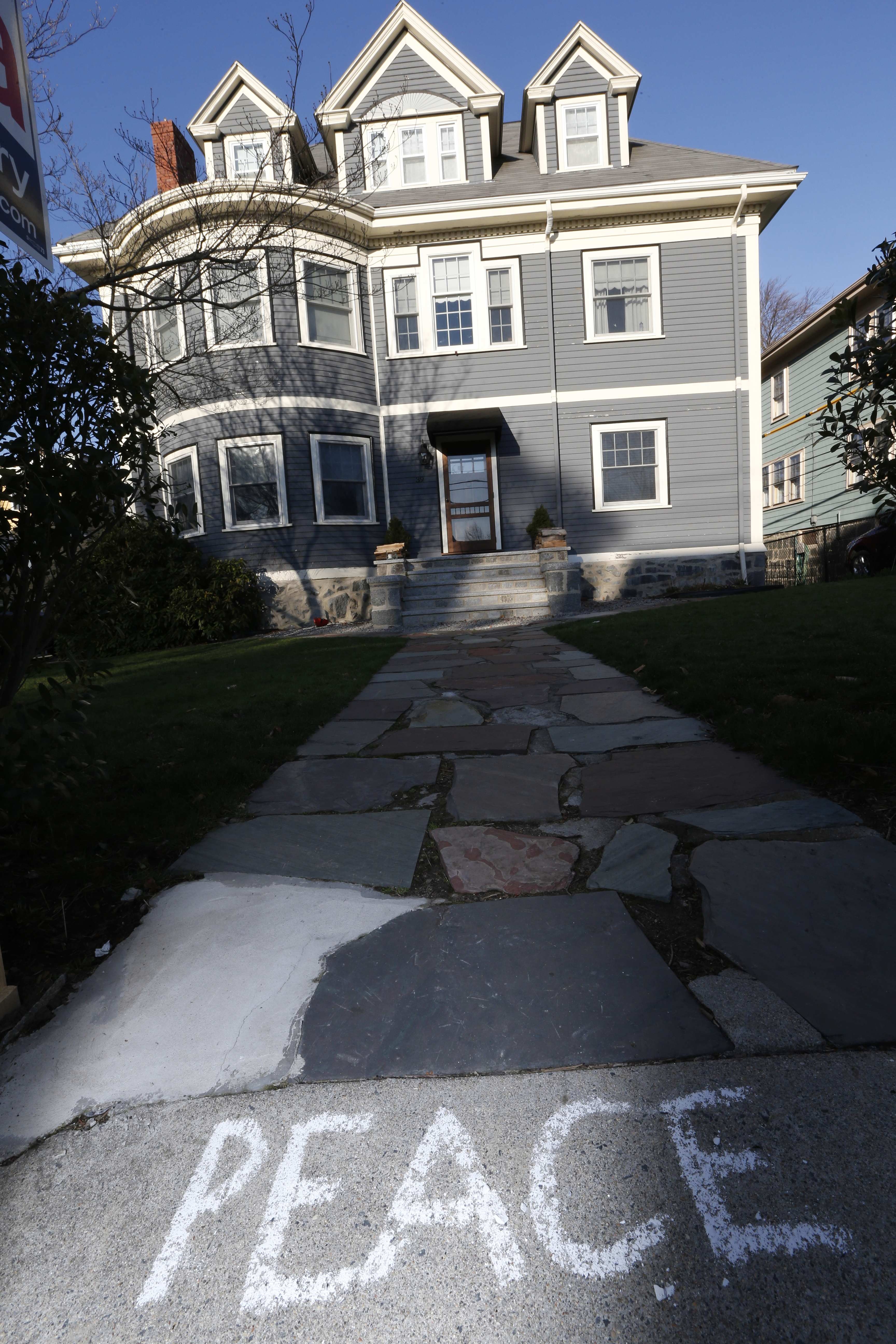
 Peace is written on the sidewalk in front of the home of Martin Richard, 8, who was killed in Monday’s bombing at the finish line of the Boston Marathon.
The bombs that shattered the Boston Marathon on Monday understandably aroused a range of emotions – compassion for the victims, horror at the needless carnage and the lurking fear of our nation’s vulnerability to random acts of terror. Given what Americans learned in the wake of the 9/11 terrorist attacks and the Oklahoma City bombing by an American renegade six years earlier, a latent fear of terrorist acts is understandable. We may not know the who and the why of Boston’s evildoers, their origin or their motive. But whether domestic or foreign, we know at our core the visceral uncertainty that random acts of terror evoke.
In this case, there is some solace in the inspirational courage of emergency responders and brave citizens who rushed into the danger zone to attend to the victims. There’s additional comfort in the resolve President Obama expressed regarding the federal agents’ pursuit of certain justice against the perpetrator or perpetrators.
After the relentless decadelong pursuit that finally brought Osama bin Laden to justice on Obama’s watch, there is reason to believe the perpetrator will be found and prosecuted, however long it takes. That doesn’t dilute the jarring sense of vulnerability in an open society such as ours, but it does affirm the sense that a terrorist cannot escape accountability for barbarous acts.
There ultimately can be no assurance, however, that a treasonous American militia member or an aggrieved foreign terrorist, or simply a deranged bomb maker, cannot or will not strike again. Yet perfect public safety is an illusion. Our society is far too open to achieve impenetrable security. Our vulnerability is also leavened by our diversity, size and basic sense of normalcy. A lull after an attack elsewhere quickly dilutes the sort of urgency and palpable fear that are requisites for a sustainable focus on public security.
The available venues for a terror strike, moreover, are so great that paying the freight for continual wall-to-wall public security has become impossible. From jammed major football stadiums to massive shopping malls to huge churches, colleges and business campuses that house thousands, other targets will always be readily accessible.