
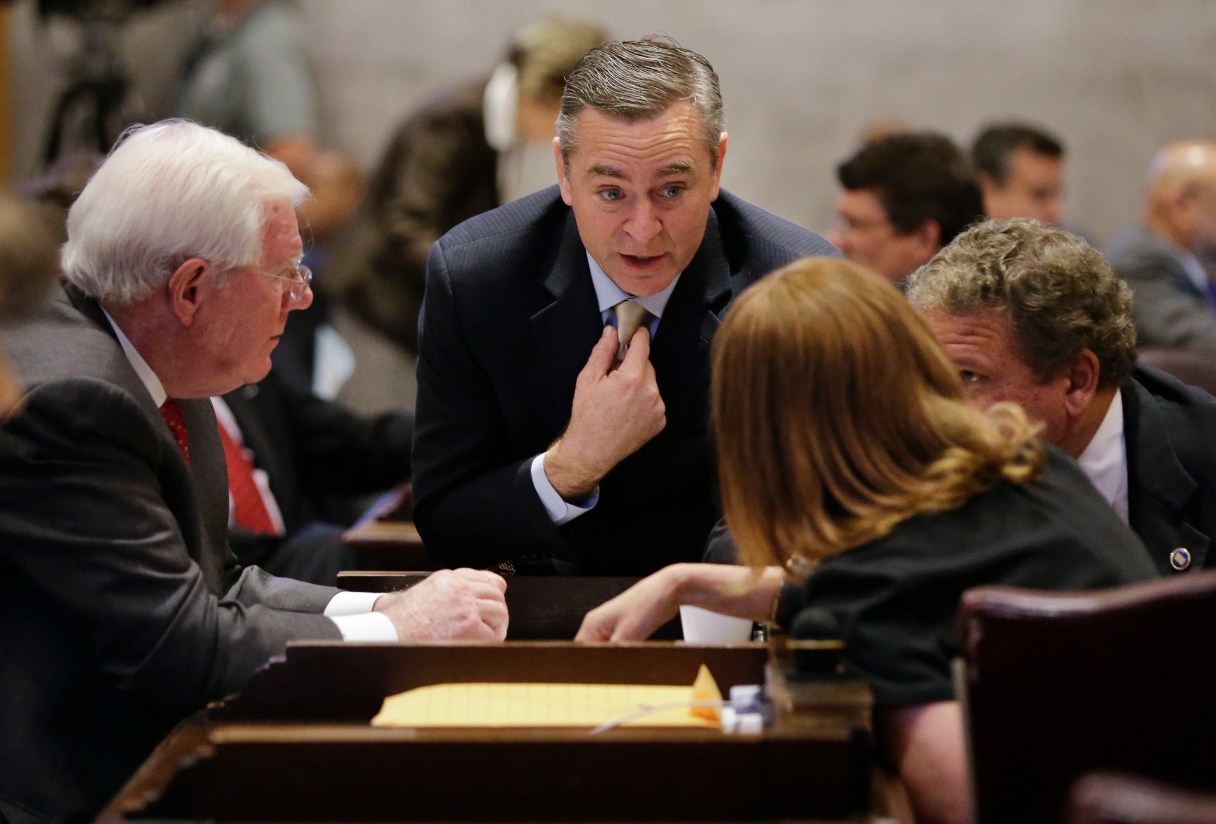
NASHVILLE, Tenn. (AP) – A lengthy debate over a proposed veto override, partisan squabbling and a disagreement over a tax cut have delayed the planned conclusion of the legislative session.
As the House slowly churned through its calendar into the evening Wednesday, the Senate voted to recess for the night and return Thursday.
The House bid to override Republican Gov. Bill Haslam’s veto of making the Bible the state’s official book ended up falling short after two hours of debate.
The rest of the day was marked by sniping between Democrats who tried to amend various Republican bills and the GOP supermajority killing those efforts.
Republican leaders also grappled with efforts by members of their own party to try to expand a planned cut in the Hall tax on earnings from stocks and bonds.
The budget passed by both chambers last week includes funding for a 17 percent reduction in the Hall tax that is projected to cause a loss of $28 million in state revenues, plus another $15 million from the communities where the tax is collected.
But some lawmakers insisted on writing future reductions into the law as long as revenues grow by 3 percent per year, and House Finance Chairman Charles Sargent ultimately agreed to incorporate that change into the bill on Wednesday.
Other legislative action included:
GUNS ON CAMPUS: The House sent a bill to allow faculty and staff with handgun carry permits to be armed on the campuses of public colleges and universities. The bill sponsored by Republican Rep. Andy Holt of Dresden passed the House 69-24. Haslam has raised concerns about the measure because it didn’t give the institutions the power to opt out.
UT DIVERSITY OFFICE: The Senate voted to strip funding from the University of Tennessee Office of Diversity and Inclusion and put the money into scholarships for minority students who study engineering. The move came after the office angered some lawmakers for recommending the use of gender-neutral pronouns on campus and advising against religious-themed parties and decorations. The House, which has already voted to defund the diversity office, would have to agree to the Senate version before it can go to the governor.
GANGS: Both chambers scrambled to pass a law that would give gang members stiffer prison sentences after a state appeals court earlier this month struck down Tennessee’s gang enhancement sentencing law as unconstitutional. The measure passed in both the House and the Senate and is now on its way to the governor.
ANGEL INVESTORS: Lawmakers also passed a separate measure to allow people who invest in small businesses in Tennessee to get a tax credit to offset their Hall income tax liability.
VEHICLE EMISSIONS: Lawmakers revived a bill to allow counties to end emissions testing for new vehicles. The House approved the measure on an 84-8 vote after the bill’s sponsor, Rep. Mark Pody, made a change to leave it up to the counties to decide whether to end the testing. The Senate early in the session overwhelmingly approved an earlier version of the bill despite concerns that relaxing the standards might be a bad idea in light of the Volkswagen diesel emissions cheating scandal.