
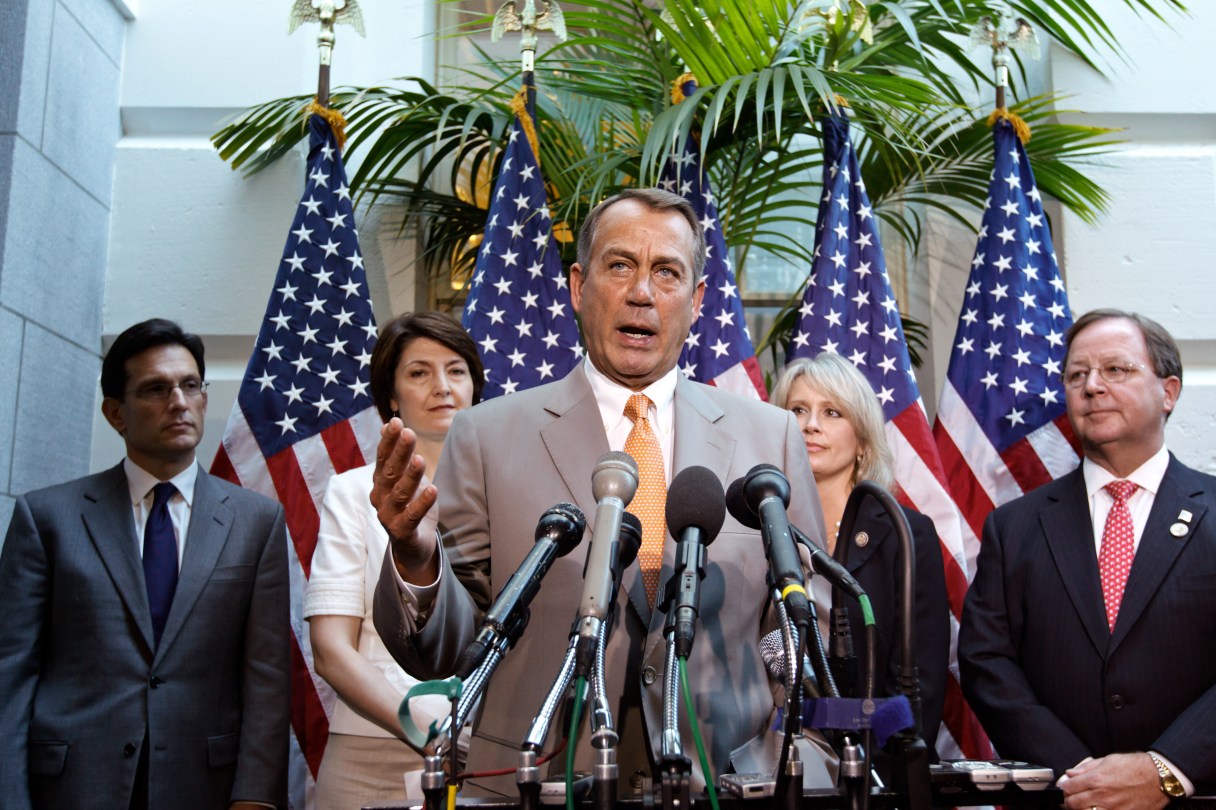
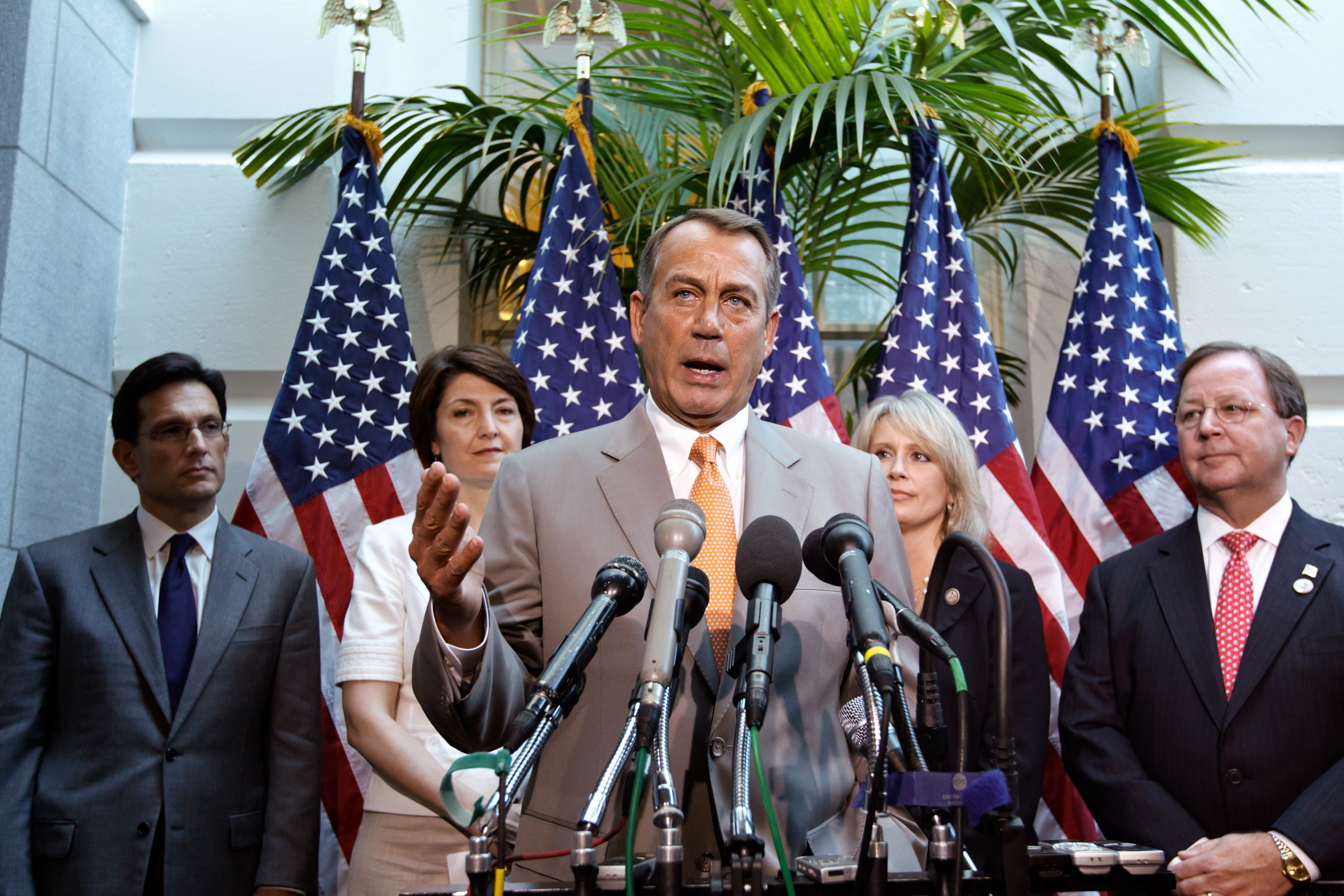
 House Speaker John Boehner of Ohio, center, joined by other House GOP leaders, gestures during a news conference on Capitol Hill in Washington, Wednesday, June 27, 2012, following a political strategy session. From left are, House Majority Leader Eric Cantor of Va., Rep. Cathy McMorris Rodgers, R-Wash., Boehner, Rep. Renee Ellmers, R-NC, and Rep. Bill Flores, R-Texas.
WASHINGTON – Congress is nearing agreements that would prevent a doubling of student loan interest rates and revamp the nation’s transportation programs, House Speaker John Boehner said Wednesday. If completed, the compromises would resolve two vexing issues on which lawmakers face weekend deadlines for action.
Boehner, R-Ohio, made his remarks a day after the Senate’s Democratic and Republican leaders said they’d reached a deal to prevent interest rates on new subsidized Stafford loans from doubling to 6.8 percent, beginning this Sunday. Their bipartisan agreement – which the White House backed – put pressure on Boehner to accept the deal, which if enacted would avoid antagonizing millions of students and their parents in an election year.
Separately, the government’s authority to spend money on highways, bridges and transit systems expires Saturday, as does its ability to levy gasoline and diesel taxes. Bargainers have been working for months in search of compromise on that measure, but have been stymied by disputes over environmental reviews of highway projects, the proposed Keystone oil pipeline from Canada to Texas and other issues.
“We’re moving, I think, towards an agreement on a transportation bill that would also include a one-year fix on the student loan rate increase,” Boehner told reporters after meeting behind closed doors with House Republicans.
Without action by Congress, interest rates on subsidized Stafford loans would double from their current 3.4 percent for 7.4 million students expected to receive such loans in the year beginning July 1. The loans, used by lower- and middle-income students, are usually paid off over more than a decade, and the higher rates would cost the typical student around $1,000 over the course of the loan.