
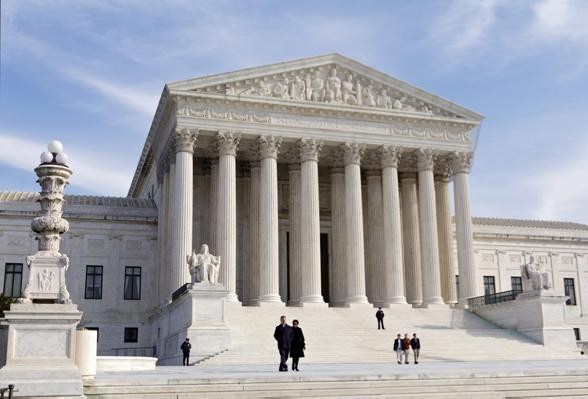
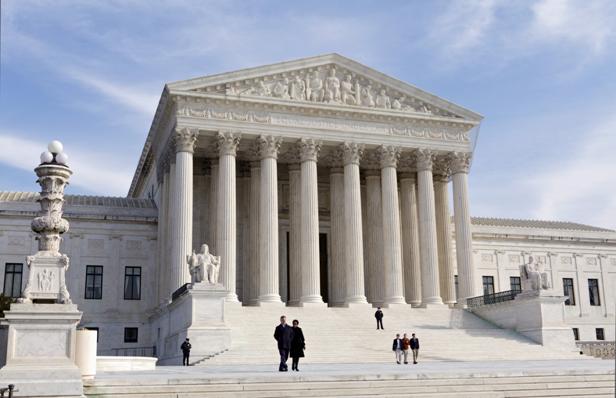
 This file photo shows the U.S. Supreme Court Building in Washington, D.C.
WASHINGTON – The Supreme Court debated Wednesday how to apply a federal gun ban to those with misdemeanor domestic violence records, with justices trying to figure out a middle road between what one justice called two extreme positions.
Justices heard arguments from government officials who want the ban to apply to James Castleman, who pleaded guilty to misdemeanor domestic assault in 2001 in Tennessee. He was then charged in 2009 with illegal possession of a firearm after he and his wife were accused of buying guns and selling them on the black market.
Federal law bars a person convicted of misdemeanor domestic violence involving physical force or a deadly weapon from possessing a firearm. A federal judge threw the gun charges out because the Tennessee law doesn’t require that physical force must have been used in misdemeanor domestic assaults. That decision was upheld by the 6th U.S. Circuit Court of Appeals.
Federal officials say under their interpretation, violent force is not required for the gun ban to apply, which could mean that just touching could lead to a conviction. Castleman’s lawyer said under his interpretation, not all attacks that led to bodily injury would apply, only those “involving a powerful use of force.”
“We sort of have two extreme positions here. The government is arguing that the statute covers mere touching. That’s one extreme,” said Justice Antonin Scalia. “And you’re arguing that the statute doesn’t cover all bodily injury, but only what, severe bodily injury? …Why isn’t there something in the middle? It doesn’t cover touching, but it covers bodily injury?”