
Friday, November 13, 2026Nov 13

Syrian refugee women face harassment, poverty

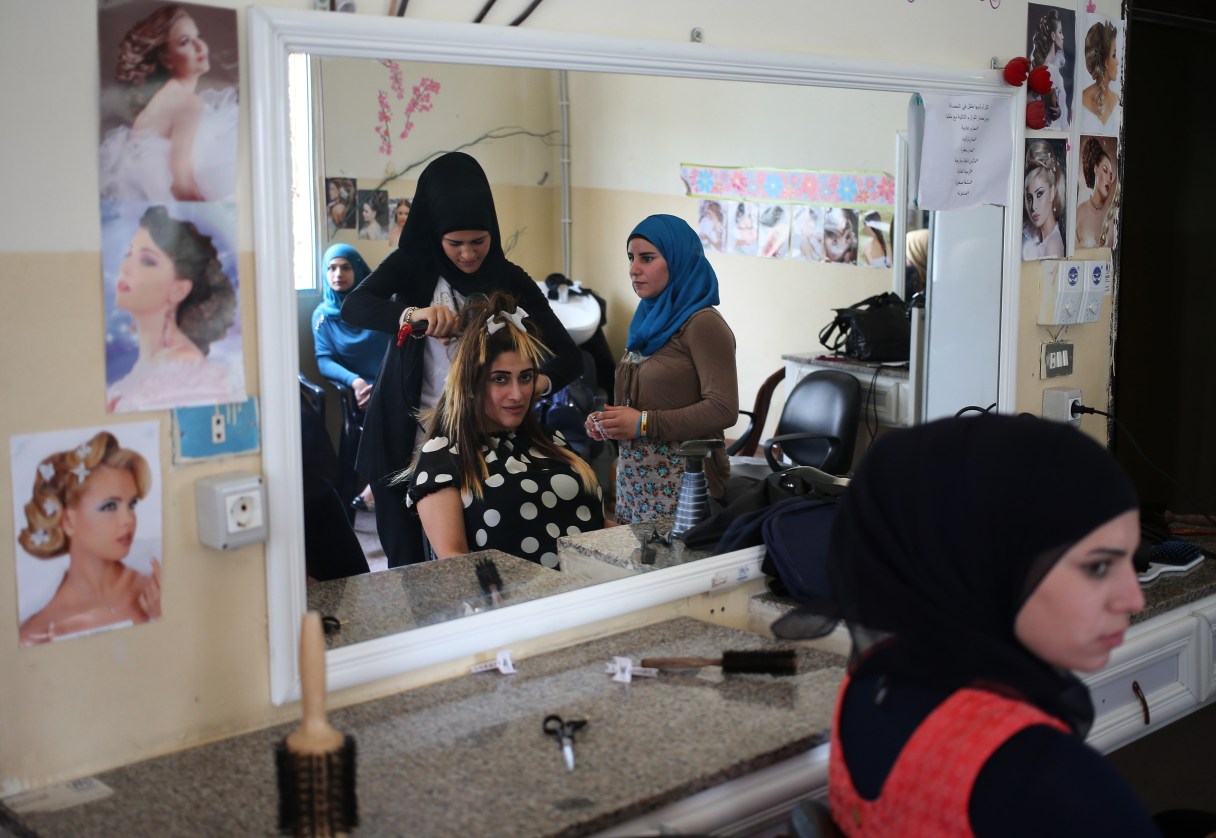
In this photo taken on May 29, 2014, Syrian refugee women attend a hair dressing class where they obtain crucial training to find jobs in a community center in Halba, north Lebanon. Across the region women lead about a quarter of all Syrian refugee families, which number some 145,000, the United Nations estimated in a report issued Tuesday, July 8, 2014. (AP Photo/Hussein Malla)
In this photo taken on May 29, 2014, Syrian refugee women attend a hair dressing class where they obtain crucial training to find jobs in a community center in Halba, north Lebanon. Across the region women lead about a quarter of all Syrian refugee families, which number some 145,000, the United Nations estimated in a report issued Tuesday, July 8, 2014. (AP Photo/Hussein Malla) In this photo taken on May 29, 2014, Syrian refugee women attend a hair dressing class where they obtain crucial training to find jobs in a community center in Halba, north Lebanon. Across the region women lead about a quarter of all Syrian refugee families, which number some 145,000, the United Nations estimated in a report issued Tuesday, July 8, 2014. (AP Photo/Hussein Malla)

HALBA, Lebanon (AP) – Before she began working as a hairdresser, poverty forced Syrian Umm Mahmoud to seek donations for food and rent money to survive as a refugee in Lebanon.

Often men suggested she have sex with them to show her gratitude, the 32-year-old said.

Her experiences echo among Syrian refugee women. Across the region, they lead about a quarter of all Syrian refugee families, which number some 145,000, the United Nations estimated in a report issued Tuesday.

“If you want to eat in Lebanon, you must eat your dignity,” said Umm Mahmoud. Her husband was disabled in fighting in Syria, leaving her to care for their five children alone. “To stay honorable, it means to go hungry sometimes. She who doesn’t have a husband or protector – they are always the most vulnerable,” she said.

Syrians made refugees by the war in their country, now in its fourth year, number nearly three million across neighboring Lebanon, Turkey and Jordan. Most live in poverty as they hustle for food, jobs, accommodation and health care.