
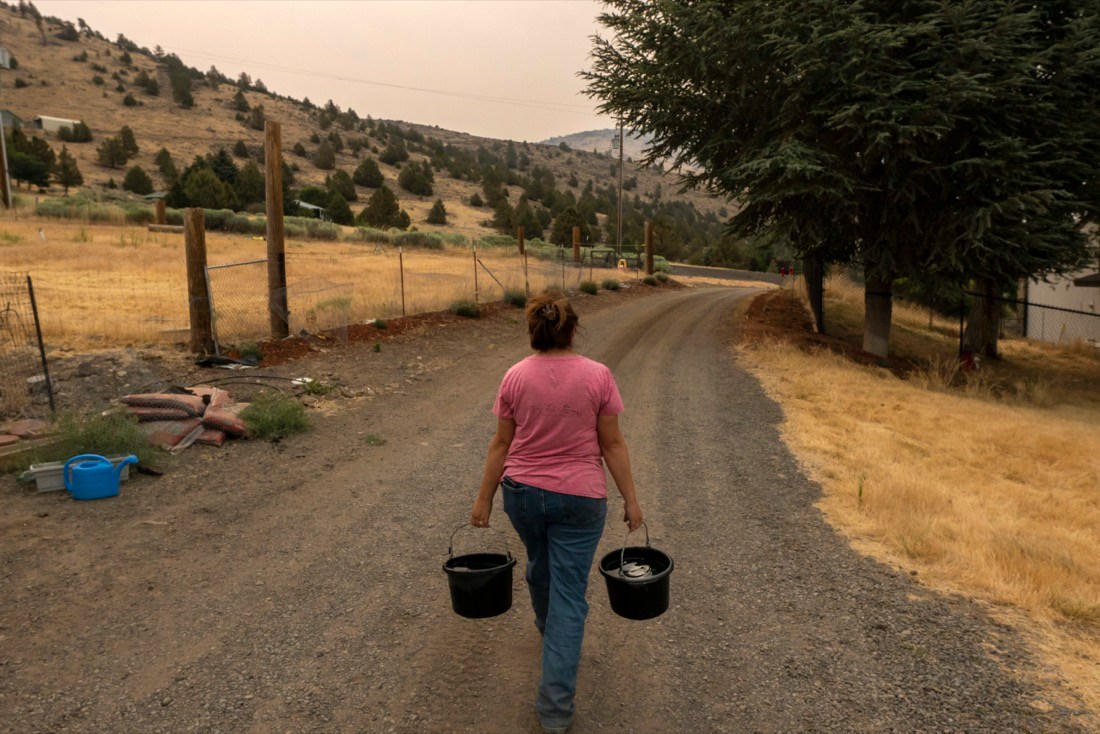
MALIN, Ore. (AP) – Judy and Jim Shanks know the exact date their home’s well went dry – June 24.
Since then, their life has been an endless cycle of imposing on relatives for showers and laundry, hauling water to feed a small herd of cattle and desperately waiting for a local well-drilling company to make it to their name on a monthslong wait list.
The couple’s well is among potentially hundreds that have dried up in recent weeks in an area near the Oregon-California border suffering through a historic drought, leaving homes with no running water just a few months after the federal government shut off irrigation to hundreds of the region’s farmers for the first time ever.
Officials have formal reports of 117 empty wells but suspect more than 300 have gone dry in the past few weeks as the consequences of the Klamath River basin’s water scarcity extend far beyond farmers’ fields.
Worried homeowners face waits of six months or more to get new, deeper wells dug because of the surging demand, with no guarantee that those wells, too, won’t ultimately go dry.