
Friday, November 13, 2026Nov 13

US opens more distance in worldwide race against coronavirus

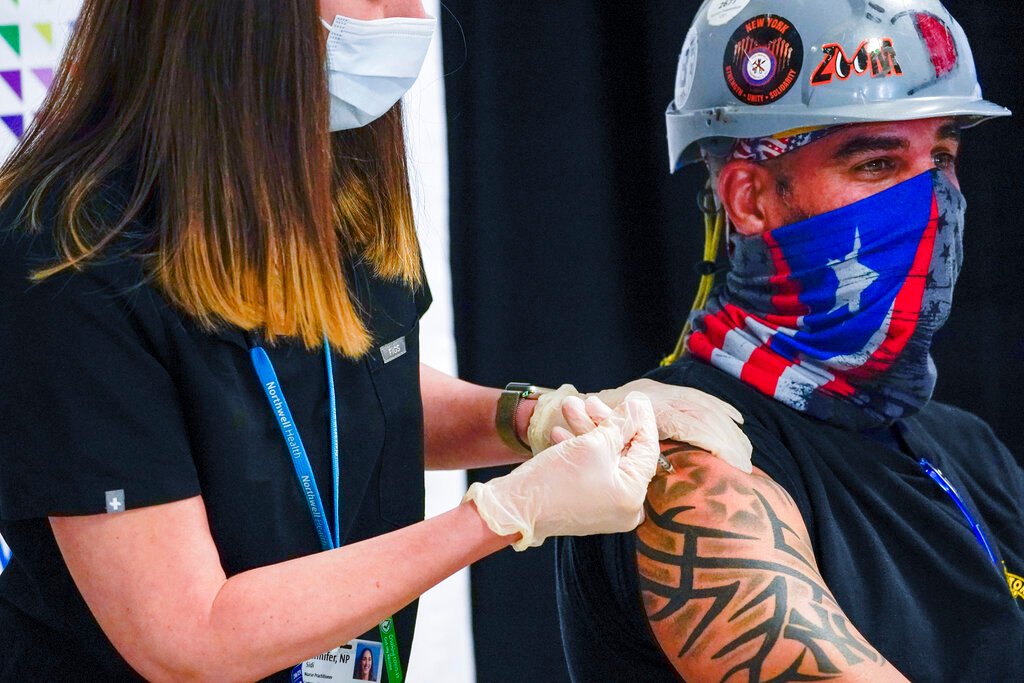
In this April 14, 2021, file photo, Northwell Health nurse inoculates Local 28 Sheet Metal Worker Demetrius Buttelman with the first dose of the Pfizer vaccine during a news conference at the Belmont Park in Elmont, N.Y. The United States opened more distance between itself and much of the rest of the world on Thursday, April 15, nearing the 200 millionth vaccine administered in a months-long race to protect the population against COVID-19, even as other countries, rich and poor, struggle with stubbornly high infection rates and deaths. (AP Photo/Mary Altaffer, Pool, File)
In this April 14, 2021, file photo, Northwell Health nurse inoculates Local 28 Sheet Metal Worker Demetrius Buttelman with the first dose of the Pfizer vaccine during a news conference at the Belmont Park in Elmont, N.Y. The United States opened more distance between itself and much of the rest of the world on Thursday, April 15, nearing the 200 millionth vaccine administered in a months-long race to protect the population against COVID-19, even as other countries, rich and poor, struggle with stubbornly high infection rates and deaths. (AP Photo/Mary Altaffer, Pool, File) In this April 14, 2021, file photo, Northwell Health nurse inoculates Local 28 Sheet Metal Worker Demetrius Buttelman with the first dose of the Pfizer vaccine during a news conference at the Belmont Park in Elmont, N.Y. The United States opened more distance between itself and much of the rest of the world on Thursday, April 15, nearing the 200 millionth vaccine administered in a months-long race to protect the population against COVID-19, even as other countries, rich and poor, struggle with stubbornly high infection rates and deaths. (AP Photo/Mary Altaffer, Pool, File)

The United States opened more distance between itself and much of the rest of the world Thursday, nearing the 200 millionth vaccine administered in a race to protect the population against COVID-19, even as other countries, rich and poor, struggle with stubbornly high infection rates and deaths.

Nearly half of American adults have gotten at least one dose of the vaccine, and about 30% of adults in the U.S. have been fully vaccinated, according to the Centers for Disease Control and Prevention. But the picture is still relentlessly grim in parts of Europe, Latin America, Africa and Asia as variants of the virus fuel an increase in new cases and the worldwide death toll closes in on 3 million.

France on Thursday passed 100,000 virus deaths, becoming only the the eighth country to do so.

India’s two largest cities, New Delhi and Mumbai, imposed business shutdowns and stringent restrictions on movement as new infections shot past 200,000. Some hotels and banquet halls were ordered to convert their space into wards for treating virus patients, and the surge forced India – a major vaccine producer – to delay exports of doses to other countries.

Japan also saw a rapid resurgence of infections just three months before it’s scheduled to host the Olympics. The country’s western metropolis of Osaka reported over 1,200 new infections Thursday, its highest since the pandemic began. A top ruling party official suggested the possibility of canceling the games if the infections make them impossible.