
KABUL, Afghanistan (AP) – A city at war, the Afghan capital is among the ugliest in the world.
Wide avenues once lined with rose gardens are today gridlocked streets sandwiched by concrete blast walls protecting those inside from the bombs and bullets that form the backbeat of a 14-year insurgency. After recent deadly attacks, the towering walls multiplied almost overnight, appearing in double rows outside government buildings, businesses, embassies and the homes of powerful people.
The impression is one of division. Inside the walls, the elite are protected; outside, it’s every man for himself.
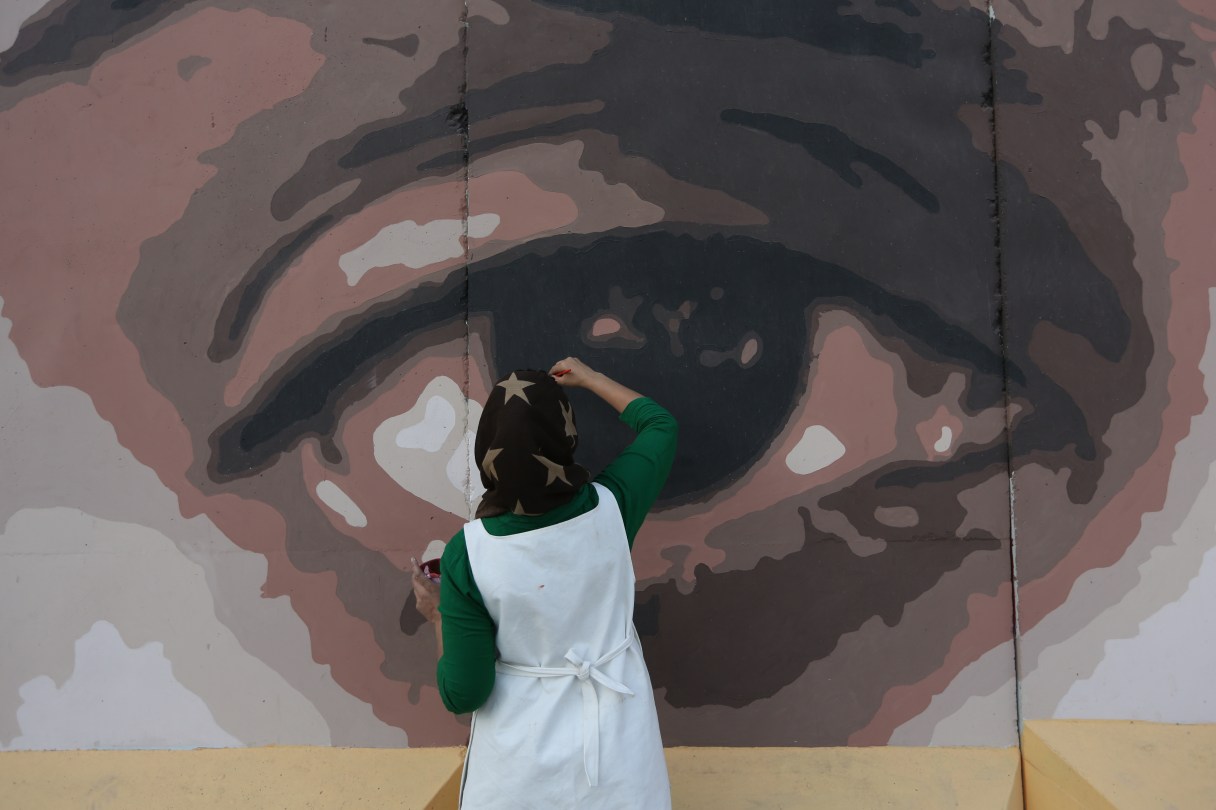
For Kabir Mokamel, an artist who returned to Kabul from the Australian capital Canberra four years ago, the blast walls present the perfect canvas for transforming not only how the city looks, but how its residents think about themselves, each other, their environment, and their future.
Calling his group Art Lords – a swipe at the warlords who still dominate Afghan politics and are publicly celebrated as warrior heroes – Mokamel uses street art to highlight social problems in Afghanistan after almost four decades of war.