
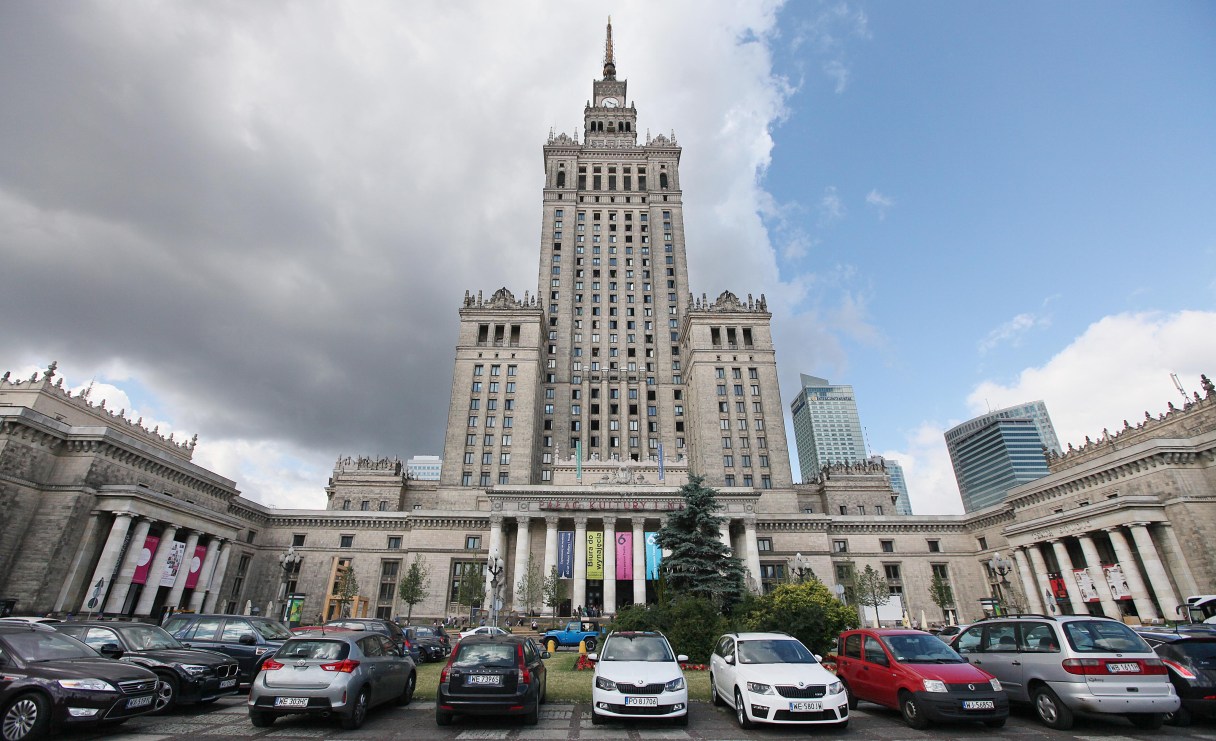
WARSAW, Poland (AP) – Some Poles liken the skyscraper to an elephant in lace underpants. A famous poet dubbed it “the nightmare of a drunken baker.” And one joke goes that it provides the best view of Warsaw because you can’t see the building from inside.
Warsaw’s Palace of Culture and Science has been derided as an oppressive eyesore ever since Soviet dictator Josef Stalin built it as his personal gift to the city. Now -having survived persistent calls to tear it down – the building marks its 60th birthday on Wednesday as an enduring symbol of a city that has known waves of destruction.
Concerts, exhibitions and fireworks are to mark the anniversary of a building Warsaw residents have finally come to appreciate. Rising 42 floors, it remains Poland’s tallest building and it boasts over 350,000 visitors each year. A growing number of them are foreign tourists curious to explore the many corners of the massive Soviet-style edifice.
“I like it, it’s nice,” said Joanna Golabek. “I don’t mind its history so much. I have good associations with the concerts and the events that I attended there.”
In the early 1950s, when Warsaw was still largely a sea of ruins after World War II, some 5,000 Soviet and Polish workers built the skyscraper in less than three years, complete with marble interiors and impressive crystal chandeliers. Some 18 were killed in on-site accidents.