
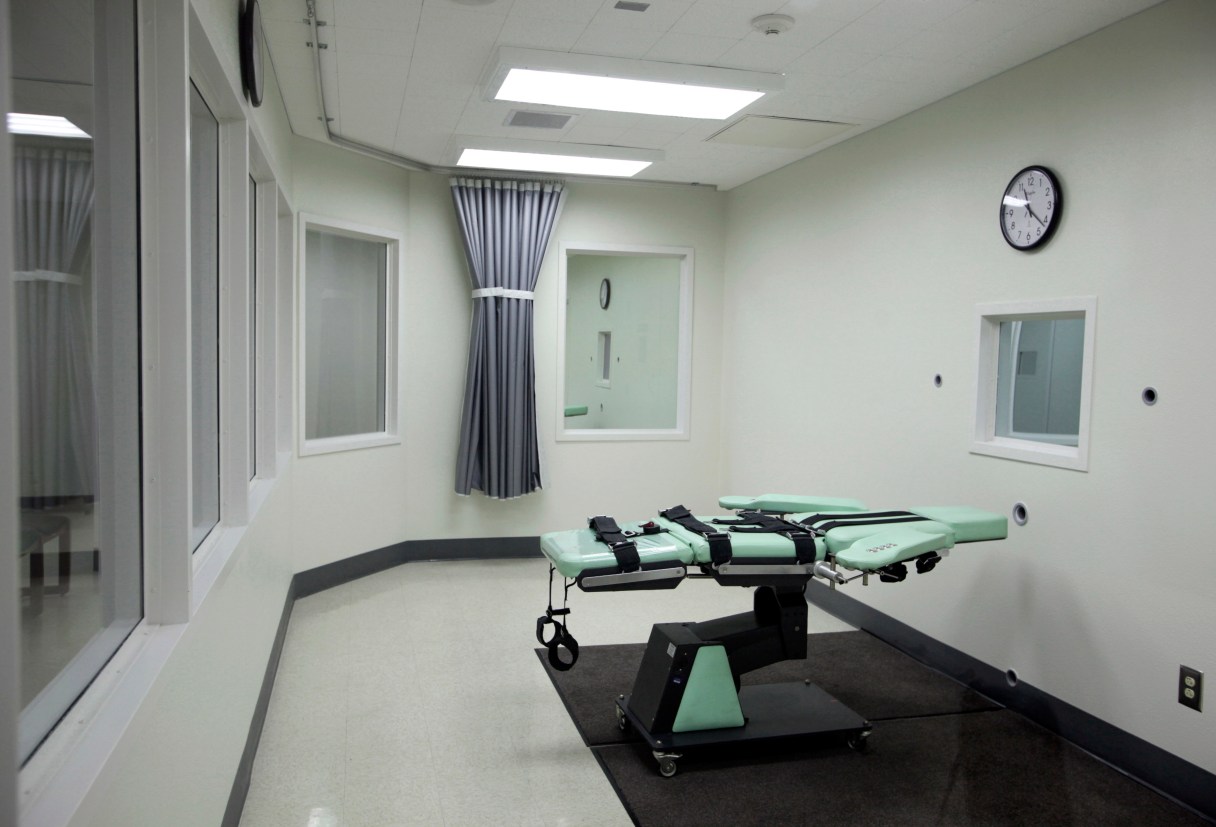
SAN FRANCISCO (AP) – Supporters of capital punishment in California claimed victory after the state Supreme Court upheld a voter-approved measure to speed up death sentences, but they still have to clear a major obstacle before executions can resume: Getting approval for a new lethal injection method.
The next step in that fight came Friday, when state corrections officials asked regulators to approve a revised drug protocol to execute inmates.
The new regulations would allow California’s death row inmates to be executed using one of two different drugs or choose the gas chamber. The state is acting after what critics say are years of delaying tactics by Democratic office-holders who have been in no hurry to resume carrying out the death penalty.
Among other things, the justices’ decision upholding Proposition 66 ends the requirement that prison officials receive approval from state regulators for their new lethal injection plan.
Corrections officials, however, decided to submit the revised regulations to the state Office of Administrative Law and follow the normal regulatory process until the justices’ decision becomes final.