
Monday, November 16, 2026Nov 16

US tobacco growers brace for tougher competition

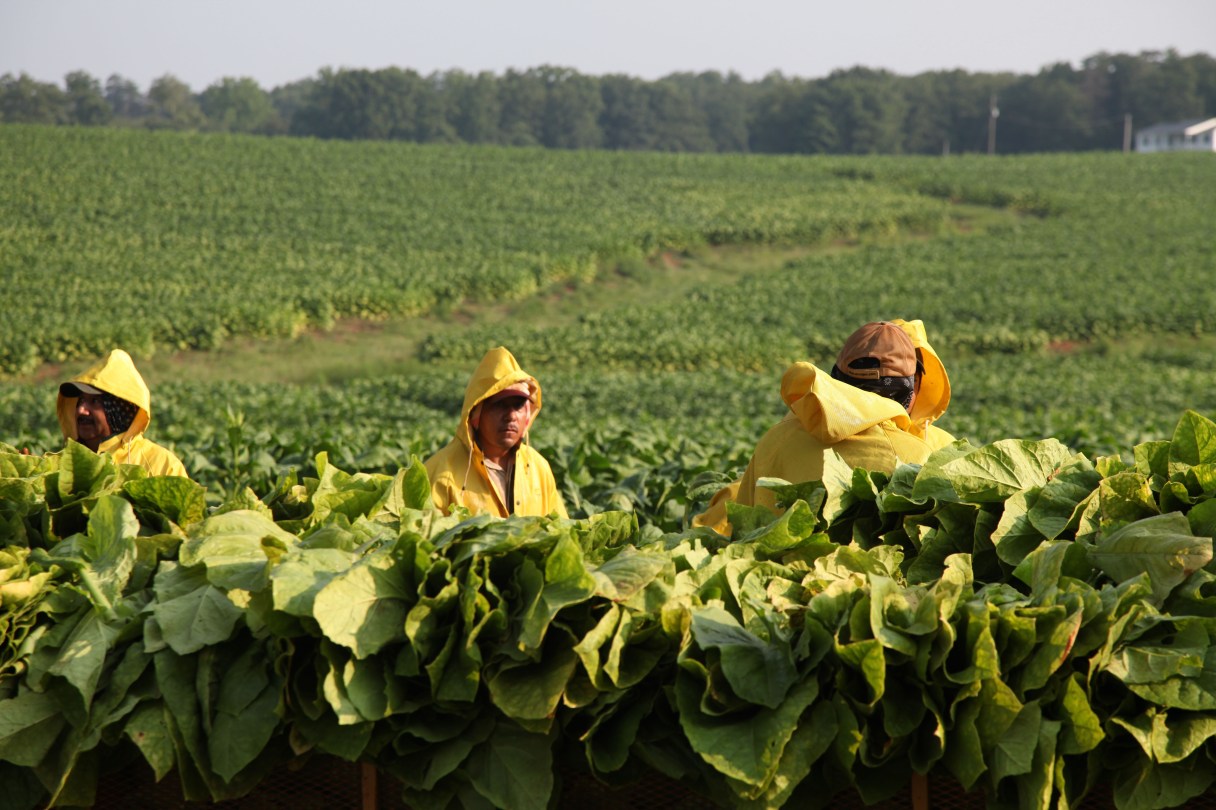
In this Thursday, Aug. 7, 2014, photo, farm workers, from left, Carlos Sanchez, Francisco Zuniga, and Alejandro Zuniga, pick tobacco leaves on Chris Haskins' farm in Chatham, Va. Starting next month, America’s remaining tobacco growers will be totally exposed to the laws of supply and demand. The very last buyout checks go out in October to about 425,000 tobacco farmers and landowners. They’re the last holdovers from a price-support and quota system that had guaranteed minimum prices for most of the 20th century, sustaining a way of life that began 400 years ago in Virginia. (AP Photo/Johnny Clark)

DANVILLE, Va. (AP) – Starting next month, America’s remaining tobacco growers will be totally exposed to the laws of supply and demand.

The very last buyout checks, totaling about $916.5 million, go out in October to about 425,000 tobacco farmers and landowners. They’re the last holdovers from a price-support and quota system that had guaranteed minimum prices for most of the 20th century, sustaining a way of life that began 400 years ago in Virginia, when the leaf became the chief cash crop of the Jamestown colony.

Cigarette makers will have paid $10 billion to compensate growers for surrendering their quotas. Growers got another $5 billion from the companies as part of their 1998 settlement of state lawsuits over smoking-related health care costs.

When the last checks are cashed, surviving growers will be on their own, forced to find profits in a tremendously competitive global market. But those who remain in the business are thriving right now: Many are producing more leaf than they have in years, and enjoying higher prices as well.

“I’m not in this for nostalgia purposes,” said Steven Barts, a fourth-generation tobacco farmer in Chatham, Virginia. “The day we’re not making money is the day we’re not doing it.”