
Thursday, October 29, 2026Oct 29

This story is free to read.

Answers about immigration checkpoints

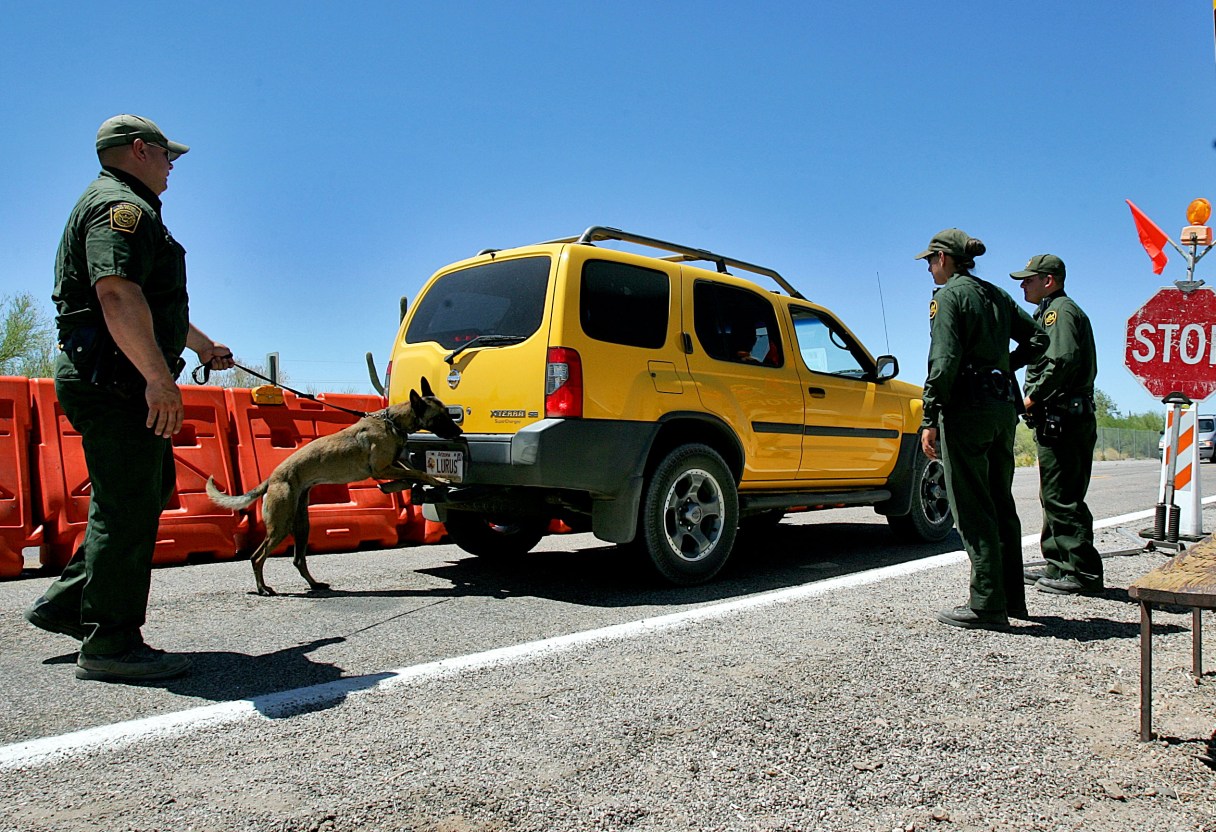
U.S. Border Patrol Senior Agent B.T. Hick and his dog Mirza, left, inspect a car at a check point outside Organ Pipe Cactus National Park in Why, Ariz., Wednesday, May 24, 2006. The detention of a prominent immigration activist at a Texas airport served as a reminder of the latitude the Border Patrol has in conducting checkpoints for drugs and immigrants in the country illegally at locations not on the border. (AP Photo/Matt York, File)
U.S. Border Patrol Senior Agent B.T. Hick and his dog Mirza, left, inspect a car at a check point outside Organ Pipe Cactus National Park in Why, Ariz., Wednesday, May 24, 2006. The detention of a prominent immigration activist at a Texas airport served as a reminder of the latitude the Border Patrol has in conducting checkpoints for drugs and immigrants in the country illegally at locations not on the border. (AP Photo/Matt York, File) U.S. Border Patrol Senior Agent B.T. Hick and his dog Mirza, left, inspect a car at a check point outside Organ Pipe Cactus National Park in Why, Ariz., Wednesday, May 24, 2006. The detention of a prominent immigration activist at a Texas airport served as a reminder of the latitude the Border Patrol has in conducting checkpoints for drugs and immigrants in the country illegally at locations not on the border. (AP Photo/Matt York, File)

TUCSON, Ariz. (AP) – The arrest of a prominent immigration activist and former journalist at a Texas airport was a reminder of the latitude that the U.S. Border Patrol has in conducting checkpoints.

Jose Antonio Vargas, a Pulitzer Prize winner, was detained at the McAllen/Miller International Airport in south Texas this week after being questioned about his citizenship status while visiting the region to attend vigils related to the Central American immigration surge. For many who do not live in border states, the idea of being asked for immigration status while flying within the U.S. seems foreign. Here are some details about why and how the U.S. Border Patrol operates in airports and locations along the country’s border.

WHAT DO BORDER PATROL AGENTS DO AT AIRPORTS?

Border Patrol agents who work at airports within 100 miles of the border are often in plain clothes and work closely with Transportation Security Administration agents to monitor people, even those who are flying within the country. Agents don’t typically have offices within the airport, and the Border Patrol will not say how many agents staff airports at any given time.

But they are there.