
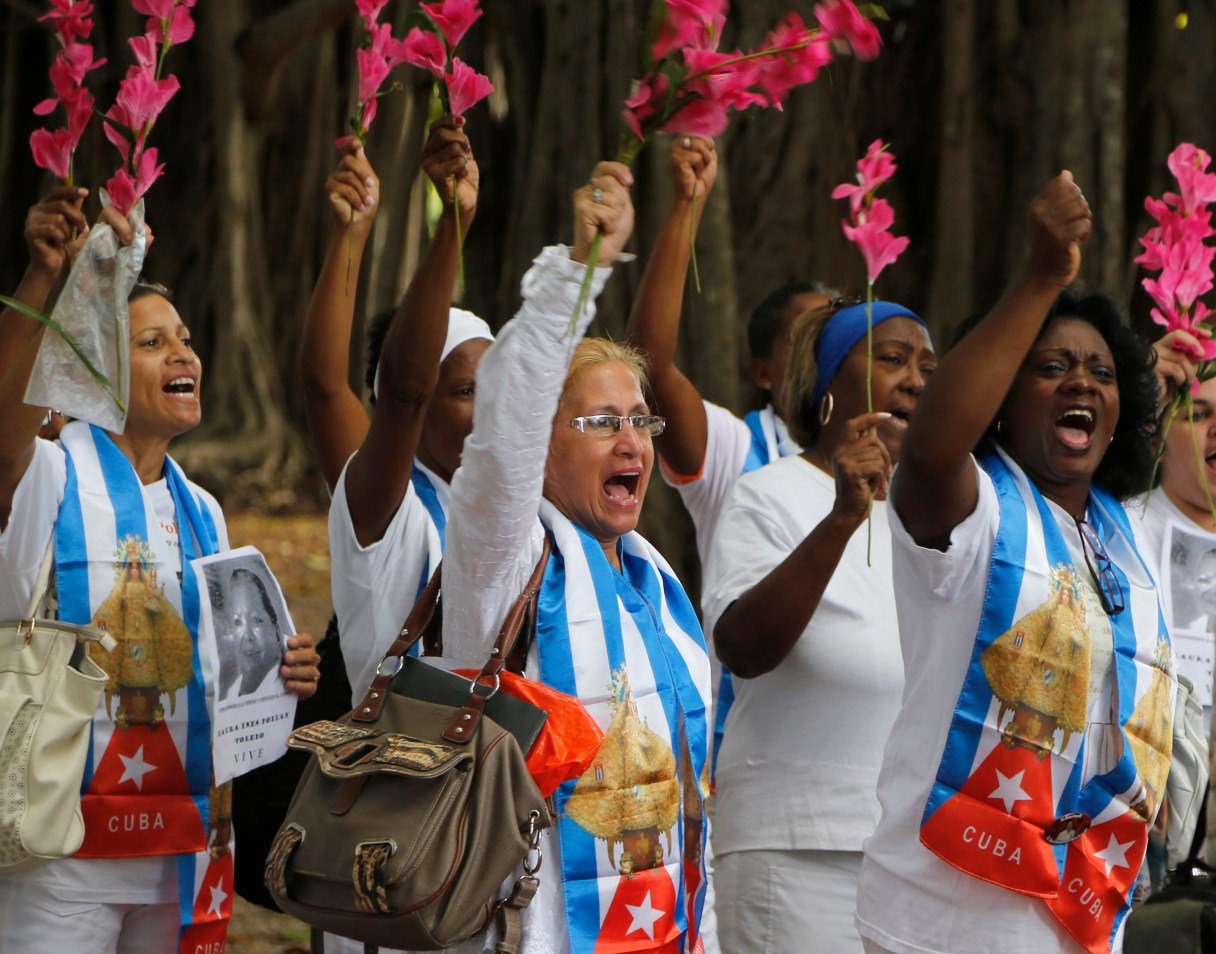
HAVANA (AP) – President Barack Obama told the world this month that engaging Cuba is the best way to strengthen people pushing for greater freedom on the island.
Less than two weeks after it was announced, the U.S.-Cuba detente is upending the civil society Obama hopes to strengthen. The prospect of engagement between the two Cold War antagonists seems to be undercutting the island’s hard-line dissidents while boosting more moderate reformers who want to push President Raul Castro gradually toward granting citizens more liberties.
The traditional dissidents say they feel betrayed by a new U.S. policy of negotiation with a government that Washington and the U.S.-backed opponents worked for decades to undermine. They say they fear that detente serves the Castro administration’s aspiration of following China and Vietnam by improving the economy without conceding citizens significantly greater freedoms.
“I think President Obama made a mistake,” said Berta Soler, head of the Ladies in White, Cuba’s best-known dissident group. “Cuba won’t change while the Castros are around. There will be positive changes for the government of Cuba, but not for the Cuban people.”
Moderates say the new balance of power inside the small, fractious world of Cuba’s opposition will produce political change by offering Castro a type of engagement that’s harder to reject: a negotiated, more controlled opening meant to avoid the sort of disorderly transition that scarred the former Soviet Union and, more recently, the countries of the Arab Spring.