
Friday, October 30, 2026Oct 30

This story is free to read.

Business Bulletin: How to avoid fake coronavirus tests

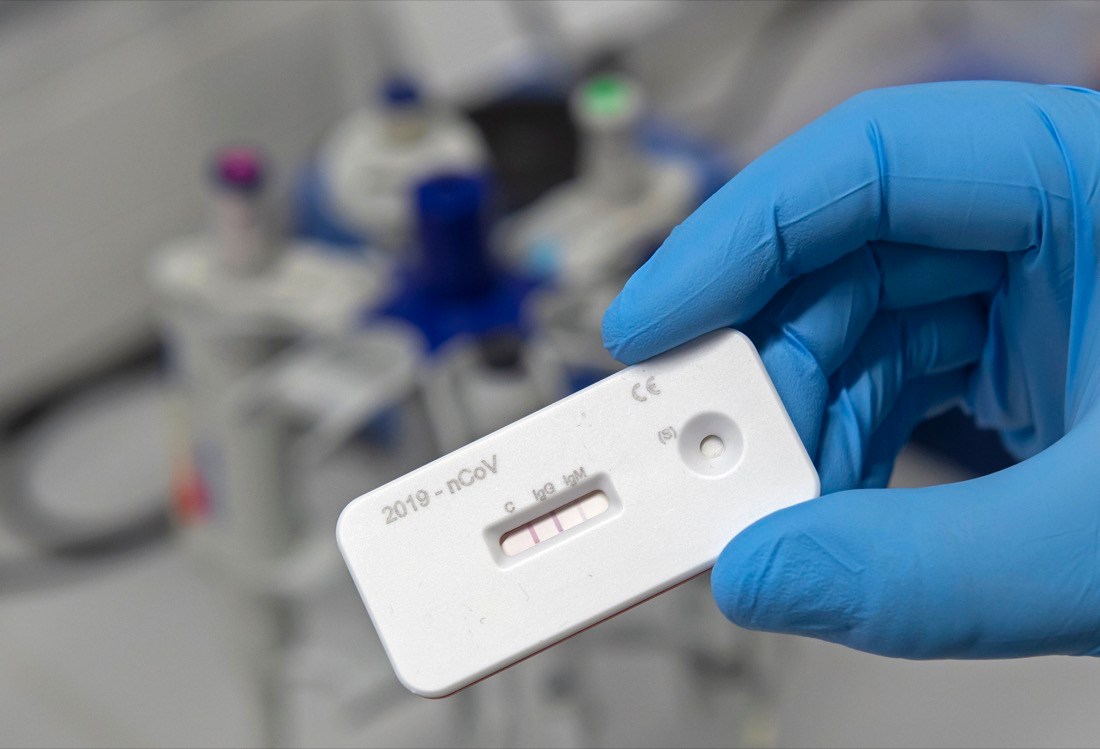
A scientist presents an antibody test for coronavirus in a laboratory of the Leibniz Institute of Photonic Technology (Leibniz IPHT) at the InfectoGnostics research campus in Jena, Germany, Friday, April 3, 2020. An international team of researchers with the participation of the Jena Leibniz Institute of Photonic Technology (Leibniz IPHT) has developed a rapid antibody test for the new coronavirus. By means of a blood sample, the test shows within ten minutes whether a person is acutely infected with the SARS-CoV-2 virus (IgM antibody) or already immune to it (IgG antibody). The strip test is manufactured by the diagnostics company Senova in Weimar and is already on the market. For most people, the new coronavirus causes only mild or moderate symptoms, such as fever and cough. For some, especially older adults and people with existing health problems, it can cause more severe illness, including pneumonia. (AP Photo/Jens Meyer)
A scientist presents an antibody test for coronavirus in a laboratory of the Leibniz Institute of Photonic Technology (Leibniz IPHT) at the InfectoGnostics research campus in Jena, Germany, Friday, April 3, 2020. An international team of researchers with the participation of the Jena Leibniz Institute of Photonic Technology (Leibniz IPHT) has developed a rapid antibody test for the new coronavirus. By means of a blood sample, the test shows within ten minutes whether a person is acutely infected with the SARS-CoV-2 virus (IgM antibody) or already immune to it (IgG antibody). The strip test is manufactured by the diagnostics company Senova in Weimar and is already on the market. For most people, the new coronavirus causes only mild or moderate symptoms, such as fever and cough. For some, especially older adults and people with existing health problems, it can cause more severe illness, including pneumonia. (AP Photo/Jens Meyer) A scientist presents an antibody test for coronavirus in a laboratory of the Leibniz Institute of Photonic Technology (Leibniz IPHT) at the InfectoGnostics research campus in Jena, Germany, Friday, April 3, 2020. An international team of researchers with the participation of the Jena Leibniz Institute of Photonic Technology (Leibniz IPHT) has developed a rapid antibody test for the new coronavirus. By means of a blood sample, the test shows within ten minutes whether a person is acutely infected with the SARS-CoV-2 virus (IgM antibody) or already immune to it (IgG antibody). The strip test is manufactured by the diagnostics company Senova in Weimar and is already on the market. For most people, the new coronavirus causes only mild or moderate symptoms, such as fever and cough. For some, especially older adults and people with existing health problems, it can cause more severe illness, including pneumonia. (AP Photo/Jens Meyer)

Q: I see tests for COVID-19 advertised; how do I know these are legitimate?

A: Great question. Some new studies show that up to 50% of people with COVID-19 don’t show any symptoms, so many people are wondering if they had the disease without knowing it. Fortunately, an antibody test, according to www.cdc.gov, can identify if your body has already fought off the virus. Unfortunately, according to BBB ScamTracker, www.bbb.org/scamtracker, scammers are cashing in on demand and creating phony tests.

How the scam works:

You receive a robocall or are directed to a website that looks like a clinic or medical supply company offering COVID-19 tests. These tests can allegedly identify if you’ve been infected with coronavirus – even if you’ve already recovered. Some even promise results in 10 minutes. To get a test, all you need to do is complete a form or, in other versions, enter your credit card details.

In some cases, the test involves an easy at-home testing kit. Other times, the tests are allegedly offered through a clinic. But in all versions, the person or website selling the test is short on details. They aren’t willing or able to provide any information about how the test works, where it is sourced, and what laboratory processes it.