
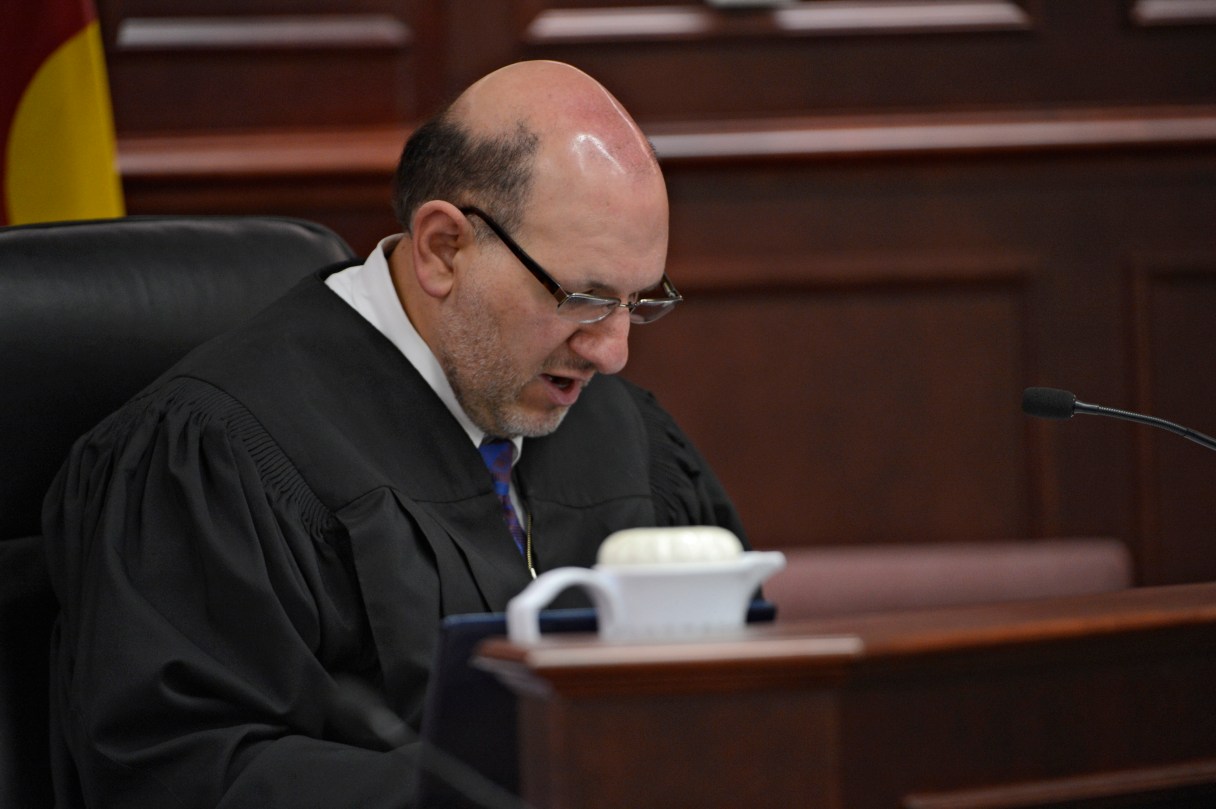
CENTENNIAL, Colo. (AP) – While the 2012 Aurora theater shooting was horrific, killing 12 people and injuring 70, the process of assembling a jury to try defendant James Holmes is far more subdued, with moments ranging from the mundane to the surreal.
Jury selection began in January, when more than 9,000 prospective jurors were summoned in what experts called the biggest jury pool in U.S. history. After filling out lengthy questionnaires, thousands were asked to return for individual questioning that began Feb. 11 and has so far yielded more than 50 people who can return for still more screening.
Judge Carlos A. Samour Jr. hopes to seat a jury to hear opening statements on April 21 or April 27.
Defendant James Holmes has pleaded not guilty by reason of insanity. If the jury finds he was sane, they will decide whether he should be put to death.
Days are long, with attorneys questioning, at most, 12 people a day, sometimes grilling one person for hours at a time. Prospects fight nerves and tears as attorneys press them on their feelings about capital punishment, mental illness and their own personal problems, such as financial hardship or sick relatives.