
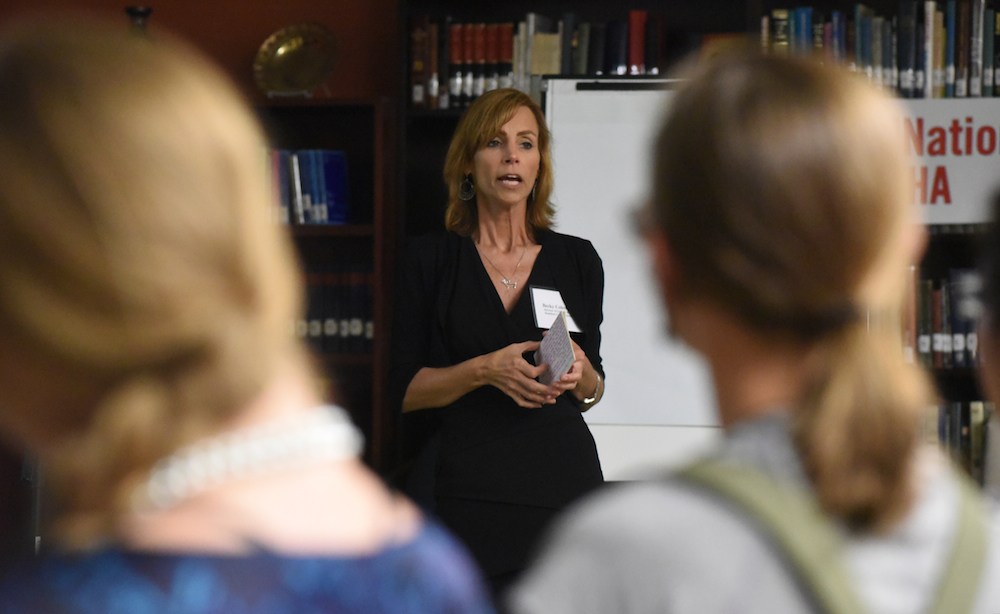
Students who are not reading on grade level midway through kindergarten may never catch up to their classmates and have higher odds of dropping out of school.
“Looking at the data was eye-opening for us all,” said Becky Coleman, director of literacy for Hamilton County Schools. “Our data showed that if a student could not read on grade level midway through kindergarten that they would not get back on track without intensive intervention.”
To keep students from falling behind, the school system begins evaluating them on day 1. Teachers start deciphering how prepared their students are to learn letters and sounds on the first day of kindergarten. By the 20th day in the classroom, teachers are reporting to the district where each student stands, and tracking continues all year. Teachers know each student’s strengths and weaknesses long before state-mandated testing begins in third grade.
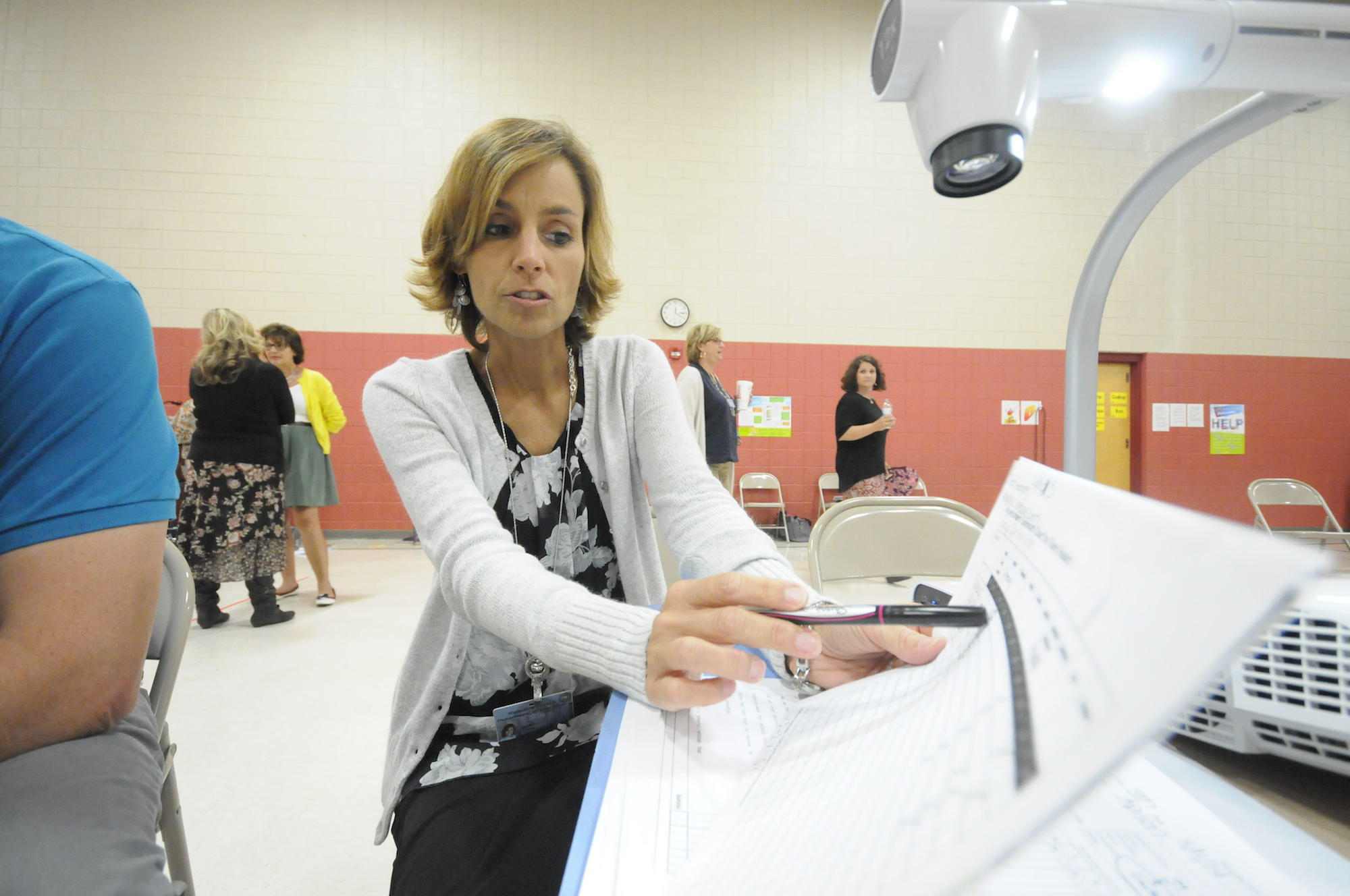 Becky Coleman, director of literacy for Hamilton County Schools, talks about Guided Reading for students Tuesday at Apison Elementary School.
The district’s emphasis on literacy was the focus on day two of the GradNation Summit, a session to inform all kindergarten and first-grade teachers, along with a handful of preschool instructors, about the current best practices in teaching literacy, Coleman said. The GradNation Summit was sponsored through a partnership between the Hamilton County Department of Education and the United Way of Greater Chattanooga.
Teachers moved among workshops Tuesday, learning from the district’s literacy coaches. These coaches are assigned to two or three elementary schools during the school year, and are placed to help teachers ensure that their students are getting the best possible instruction and are reading on grade level.
They covered a variety of topics, including techniques to use during guided reading time, helping students learn letters and sounds, and how to move a child from simply reading words to responding to the text through speaking and writing.
Amanda Cauthen has been teaching in Hamilton County Schools for 32 years, and is now a kindergarten teacher at Thrasher Elementary.
“I look forward to this training all year,” Cauthen said. “[It] give us all the tools we need.”
Cauthen said it’s been decades since her college courses in teaching reading, and the summit provides continuing education to help her stay up to date.
Jamie Scott, a Soddy-Daisy first-grade teacher, said the summit is helpful in different ways for different teachers.
“Some schools and administrations are more versed [in this approach to literacy] than others,” Scott said. “Parts of it are a refresher for some, and others are just now learning this.”
Steve Hinkle is one of the district’s 25 or so literacy coaches, and said during his 23 years as an educator he has watched the theories behind teaching students to read evolve.
“As a society, we are learning more about our brains and bodies and it influences how we teach reading,” Hinkle said. “Today everyone is here and learning the same thing and then we [the literacy coaches] will follow up with them at the school.”
The district does not mandate how each teacher or school must teach their students to read, Hinkle said, but days like this inform teachers of the current research and methods and open the door for constant conversation about best practice.
Contact staff writer Kendi Anderson at kendi.anderson@timesfreepress.com or 423-757-6592.