
Friday, October 30, 2026Oct 30

This story is free to read.

U.S. and China angle for trade truce, but both insist the other will back down

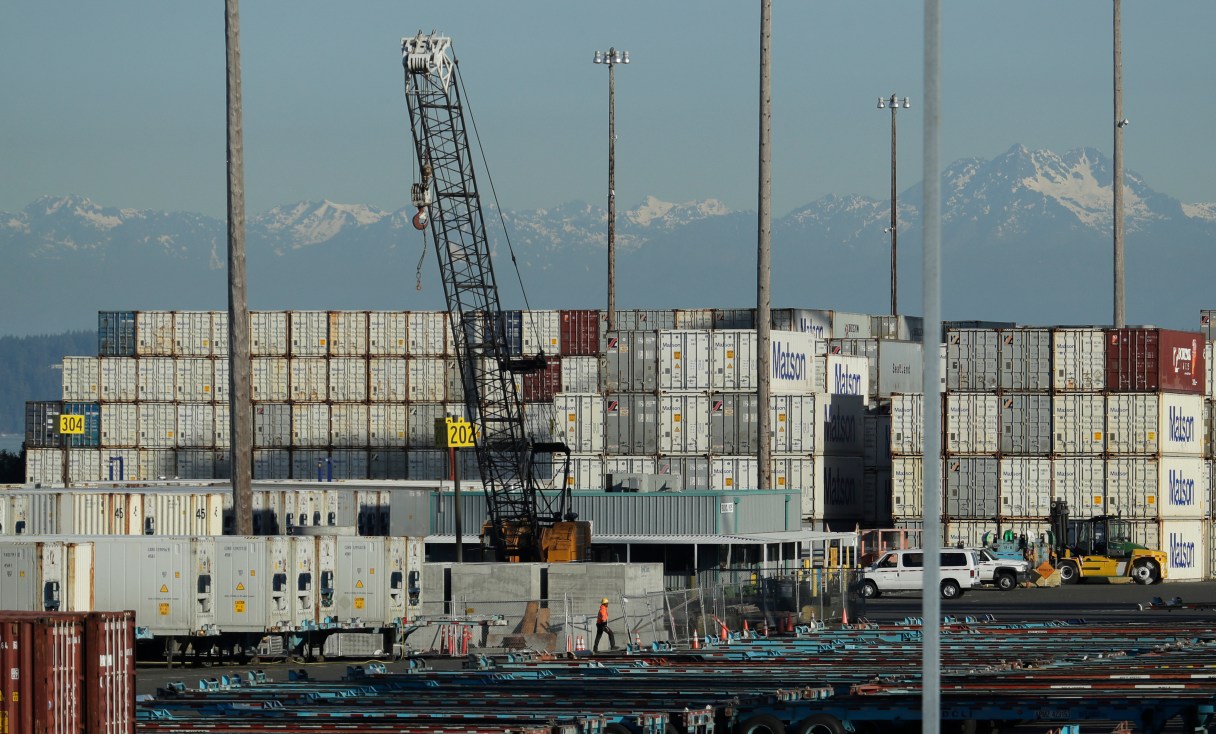
FILE - In this May 10, 2019 file photo, a worker walks near truck trailers and cargo containers at the Port of Tacoma in Tacoma, Wash. Hundreds of businesses, trade groups and individuals have written to complain about President Donald Trump's threat to impose tariffs on the remaining $300 billion in Chinese goods that he hasn't already hit with 25% import taxes, saying the additional import taxes would drive up prices for consumers, squeeze profits and leave U.S. companies at a competitive disadvantage to foreign rivals that aren't subject to higher taxes on the vital components they buy from China.  (AP Photo/Ted S. Warren, File)
FILE - In this May 10, 2019 file photo, a worker walks near truck trailers and cargo containers at the Port of Tacoma in Tacoma, Wash. Hundreds of businesses, trade groups and individuals have written to complain about President Donald Trump's threat to impose tariffs on the remaining $300 billion in Chinese goods that he hasn't already hit with 25% import taxes, saying the additional import taxes would drive up prices for consumers, squeeze profits and leave U.S. companies at a competitive disadvantage to foreign rivals that aren't subject to higher taxes on the vital components they buy from China. (AP Photo/Ted S. Warren, File) FILE - In this May 10, 2019 file photo, a worker walks near truck trailers and cargo containers at the Port of Tacoma in Tacoma, Wash. Hundreds of businesses, trade groups and individuals have written to complain about President Donald Trump's threat to impose tariffs on the remaining $300 billion in Chinese goods that he hasn't already hit with 25% import taxes, saying the additional import taxes would drive up prices for consumers, squeeze profits and leave U.S. companies at a competitive disadvantage to foreign rivals that aren't subject to higher taxes on the vital components they buy from China. (AP Photo/Ted S. Warren, File)

WASHINGTON – The fate of a yearlong trade war will reach a pivotal moment this weekend as President Donald Trump and President Xi Jinping of China meet in Japan. But while both leaders appear open to a truce, they have hardened their positions before the talks, leaving it unclear how the United States and China will resolve the tensions that have thrust the world’s two largest economies into conflict.

Both leaders have an incentive to avoid a further escalation of a trade war that has battered companies and consumers on both sides of the Pacific. The global economy is weakening as a result of the trade war, with China and America feeling the effects, putting Trump’s reelection and Xi’s popularity at risk. But neither leader wants to be seen as capitulating or agreeing to concessions that could give them less leverage once trade talks resume.

“There are still big substantive issues to resolve,” said Derek Scissors, a China expert at the American Enterprise Institute. “I don’t know how you make a deal in the next year and a half that changes the direction of the U.S.-China relationship.”

The United States and China appeared to be on the cusp of a trade agreement in April, only to have negotiations collapse in early May after the Chinese government rejected some of the Trump administration’s demands. Tensions have only escalated since, with both sides ratcheting up tit-for-tat punishment, creating even more issues to resolve.

Trump raised tariffs on $250 billion worth of Chinese products and has moved forward with preparations to tax another $300 billion worth of Chinese goods. The U.S. has tried to cut off the telecom firm Huawei and other Chinese companies from buying American technological components over national security concerns, hamstringing prominent businesses.