
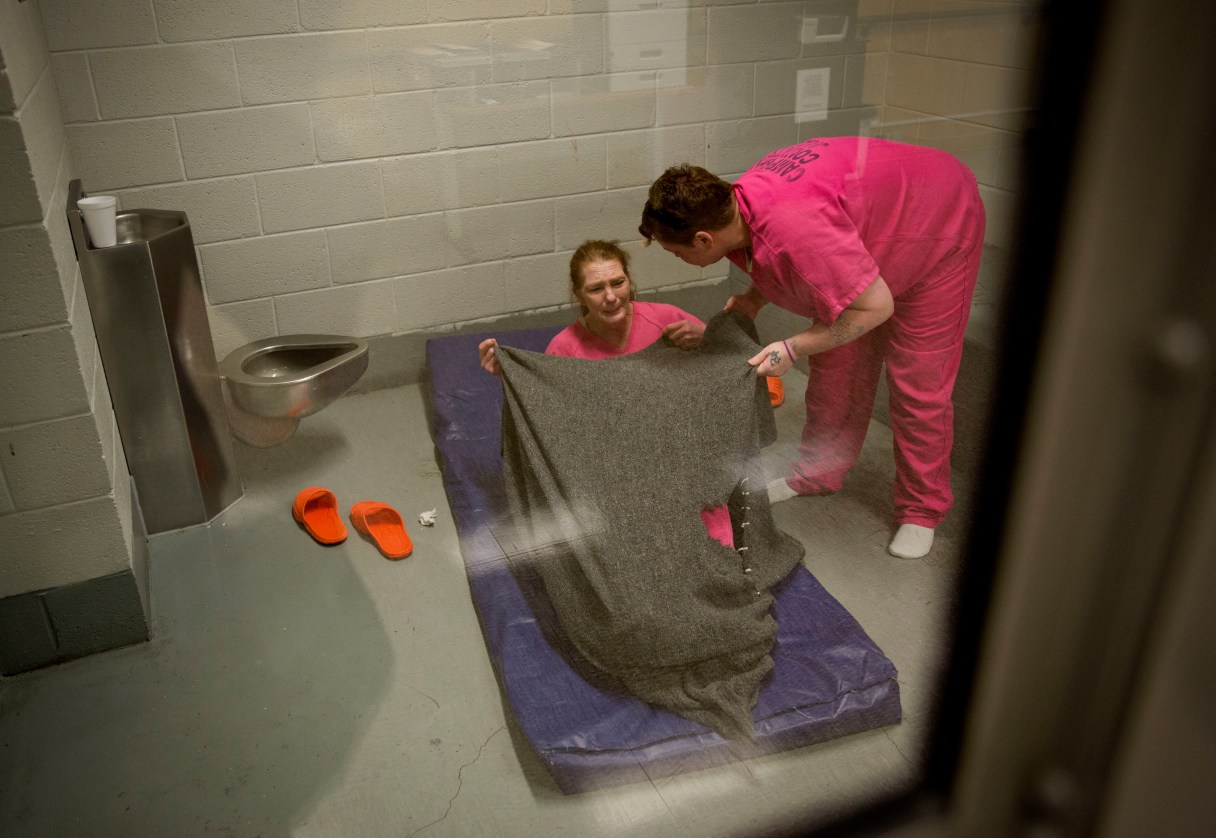
 Linda Green is arrested on charges of assault on a police officer and disorderly conduct as police attempted to apprehend her son, who was wanted for an outstanding warrant in LaFollette, Tenn., Wednesday, March 14, 2018. Green, who has struggled with drug addiction, has been arrested more than 50 times in Campbell County. The opioid crisis is putting more women behind bars across the U.S. _ tearing apart families and squeezing communities that lack treatment programs and permanent solutions. In this jail, many female inmates have long-term addiction problems. (AP Photo/David Goldman)
JACKSBORO, Tenn. – On opposite sides of the county jail, a mother and her son chat about school, girls, birthday gifts – and their future together. They aren’t allowed to see each other face-to-face, so the inmate and the fifth-grader connect by video.
“Hi, Mommy,” 10-year-old Robby says to Krystle Sweat, clutching a phone in the visiting room as he looks at his mother on a screen, sitting in her cell.
Robby hasn’t hugged or even touched her since Christmas Day 2015, just before Sweat wound up back behind bars. He runs a hand through his hair, shifts his weight from one leg to another, and says that on the day his mom is released, he wants to show her how he can ride no-hands on his bike. Sweat laughs, but knows their reunion must wait.
For years now, she has cycled in and out of jail, arrested more than two dozen times for robbery, driving violations and other crimes – almost all related to her drug addiction that culminated in a $300-a-day pain pill habit. She’s tried to quit, but nothing has worked. Now she says she’s ready to make the break when she’s paroled again, possibly this summer.
“I’m almost 33,” she says. “I don’t want to continue living like this. I want to be someone my family can count on.”