
Last week I considered what the Democratic Party should expect from politics after COVID-19 – the hope of revived popularity for President Joe Biden under return-to-normalcy conditions, the danger that the left-tilting party might be losing ground across multiple different demographic groups. Now, let’s consider how post-COVID-19 politics might look from the Republican side.
Republicans have a lot to be thankful for. In the years since George W. Bush, their party has staggered around without a governing ideology. Yet, through it all, the party has never collapsed, never fallen more than a little distance out of power and almost always retained a certain capacity to block the Democrats, which is the only thing its constituencies can agree on.
This pattern seems unlikely to be broken even if Biden’s poll numbers bounce back across 2022 and 2023. In that scenario Republicans will still probably narrowly recapture the House of Representatives, returning to the position that they held immediately after last November’s election – as a minority coalition, but a large one rather than a rump.
The problems in the Democratic Party create an opportunity for Republicans to win real popular majorities at the national level. But the fact that they don’t need to be a majority coalition to exercise a certain power means that they’re more likely to choose badly, and stay roughly where they are.
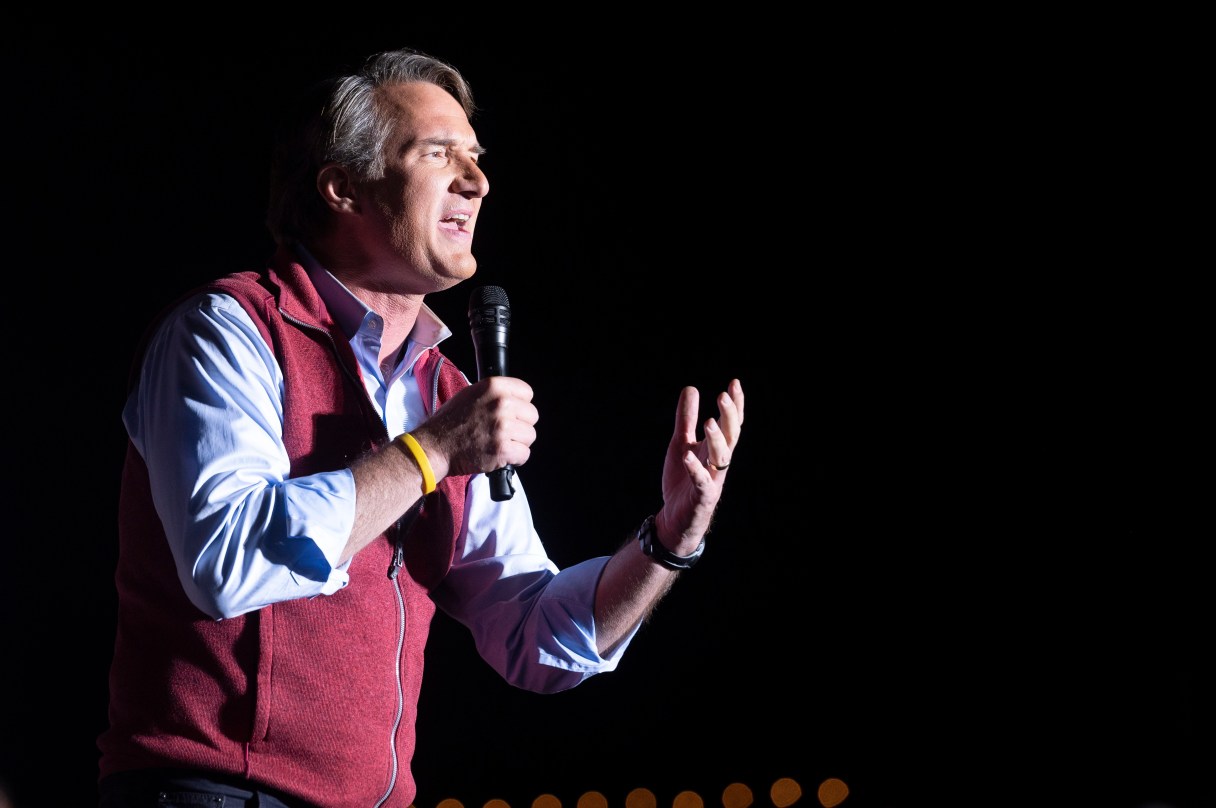
The alternative, the best-case post-COVID-19 scenario for the party, was visible in Glenn Youngkin’s Virginia campaign, which essentially blended elements from Donald Trump in 2016 and 2020 with Mitt Romney in 2012, while shedding the baggage that kept both men from winning popular-vote majorities. Youngkin has a Romney-esque persona – the corporate suit and genial family man – but where the man from Bain Capital ended up captive to party dogma on taxes and entitlement cuts, the former Carlyle Group executive promised higher education spending and tax cuts that benefit the lower-middle class, playing against the corporate-Republican and supply-side stereotypes.