
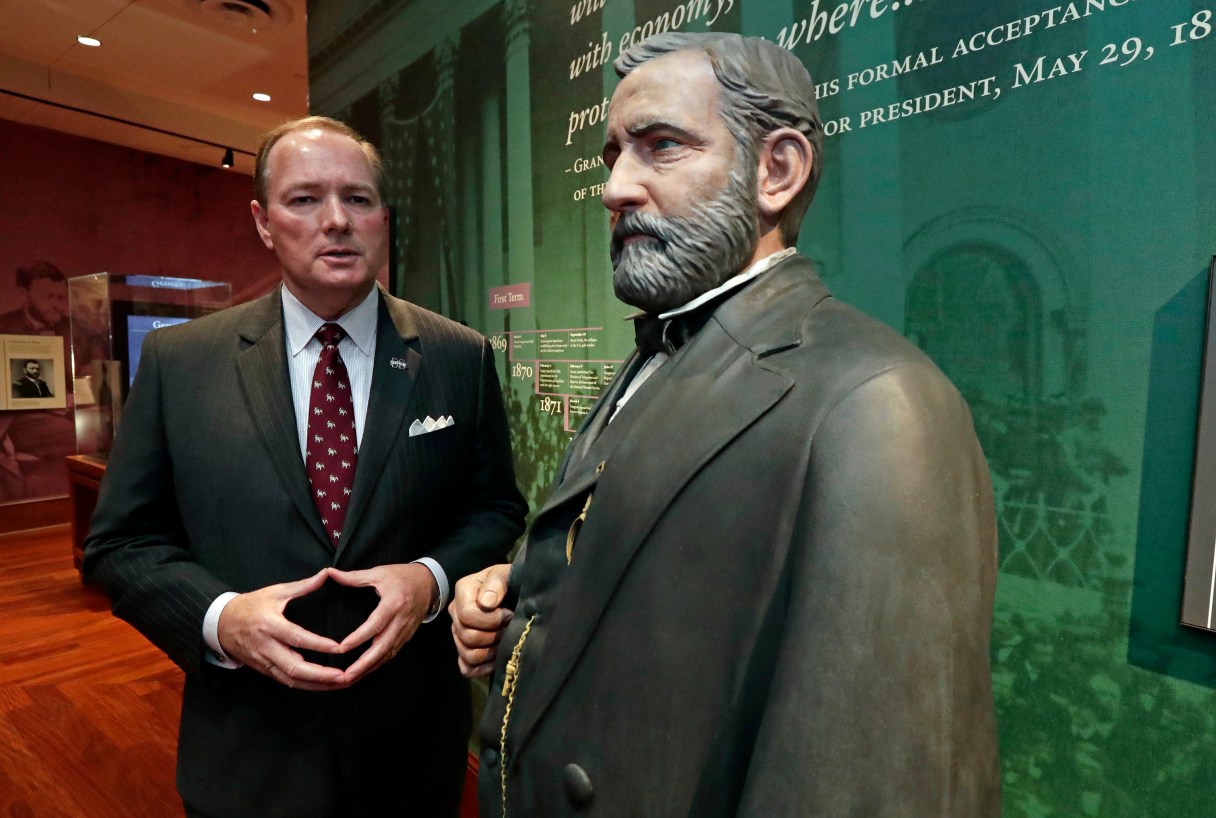
STARKVILLE, Miss. (AP) – It’s not ironic, but intentional. Ulysses S. Grant, the Union general who won the Civil War and later the presidency, is back in Mississippi in a way few would have imagined not long ago.
His new presidential library opens this month at a university in the state where Grant gained fame by capturing the Confederate stronghold at Vicksburg.
Mississippi State University will launch the new library and exhibit space housing Grant’s papers and artifacts on Nov. 30. That may seem improbable in a state steeped in the Confederacy, but supporters hope the library – with its interactive exhibits, artifacts and vast trove of historic documents – will help further unity more than 150 years after the war.
The state spent $10 million to build a new home for the Ulysses S. Grant Presidential Library at Mississippi State University in Starkville. And the man instrumental in bringing Grant’s papers to Mississippi last decade said he hopes it will help heal lingering North-South divisions.
“It was our view that going to the South with these collections would somehow, somehow, help people to understand each other and survive as a family,” said Frank Williams, a former Rhode Island Supreme Court chief justice.