
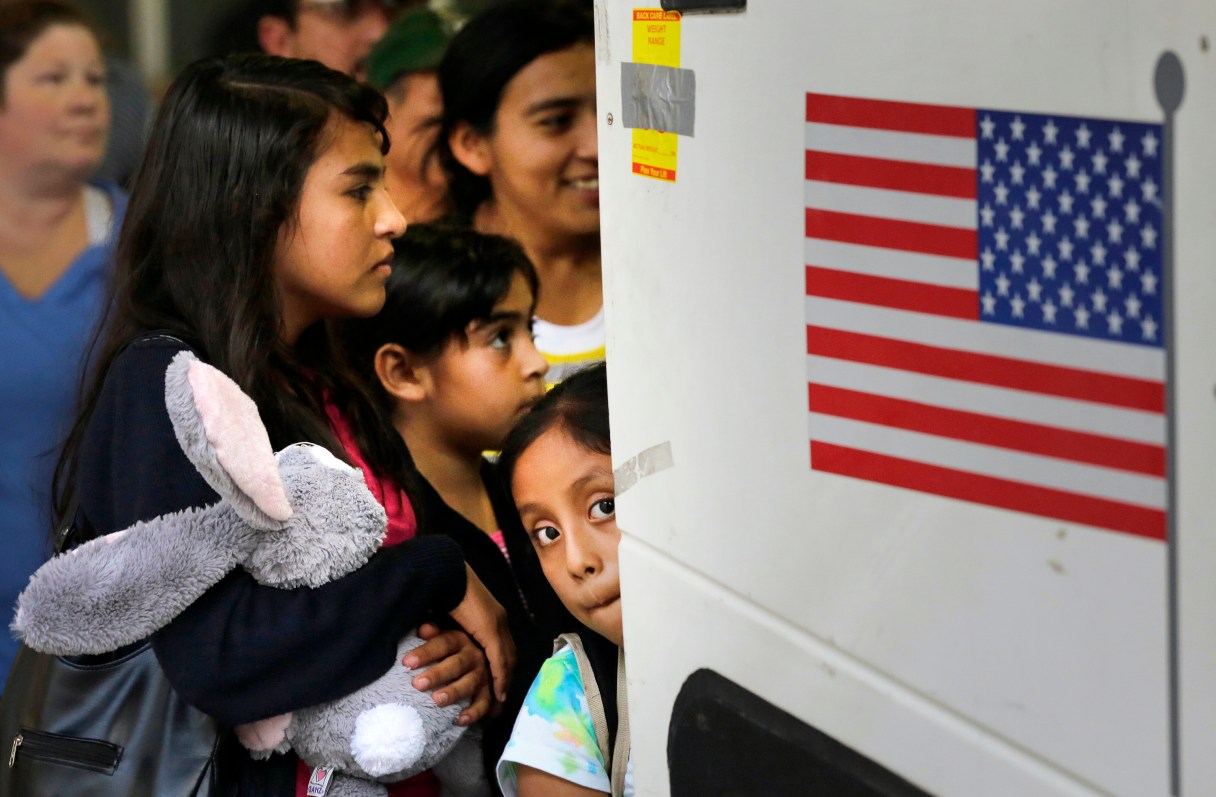
LOS ANGELES (AP) – The vast majority of immigrant children who arrive alone at the U.S. border are placed by the government with adults who are in the country illegally, federal data reviewed by The Associated Press show.
The government has long said that it places the children with family and friends regardless of immigration status. But since more children began arriving on the border in 2014, officials have not revealed how often those sponsors lack legal papers.
In response to a Freedom of Information Act request, the Department of Health and Human Services provided data showing that 80 percent of the 71,000 mostly Central American children placed between February 2014 and September 2015 were sent to sponsors who were not here legally.
Six percent were placed with adults who had temporary protected status, which has let some Central American citizens stay and work in the country legally for more than a decade. Four percent were sponsored by American citizens and 1 percent by immigrants facing deportation proceedings.
Most of the rest were placed with sponsors who had other forms of legal status or who have filed immigration applications.